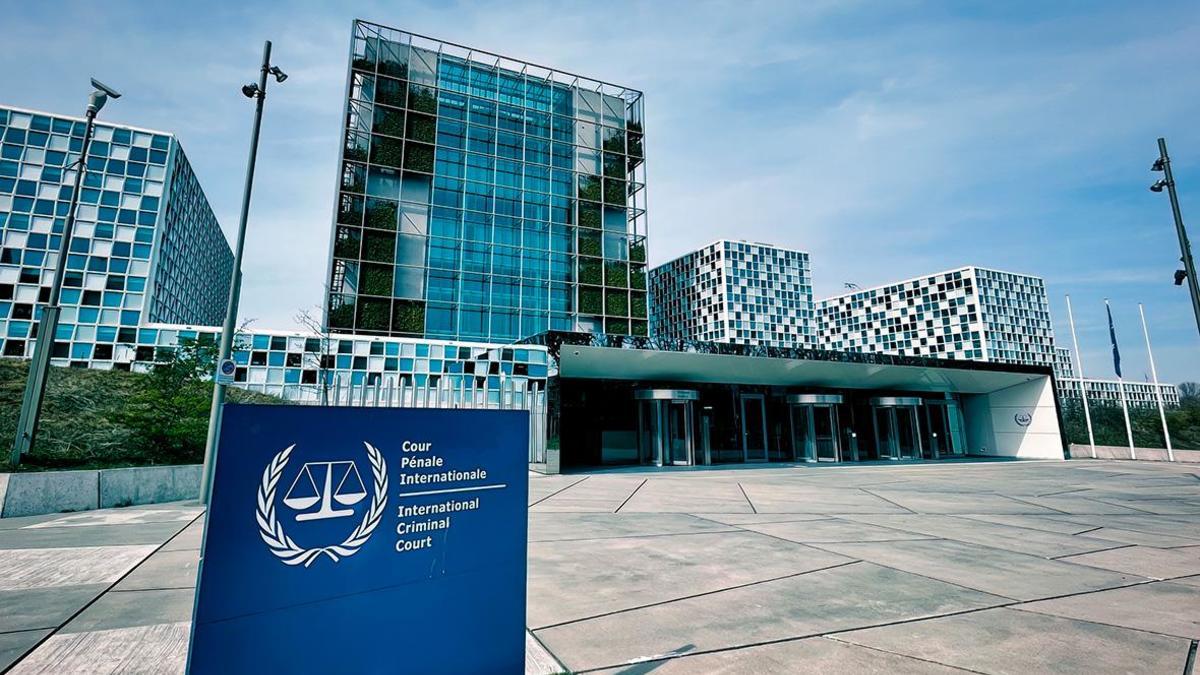
Kenya and Uganda are facing uncomfortable diplomatic questions after Washington imposed sweeping sanctions on the International Criminal Court, exposing differences in how the two East African neighbours view international justice.
Trump ICC sanctions have placed Kenya and Uganda in a difficult position, forcing both countries to consider how far they can defend international justice without complicating their relationships with the United States.
For Nairobi and Kampala, this is not simply another disagreement between Washington and an international institution. Both countries have their own histories with the International Criminal Court (ICC), and both have reasons to approach the latest confrontation carefully.
The United States announced sweeping sanctions against the Hague-based court on October 9, 2026, escalating a dispute that has been building since President Donald Trump returned to the White House.
The latest measures target the ICC as an institution, going beyond earlier sanctions imposed on individual judges and prosecutors. They restrict financial transactions and access to US-linked services, potentially affecting the court’s day-to-day operations.
Washington argues that the court has exceeded its authority by pursuing cases involving American citizens and officials of countries that have not joined the ICC, particularly Israel.
The court rejects that position, insisting that its work is grounded in the Rome Statute and that political pressure should not interfere with investigations into serious international crimes.
For Kenya and Uganda, the dispute has brought an old question back into focus: how should African governments respond when their international legal commitments collide with the interests of powerful diplomatic partners?
Kenya Rejects Trump ICC Sanctions but Wants the Court Reformed
Kenya has chosen a relatively measured response.
Rather than supporting Washington’s sanctions or defending every decision made by the ICC, Nairobi has argued that the court needs reform, not punishment.
Foreign Affairs Principal Secretary Korir Sing’oei said the ICC deserved criticism over its performance and allegations that it had concentrated too heavily on cases involving particular regions.
However, he made clear that sanctions were not the answer.
Kenya’s position is that the institution should be improved through cooperation among its member states.
That approach allows Nairobi to acknowledge longstanding African concerns about the court while maintaining its commitment to the international justice system.
It is also a position shaped by Kenya’s own experience.
The ICC became a major political issue in Kenya following the violence that accompanied the disputed 2007 presidential election.
The court subsequently pursued cases involving several prominent Kenyan political figures, including Uhuru Kenyatta and William Ruto.
Those proceedings became central to debates about sovereignty, accountability and the relationship between African governments and international institutions.
The cases against Kenyatta and Ruto did not result in convictions. The prosecution withdrew charges against Kenyatta, while the judges terminated Ruto’s case without an acquittal.
The experience left Kenya with a complicated relationship with the court.
It also helps explain why Nairobi can support the ICC’s continued existence while questioning aspects of its performance.
Uganda’s Response Reveals Differences Within Government
Uganda’s reaction has been more contentious.
The latest sanctions have exposed differences within the government over how Kampala should relate to the ICC.
Foreign Affairs Minister Adonia Ayebare raised the possibility of Uganda withdrawing from the court if it pursued investigations or indictments against Ugandan citizens.
His remarks drew a public response from Justice and Constitutional Affairs Minister Norbert Mao, who cautioned against statements that could damage Uganda’s diplomatic standing.
The disagreement, reported on October 10, highlighted the sensitivity of the issue within government.
For Uganda, relations with the ICC are particularly significant because the country was among the earliest African states to engage directly with the institution.
Uganda ratified the Rome Statute in June 2002 and referred the situation involving the Lord’s Resistance Army conflict to the court in January 2004.
The ICC subsequently investigated alleged war crimes and crimes against humanity connected to the conflict in northern Uganda.
Those investigations were formally closed in December 2023, although the court’s wider judicial history involving Uganda remains important.
Uganda’s past cooperation makes the current debate particularly striking.
A government that once sought international judicial assistance is now discussing the possibility of distancing itself from the same institution.
Yet a minister’s warning does not amount to a formal decision to withdraw.
As of October 12, 2026, the public disagreement should be understood as evidence of competing positions within government, not confirmation that Uganda has left the Rome Statute.
Why Trump Is Targeting the International Criminal Court
The dispute between Washington and the ICC is not new, but the latest sanctions represent a significant escalation.
During his first presidency, Trump also imposed sanctions on ICC officials. Those measures were later reversed under President Joe Biden.
After returning to office in January 2025, Trump renewed pressure on the court through an executive order issued on February 6, 2025.
The administration accused the ICC of improperly asserting jurisdiction over Americans and Israeli officials, despite neither country being a party to the Rome Statute.
Much of the disagreement centres on investigations involving alleged crimes committed by American personnel in Afghanistan and the ICC’s arrest warrants against Israeli Prime Minister Benjamin Netanyahu and former Defence Minister Yoav Gallant.
Washington maintains that the court’s actions threaten American sovereignty and improperly expose officials from non-member countries to international prosecution.
The ICC takes a different legal position. Under the Rome Statute, the court may exercise jurisdiction over certain crimes committed on the territory of member states, even when the suspected perpetrators are nationals of countries that have not joined the treaty.
The latest American sanctions go beyond travel bans and asset restrictions targeting individual court officials.
They threaten the institution’s access to banking, technology and other services that depend on American companies or financial systems.
A transitional authorisation gives affected businesses approximately six months to adjust their arrangements.
For an international court that relies on complex financial and administrative systems, these restrictions could create serious operational difficulties.
Why Trump ICC Sanctions Matter to African Countries
Africa has a complicated history with the International Criminal Court.
Several African governments were among the early supporters of the Rome Statute, which established the court to prosecute individuals accused of genocide, war crimes, crimes against humanity and aggression.
For countries emerging from periods of conflict, the institution offered a possible route to justice when national courts were unwilling or unable to pursue serious cases.
Over time, however, criticism emerged.
Some African leaders argued that the court paid disproportionate attention to the continent while taking a different approach to powerful countries elsewhere.
Others defended its work, pointing out that several African investigations originated from referrals made by African governments themselves.
Both arguments have influenced debates about the ICC’s independence, fairness and effectiveness.
The Trump administration’s latest sanctions have brought those disagreements back into the spotlight.
African governments must now decide how to respond to American pressure without abandoning their own positions on international accountability.
For Kenya and Uganda, the decision is particularly sensitive because both are members of the ICC and maintain important diplomatic relationships with Washington.
Can Kenya and Uganda Support Both Washington and the ICC?
The difficulty for Nairobi and Kampala is that their interests do not fit neatly into one diplomatic camp.
The United States is an important partner to both countries in areas including security, trade, healthcare and development cooperation.
At the same time, Kenya and Uganda have voluntarily accepted obligations under the Rome Statute.
Those commitments do not disappear simply because Washington opposes the court’s activities.
Supporting the ICC does not necessarily require either government to agree with every decision made by its prosecutors or judges.
Similarly, maintaining constructive relations with the United States does not legally require a country to support American sanctions.
This leaves room for diplomatic compromise.
Kenya appears to be pursuing that approach by calling for institutional reforms while rejecting the use of sanctions.
Uganda’s position is less settled, with the recent disagreement between senior government officials revealing different views about the country’s future relationship with the court.
What neither government can easily ignore is the wider question of consistency.
If countries support international courts when they investigate crimes committed elsewhere but reject them when their own interests are involved, public confidence in international justice may weaken.
On the other hand, concerns about unequal treatment and the court’s effectiveness also deserve examination through established legal and diplomatic processes.
Withdrawing From the ICC Would Not Be Straightforward
The possibility of Uganda leaving the ICC has attracted attention, but withdrawal would involve a formal legal process.
Under Article 127 of the Rome Statute, a member country wishing to withdraw must notify the United Nations Secretary-General in writing.
The withdrawal generally takes effect one year after the notification is received, unless a later date is specified.
Importantly, leaving the court does not automatically erase obligations arising while the country was a member.
Existing investigations and proceedings may continue to have legal consequences under the treaty.
This means withdrawal would not necessarily provide the immediate protection that some political statements might suggest.
For Uganda, such a decision would also carry diplomatic implications, given its historical involvement with the ICC and its relationships with countries that strongly support the institution.
Kenya, meanwhile, has signalled that it intends to continue working with other member states to pursue reforms.
Neither country’s long-term response can be judged solely from the political statements made in the days following the latest sanctions.
The ICC Says It Will Continue Its Work
Despite the pressure from Washington, the International Criminal Court has insisted that it will continue carrying out its mandate.
In a statement issued on October 9, 2026, the court condemned the sanctions against the institution and warned that they could interfere with efforts to investigate and prosecute serious international crimes.
The court has appealed to its member states to support its independence and ensure that it can continue operating.
Its position has received backing from several European governments and international human rights organisations.
Some governments have also begun considering measures intended to protect the court and its personnel from the practical effects of American restrictions.
For supporters of the ICC, the concern goes beyond the immediate dispute involving the United States.
They argue that allowing political pressure to interfere with judicial institutions could weaken international accountability.
Critics of the court, meanwhile, continue to raise questions about jurisdiction, oversight and the consistency of its decisions.
These disagreements are unlikely to disappear quickly.
What Happens Next for Kenya and Uganda?
The immediate question is whether Kenya and Uganda will maintain their current positions as the American sanctions begin to affect the ICC’s operations.
Kenya has already made its preference clear: reform the institution rather than weaken it through economic restrictions.
Uganda faces a more complicated internal debate.
The disagreement between officials raises questions about whether Kampala will maintain its existing commitment to the Rome Statute or pursue a more confrontational approach.
Much will depend on further government consultations, developments at the ICC and the diplomatic response from other African countries.
There is also a wider regional interest.
African states have long sought a stronger voice in the international justice system. The latest confrontation offers another opportunity for them to press for reforms, including greater institutional accountability and more consistent application of international legal standards.
For Kenya and Uganda, however, any response must also account for the practical realities of their relationships with major international partners.
The dispute is therefore as much about diplomacy as it is about international law.
A Difficult Diplomatic Balance
Trump ICC sanctions have placed Kenya and Uganda in an uncomfortable position at a time when international institutions are facing growing political pressure.
Nairobi has responded by defending the need for an international court while acknowledging its shortcomings.
Kampala has shown a less unified approach, with senior officials publicly disagreeing over whether Uganda should reconsider its membership.
Neither country faces a simple choice.
Both have legal commitments to the ICC, important relationships with the United States and legitimate interests in ensuring that international justice is applied fairly.
The coming months will test how they manage those competing responsibilities.
What is already clear is that Washington’s latest sanctions have reopened a debate that has shaped Africa’s relationship with the ICC for years.
For Kenya and Uganda, the challenge is not simply choosing between the United States and the court. It is finding a position that protects their diplomatic interests, respects their international obligations and addresses longstanding concerns about how global justice is administered.
That balancing act may prove more difficult as pressure on the court intensifies.