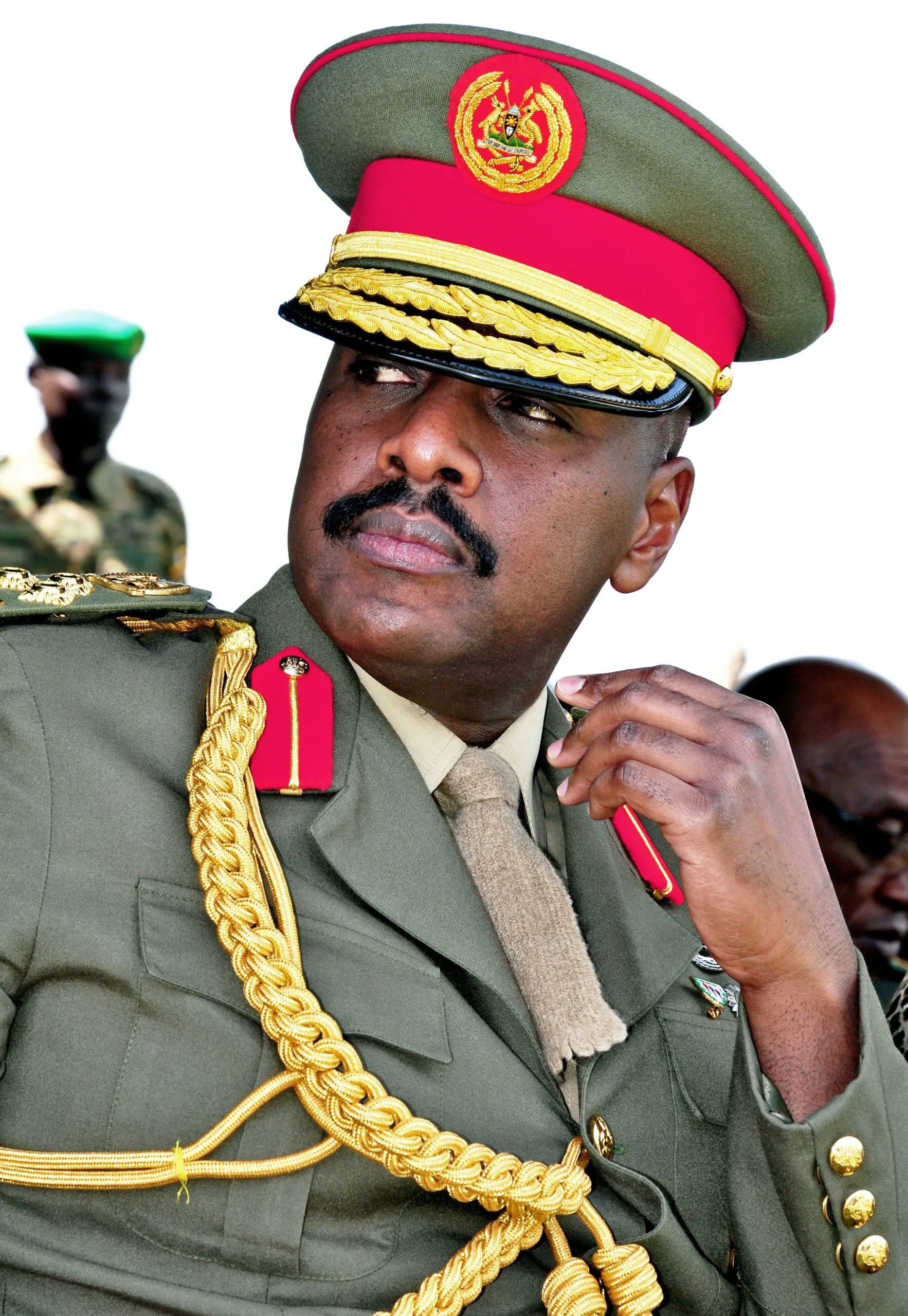
Gen Muhoozi Kainerugaba’s declared 2031 presidential bid is changing Uganda’s debate over succession, the NRM and political transition.
The Muhoozi 2031 bid is increasingly influencing Uganda’s debate about political transition, succession and the future of the ruling National Resistance Movement.
Gen Muhoozi Kainerugaba, Uganda’s Chief of Defence Forces and the son of President Yoweri Museveni, publicly declared in August 2026 that he intends to contest for the country’s highest office in 2031.
“I will stand for the highest office in the land in 2031,” Kainerugaba said in a post announcing his plans. He also said President Museveni would support his campaign, although the President has not announced whether he himself intends to contest the 2031 election.
That declaration has given a specific election date to a succession debate that has followed Kainerugaba for years.
Muhoozi 2031 bid turns succession talk into an organised campaign
Kainerugaba’s political ambitions are not new.
Supporters previously mobilised around him through the MK Movement, which later evolved into the Patriotic League of Uganda, or PLU.
Before the 2026 election, Kainerugaba had at various points indicated an interest in the presidency but ultimately backed his father instead. His latest declaration therefore signals that his presidential ambitions were postponed rather than abandoned.
The PLU has since intensified mobilisation around the 2031 campaign.
In September, Kasambya County MP David Kabanda, a senior PLU figure, publicly told supporters that Kainerugaba would contest the 2031 presidential election.
Kabanda also said President Museveni had sanctioned the planned candidature. That claim has been repeated by PLU figures, although the political arrangements surrounding the 2031 election remain several years away and could still change.
Grassroots mobilisation is already taking shape
The Muhoozi 2031 bid is increasingly being accompanied by organised political activity beyond Kampala.
PLU officials have been rebuilding regional structures and holding grassroots meetings following the 2026 elections.
In September, political leaders and PLU organisers in parts of Bunyoro and Teso publicly backed Kainerugaba’s planned candidacy, while endorsement campaigns were being prepared in some districts.
Kampala Local Council leaders have also publicly endorsed him, illustrating how mobilisation for a contest five years away has already started filtering into lower levels of political organisation.
The activity means Uganda’s next succession discussion is developing unusually early in the electoral cycle.
PLU’s growth adds another layer to the transition debate
The PLU has become an important part of the conversation.
Although it describes itself as a civic organisation aligned with the broader NRM political project, it has developed structures involving politicians, government officials and supporters across the country.
In June 2026, Kainerugaba announced leadership changes that brought several prominent political figures into senior PLU roles.
Daily Monitor reported at the time that the organisation’s expansion was raising questions about succession and the relationship between PLU and existing NRM structures.
Those questions are likely to become more prominent as 2031 approaches.
If Kainerugaba ultimately contests the presidency, the NRM and PLU will need to clarify how his candidature relates to the ruling party’s own processes for selecting a presidential flagbearer.
At present, that process has not been completed for 2031.
Museveni remains central to the political equation
Any discussion of Uganda’s political transition still revolves heavily around President Museveni.
Museveni has governed Uganda since 1986, and Kainerugaba’s position as both his son and the country’s military chief makes the 2031 declaration politically significant.
Reuters reported in August that Kainerugaba said his father would be his campaign manager and predicted strong electoral support with Museveni behind him.
However, it remains unknown whether Museveni will stand again in 2031.
That uncertainty means the current situation should not be treated as a confirmed transfer of power.
What has changed is that one possible succession scenario now has an openly declared candidate, a political organisation and an emerging mobilisation structure.
Military role puts civilian politics under greater scrutiny
Kainerugaba’s position as Chief of Defence Forces adds another dimension to the debate.
He simultaneously occupies Uganda’s highest military command while publicly expressing presidential ambitions.
The combination has attracted scrutiny from opposition figures, civil society actors and political analysts concerned about the boundaries between military institutions and civilian politics.
Supporters of Kainerugaba, meanwhile, have presented him as a figure capable of maintaining political continuity and stability.
Associated Press reported earlier in 2026 that supporters viewed his rise as a possible route to an orderly transition, while critics raised concerns about the prospect of power moving from father to son and about the military’s role in politics.
These remain competing political interpretations rather than predetermined outcomes.
The debate goes beyond whether Muhoozi becomes president
The significance of the Muhoozi 2031 bid extends beyond Kainerugaba himself.
Uganda has never experienced a presidential transfer between two elected leaders since Museveni took power in 1986.
That makes the eventual transition from the current political era a major institutional question involving the presidency, NRM, opposition parties, Parliament, the military and the country’s electoral institutions.
A September analysis published by New Vision argued that the central issue should be whether Uganda can eventually manage a peaceful and constitutional transfer of leadership, regardless of the individual who wins a future election.
Other commentators have similarly argued that Kainerugaba’s public declaration has made succession harder to discuss purely as a hypothetical issue.
Muhoozi name change adds symbolism to 2031 campaign
Kainerugaba also attracted attention in September when he announced that he would use the name Muhoozi Kainerugaba Museveni.
The announcement came as PLU mobilisation around his 2031 plans gathered pace.
While a name change does not itself determine a political strategy, its timing strengthened public discussion about how closely Kainerugaba’s political identity is being linked to his father’s legacy.
Opposition politics will also shape the transition
The 2031 conversation cannot be understood solely through the NRM and PLU.
Uganda’s opposition parties will also determine how the next political cycle develops.
The country’s political environment remains contested, including disputes over treatment of opposition leaders, the conduct of security forces and electoral conditions.
Government officials have rejected accusations that state institutions deliberately suppress legitimate political competition, while opposition groups and human-rights organisations have repeatedly raised concerns about arrests, restrictions on political activity and the use of security forces.
Those disagreements will remain an important part of the political environment leading toward 2031.
Muhoozi 2031 bid opens a longer transition conversation
Kainerugaba’s declaration does not settle Uganda’s succession question.
Five years remain before the scheduled 2031 election, political alliances can change, parties still have internal nomination processes to conduct, and other candidates are likely to emerge.
What the declaration has done is make the succession conversation more concrete.
Uganda is no longer discussing Kainerugaba’s presidential ambitions solely through rumours about a possible future candidature. He has publicly identified 2031 as the election in which he intends to seek the presidency, while his supporters have begun organising around that objective.
The coming years will therefore test not only the strength of the Muhoozi 2031 campaign, but also how Uganda’s political institutions, ruling party, opposition and electorate approach a transition debate that is likely to remain central to national politics.