
A personal bank account can help you receive income, save money, make payments and maintain a record of your finances. However, the requirements and costs vary between banks and account types.
To open a personal bank account in Uganda, choose a suitable account, prepare the bank’s accepted identification and supporting information, complete an application and undergo verification. You may also need an opening deposit before the account becomes operational.
Ugandan applicants should generally prepare their original National ID. Foreign nationals should ask about passport and immigration-document requirements, while refugees should confirm the bank’s accepted identification arrangements.
Check the requirements for the specific account before travelling or submitting an online application.
read Also: Tropical Bank Uganda SWIFT code: TROAUGKA explained (step-by-step)
1. Decide What You Need the Account For
Start with how you expect to use the account.
Consider whether you mainly want to:
- Receive a salary.
- Save regularly.
- Receive payments from customers or clients.
- Pay bills.
- Use a debit card.
- Transfer money to mobile money.
- Receive international transfers.
- Maintain funds in another currency.
An account suitable for occasional saving may have different charges and access conditions from one used for frequent transactions.
Common personal account options
| Account type | What to check |
|---|---|
| Savings account | Interest, minimum balance, withdrawal conditions and fees |
| Current or transactional account | Payment facilities, transaction costs and account charges |
| Salary account | Employer arrangements and what happens if salary deposits stop |
| Student or youth account | Eligibility, identification and age conditions |
| Foreign-currency account | Supported currencies, transfer charges and conversion costs |
| Joint account | Identification for all holders and instructions for operating it |
Product names differ between banks. Read the features rather than assuming every account with the same label works identically.
2. Compare Banks Before Applying
Choose a regulated institution and confirm the product through the bank’s official channels.
Compare:
- Branch and ATM access.
- Agent banking availability.
- Mobile and internet banking.
- Debit-card costs.
- Account-management charges.
- Transfer fees.
- Minimum-balance requirements.
- Customer support.
- Account closure and dormancy conditions.
If you frequently move money between a bank and mobile money, check the charges in both directions.
A nearby ATM is useful, but also establish whether withdrawals from another bank’s machines cost more.
read Also;Bank of Baroda Uganda Branches, Locations and Contacts
3. Prepare Your Identification
Banks verify customers before opening accounts. The accepted documents depend on your status and the institution’s procedures.
For Ugandan citizens
Prepare your original National ID and any copies requested.
Some banks list other accepted documents for particular circumstances, but do not assume a driving permit, passport, NIN slip or employment card will substitute for the National ID in every application.
If your ID is lost, expired or being replaced, ask the bank what alternative verification it accepts.
For foreign nationals
Prepare a valid passport and ask which additional immigration documents are required.
Depending on the bank and circumstances, these may include a valid visa, work permit, dependant’s pass or certificate of residence.
A passport alone may not complete the application.
For refugees
Ask about the bank’s refugee account-opening process and accepted refugee identification.
Do not assume that inability to meet one ordinary application route means every banking option is unavailable.
4. Gather Supporting Information
In addition to identification, the bank may request:
- A registered telephone number.
- Email address.
- Passport-size photographs or a digital selfie.
- Residential address.
- Occupation.
- Source of income or funds.
- A specimen signature.
- Tax-residency information.
- A referee, where required.
Requirements can differ between branch and digital applications.
Proof of residence
Ask which documents are accepted. Depending on the bank, possible evidence may include a utility bill, tenancy agreement, employer letter or local-authority confirmation.
If bills are in your landlord’s name, explain this before applying and ask what supporting evidence is acceptable.
Do not obtain a document solely because someone says all banks require it.
5. Explain Your Source of Funds Accurately
A bank may ask where deposits will come from and what transaction activity you expect.
Examples include:
- Employment.
- Farming.
- Freelance work.
- Small trading activities.
- Family support.
- Pension payments.
- Savings held elsewhere.
Answer honestly.
Not having a monthly salary does not automatically rule out a personal account. Ask which product suits your circumstances and what evidence the bank accepts.
A bank may need further clarification for unusual activity or particular sources of funds.
If the account will mainly handle an established business’s transactions, discuss whether a business account is more appropriate.
6. Understand the Opening Deposit
An opening deposit is money placed in the account when it is opened. It is different from a fee charged for providing a service.
It may also differ from the minimum balance you must retain.
| Term | Meaning |
|---|---|
| Opening deposit | Money initially deposited into the account |
| Minimum balance | Amount the product requires you to maintain |
| Account fee | Charge for operating or maintaining the account |
| Card fee | Charge associated with issuing, replacing or maintaining a card |
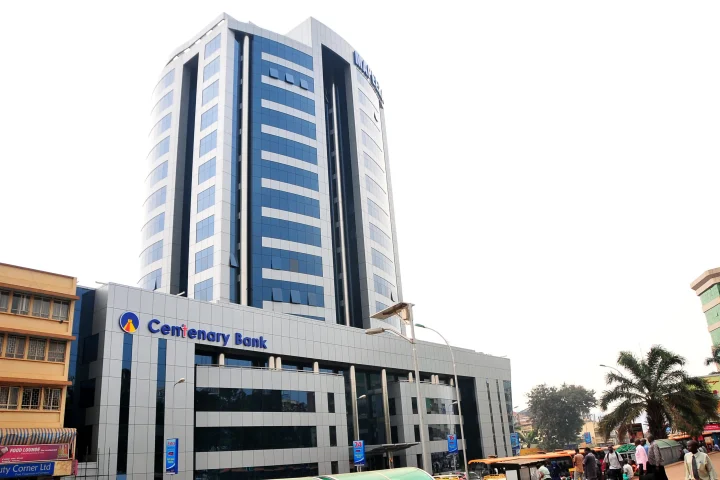
For example, Stanbic’s published Everyday Account information lists an initial deposit, while Centenary publishes opening-deposit and minimum-balance requirements for its ordinary savings product.
These are product-specific requirements, not a national standard.
Ask how much of your deposit will be available after any applicable charges.
7. Read the Charges Before Signing
Request the current tariff guide and the account’s terms.
Check:
- Monthly charges.
- ATM withdrawals.
- Counter withdrawals.
- Debit-card issuance and replacement.
- SMS alerts.
- Bank-to-mobile-money transfers.
- Transfers to other banks.
- International payments.
- Printed statements.
- Inactivity or dormancy.
- Account closure.
“No monthly fee” does not mean every service is free
An account without a monthly management charge can still charge for withdrawals, alerts or other activities.
Compare your expected monthly use.
For example, someone making frequent withdrawals may value a different package from someone who deposits savings and rarely transacts.
Confirm whether quoted charges include applicable taxes.
8. Choose a Branch or Online Application
Some Ugandan banks support digital applications for selected personal accounts.
Applying at a branch
Take the required original documents and requested copies.
Staff will normally guide you through forms, identity checks and account selection. Read the completed details before signing.
Applying online
Use the bank’s official website or verified application.
Depending on the process, you may need:
- Identification photographs.
- A selfie.
- A signature image.
- Telephone verification.
- Additional information.
Stanbic and Absa publish online application options for certain accounts. Eligibility and verification requirements still apply.
An application acknowledgement does not necessarily mean the account is fully approved or ready to receive every type of payment.
9. Wait for Verification and Confirm Activation
Processing time depends on the bank, product and whether further checks are needed.
Ask:
- Has the application been approved?
- Is the account active?
- Are any transaction limits temporary?
- Is an additional branch visit required?
- When can I collect or activate the card?
- Is any information outstanding?
Verify your name, account number and contact details.
Keep confirmation securely. Do not announce a new account for salary or client payments until you know it can receive the intended funds.
10. Set Up Mobile Banking and Alerts
Ask the bank to explain the available access channels.
These may include:
- A mobile application.
- USSD banking.
- Internet banking.
- Debit card.
- Agent banking.
Use official installation links or verified app-store listings.
Set your own credentials privately and keep them different from your mobile money PIN.
Confirm how transaction alerts work, what they cost and what to do if an alert does not arrive.
Avoid assuming that SMS is the only way to check activity. Review the actual statement or transaction history regularly.
11. Understand Debit-Card and Online Payment Settings
If you receive a card, ask:
- How to activate it.
- Where to set or change the PIN.
- Whether online payments are enabled.
- Whether international transactions are permitted.
- How recurring card payments work.
- How to freeze or block the card.
- What to do after an unexpected charge.
Set appropriate limits where supported.
Decline optional services you do not need, and request an explanation before authorising unfamiliar features.
Can You Open an Account Without Employment?
Potentially, yes. Requirements depend on the product and your circumstances.
Explain your actual source of funds and ask about appropriate accounts.
Do not invent an employer or obtain false income documents. Inaccurate information can create problems during application and later reviews.
Can a Minor Open an Account?
Banks offer products for children or young people, but a parent or guardian may need to operate or oversee the account.
Ask about:
- Age eligibility.
- Birth or identity documents.
- Guardian identification.
- Withdrawal authority.
- What changes when the child reaches adulthood.
These requirements differ from an ordinary adult account.
Are Bank Deposits Protected?
Uganda’s Deposit Protection Fund protects eligible deposits at contributing institutions, subject to its rules.
The published protection limit is UGX 10 million per depositor per contributing institution, rather than a separate UGX 10 million for every personal account at the same institution.
This protection concerns the failure or closure of a contributing institution. It is not a general promise to refund every scam, card dispute or mistaken payment.
Confirm the institution’s participation and applicable conditions.
What to Do if Your Application Is Delayed
Ask the bank to identify the outstanding issue clearly.
It could involve:
- Missing documents.
- Identity verification.
- Inconsistent names.
- Address confirmation.
- Source-of-funds clarification.
- An incomplete online submission.
Keep your application reference and follow up through official channels.
Do not pay an unofficial intermediary who promises to bypass the bank’s verification process.
Frequently Asked Questions
How much money do I need to open an account?
There is no single amount for every bank or account. Confirm the opening deposit, minimum balance and separate fees for your chosen product.
Do I need an LC1 letter?
Not universally. Some banks may accept local-authority confirmation as address evidence. Ask whether it is required or whether another document is suitable.
Can I open an account using my phone?
Some banks support digital applications for selected customers and products. You must still complete the required verification.
Can foreigners open personal accounts in Uganda?
Banks provide application routes for foreign nationals, subject to identification, immigration-status and other checks.
Must I take passport photographs?
Requirements vary. A branch may request photographs, while a digital process may use a selfie. Confirm the number and format before applying.
Does opening an account automatically give me a loan?
No. Credit products require a separate assessment and approval.
Can I link my account to mobile money?
Many accounts support related services, but availability, setup, transaction limits and charges depend on the bank and operator.