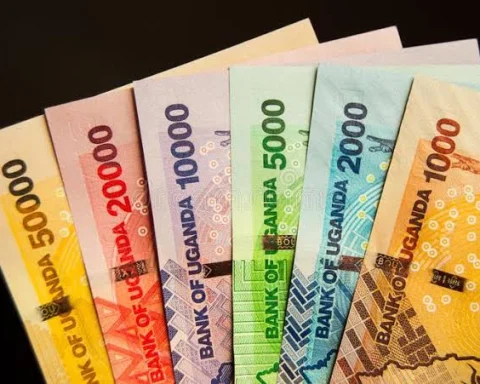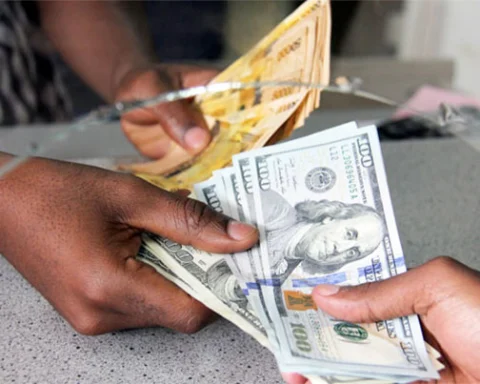

A transfer advertised as “zero fees” does not necessarily give the recipient the most money. A provider may charge nothing upfront while offering an exchange rate that delivers fewer Uganda shillings.
Another provider may offer a better rate but charge more for the payment method or payout option you select.
The simplest comparison is to ask how many Uganda shillings the recipient will actually receive for the same total amount paid by the sender. Then account for any receiving, withdrawal or other charges outside the quotation.
Compare live quotes for the same route, amount and receiving method. A provider that offers good value from one country may not be cheapest from another.
What Makes Up the Cost of a Remittance?
The main costs can include:
| Cost | What to check |
|---|---|
| Transfer fee | What the remittance provider charges the sender |
| Exchange-rate margin | How the offered conversion rate compares with a suitable reference rate |
| Funding cost | Any separate charge for paying by card, bank or another method |
| Receiving deduction | Charges applied before the recipient can use the funds |
| Cash-out cost | Cost of withdrawing from a wallet or bank |
| Access cost | Transport or other practical costs of collecting money |
Not every transfer has every cost. Avoid adding a charge twice if it is already included in the quoted payout.
The World Bank’s remittance-comparison methodology considers both explicit fees and exchange-rate margins because the fee alone does not capture the complete price.
1. Set a Consistent Comparison
Choose which question you want to answer:
- I have a fixed budget: how much will arrive?
- The recipient needs a fixed amount: how much must I pay?
Both approaches work. Do not mix them between providers.
Also keep these details consistent:
- Sending country.
- Sending currency.
- Receiving currency.
- Payment method.
- Payout method.
- Delivery option.
- Customer eligibility for promotions.
Compare quotes close together because rates can change.
2. Compare the Same Total Sender Budget
Suppose you can spend USD 200 in total, including the transfer fee.
The figures below are invented to demonstrate the calculation.
| Item | Provider A | Provider B |
|---|---|---|
| Total sender payment | USD 200 | USD 200 |
| Transfer fee included in budget | USD 0 | USD 4 |
| Amount converted | USD 200 | USD 196 |
| Illustrative exchange rate | UGX 3,600 per USD | UGX 3,700 per USD |
| Quoted recipient amount | UGX 720,000 | UGX 725,200 |
Provider B delivers UGX 5,200 more, despite charging a transfer fee.
The difference comes from the combination of fee and conversion rate.
These are not current exchange rates or provider quotations.
Check whether the fee is added or deducted
A form showing “send USD 200” may mean:
- USD 200 is converted, with the fee added on top; or
- The fee is deducted from the USD 200 budget.
Read the total you pay and recipient receives fields before confirming.
3. Compare a Fixed Amount Needed in Uganda
Sometimes the recipient needs a specific amount for rent, school fees or another obligation.
Enter that required payout where the service permits it, then compare the sender’s final cost.
For example:
“How much must I pay for the recipient to receive UGX 1,000,000 into their wallet?”
If cash is required, include the withdrawal cost separately. Receiving UGX 1,000,000 in a wallet is not necessarily the same as taking home UGX 1,000,000 in cash.
Ask whether the recipient amount is guaranteed and whether any deductions remain outside it.
4. Understand the Exchange-Rate Margin
The exchange-rate margin is part of the cost of converting currencies.
When a quote is expressed as UGX per unit of sending currency, a higher rate generally produces more UGX for the same amount converted.
Illustrative margin calculation
Suppose:
- A suitable reference rate is UGX 3,800 per USD.
- A provider offers UGX 3,686 per USD.
The difference is UGX 114 per dollar.
Illustrative margin = (3,800 − 3,686) ÷ 3,800 × 100 = 3%
That calculation helps explain the conversion difference. It is not the total transfer cost because it excludes separate fees.
Use a relevant reference
Check the currency direction and timestamp. Rates from different times or quoted in reverse form can lead to incorrect comparisons.
A market reference rate is also not a promise that a retail transfer service will offer that rate.
For everyday decisions, comparing final recipient amounts is often easier than calculating margins yourself.
5. Check Your Funding Method
The amount you pay can change depending on whether you use:
- Bank transfer.
- Debit card.
- Credit card.
- Cash.
- A supported wallet.
Check the provider’s fee and any separate charge from your bank or card issuer.
For a credit-card-funded transfer, ask the issuer whether it treats the payment as a cash advance or applies other charges.
Also check whether the provider bills in a currency different from your account’s currency. That can introduce another conversion.
Do not assume the cheapest advertised funding option is available to every customer.
6. Compare Payout Methods Separately
Providers may quote different prices for mobile money, bank deposit and cash pickup.
| Payout method | Questions to ask |
|---|---|
| MTN MoMo | Is the wallet eligible, and what will later withdrawal cost? |
| Airtel Money | Is the route supported, and what charges apply after receipt? |
| Bank deposit | Could the receiving or intermediary bank deduct anything? |
| Cash pickup | Which agent can pay, in what currency and with what identification? |
MTN publishes no receiving fee for supported international MoMo receipts. That does not remove sender charges, conversion margins or later cash-out costs.
Choose the method the recipient can use conveniently.
7. Include the Recipient’s Actual Use
Ask what happens after the transfer arrives.
If the recipient will pay school fees digitally, cashing out first may create unnecessary expense. If they need cash, check the applicable withdrawal tariff and practical access.
A slightly better payout may offer poor value if collecting it requires a costly journey.
For cash pickup, verify the agent’s location, opening hours and availability before sending.
Do not assume that every branch displaying a provider’s logo can handle every payout immediately.
8. Read Promotional Conditions
Welcome offers can produce unusually attractive comparisons.
Check:
- New-customer eligibility.
- Maximum qualifying amount.
- Expiry date.
- Required payment method.
- Payout restrictions.
- Whether a code is needed.
- The ordinary rate for later transfers.
For example, Remitly’s published US-to-Uganda offer distinguishes a promotional exchange rate from non-promotional pricing and limits the amount eligible for the welcome rate.
A promotion may be worthwhile, but it does not establish the cheapest option for every future transfer.
Compare again when the offer ends.
9. Compare Speed and Certainty
A lower-cost route may have a longer delivery estimate.
Check:
- When the recipient should receive funds.
- Whether bank working days matter.
- Whether verification can delay processing.
- When the rate becomes fixed.
- Whether the quote expires before funding.
- What happens if the transfer fails.
Western Union notes that rates and fees vary with factors including payment and payout methods.
Do not compare an economy transfer with an urgent option without recognising the difference.
For a deadline-sensitive payment, reliability and adequate time can matter more than a small price saving.
10. Check Limits Before Paying
The sender and receiver may face different limits.
These can depend on:
- Identity-verification level.
- Sending country.
- Provider.
- Funding method.
- Wallet capacity.
- Transaction frequency.
- Account restrictions.
A transfer can fit the sender’s limit but exceed the recipient’s available wallet capacity.
Confirm the route before sending a large amount. Do not split transfers to evade verification or reporting requirements.
11. Use Comparison Websites Carefully
Comparison tools can help identify providers to investigate.
However, check:
- The date of the information.
- Whether the displayed offer is promotional.
- Whether the provider supports your exact route.
- The assumed amount and payment method.
- Whether the site receives referral commission.
The World Bank’s Remittance Prices Worldwide database provides useful cost-comparison information, but published survey data is not a live transaction quote.
Always verify the final offer with the provider.
A Simple Remittance Comparison Sheet
Complete this before a significant transfer:
| Item | Provider A | Provider B | Provider C |
|---|---|---|---|
| Total sender payment | |||
| Sending currency | |||
| Funding method | |||
| Transfer fee | |||
| Exchange rate | |||
| Quoted UGX payout | |||
| Receiving method | |||
| Further recipient costs | |||
| Expected usable amount | |||
| Delivery estimate | |||
| Promotion conditions |
Do not add an exchange-rate margin again as a separate cash deduction if it is already reflected in the payout.
Questions to Ask Before Confirming
Ask the provider:
“For this total payment, how much will the recipient receive in Uganda, through the selected method? Is the rate fixed, when should the money arrive, and which charges are not included?”
Save the final quotation and receipt.
Verify the recipient’s registered name, network and account details. A small fee saving is irrelevant if the money goes to the wrong destination.
Avoid Unofficial Exchange Offers
Be cautious about strangers offering exceptional rates through personal accounts or informal payment chains.
Verify the service and its applicable authorisation. Never disclose a PIN, banking password or authentication code to obtain a better rate.
Do not send an additional “release fee” merely because someone presents a payment screenshot.
If a transfer is delayed, trace it through the original provider.
read Also: Uganda
Frequently Asked Questions
Is a zero-fee transfer always cheapest?
No. The conversion rate and other charges can reduce its value.
Does the highest exchange rate always win?
Not necessarily. Compare the final payout after fees for the same sender budget.
Should I wait for a better rate?
Exchange rates can move in either direction. Consider your deadline rather than assuming a better rate will appear.
Is mobile money always cheaper than a bank transfer?
No. The result depends on the amount, route, provider and what the recipient does after receipt.
Should I combine several transfers?
That may reduce repeated fixed fees, but assess limits, timing and the recipient’s needs. It is not automatically cheaper.
How often should I compare providers?
Recheck when the amount, route, payment method or payout method changes, and after promotional pricing ends.
read Also: KUSCCO Liquidation Begins as Liabilities Exceed KSh17 Billion