Tag: Parenting

  • Navigating Motherhood Between Uganda and Switzerland

    Navigating Motherhood Between Uganda and Switzerland

    At night, I hear the baby cry. My mother hands him to me, and without fully waking, I sit up to breastfeed. When I finally get out of bed, I know there will be katogo, plantain mixed with fatty meat cuts, or a flask of hot porridge, always available for a nakawere—a new mother. The title carries respect and admiration, spoken slowly, as a tribute to a woman who has just endured the miracle of childbirth.

    This memory became my comfort and escape after I moved from Uganda to Switzerland in May last year. My husband and I relocated with our two children, aged six and twelve, for my dream job in health advocacy. While I had lived in Europe before—including the UK in my twenties—nothing had prepared me for mothering without a village.

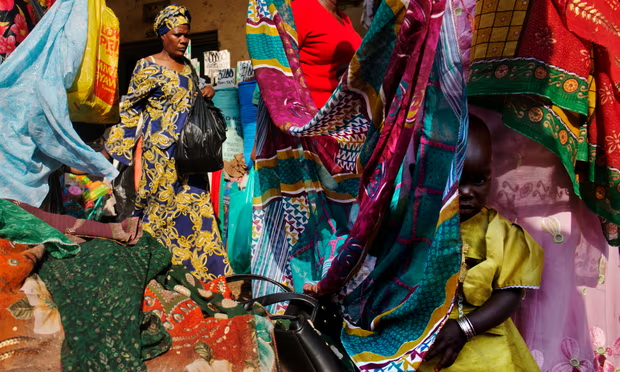
    In Uganda, strangers acknowledge small parenting victories. A fellow passenger in a matatu might compliment a child’s good behavior or offer to carry them to save on transport fare. In Switzerland, no one pays attention when I navigate stairs without stepping on a toy or keep my six-year-old still during a long journey. Parenting feels silent and isolating.

    The Unspoken Support Systems of African Motherhood

    Many portray African motherhood as a struggle—women raising more children than they can afford, often alone. But few recognize the support systems that exist across all social classes.

    A mother in Uganda can leave her children with a neighbor for an entire day without notice, trusting they will be fed and cared for. The aggrandizement of new mothers, the year-long care, and the honor in calling her nakawere serve as recognition of unpaid labor. These traditions acknowledge that raising children is work, and society must share the burden.

    In Switzerland, my husband and I realized we were not just parents anymore. We had to be teachers, caregivers, and storytellers. No cousins helped with homework, no aunties passed down moral lessons through folk tales. The system expects parents to do it all, while still managing careers and personal lives.

    The Illusion of the Ideal Nuclear Family

    The Ugandan education system, inherited from British colonial rule, promotes the nuclear family as the ideal structure. I once imagined Western parenting as a scene from television—two parents and their children at a beautifully set table, free from worries about malaria, water shortages, or smoke from firewood stoves.

    Now, I understand the reality behind the image. Women in the West carry the majority of child-rearing responsibilities, even as men participate more. Globally, women perform 76% of unpaid care work, valued at $10.8 trillion, according to a 2019 Oxfam report.

    The Cost of Parenting Alone

    Without family support, parenting exhausted us. Our home fell into constant disarray. We longed for Irene, our home manager in Uganda, appreciating her more with each passing day. Childcare in Switzerland is expensive, making household help a luxury for the wealthy.

    In Uganda, families find affordable ways to manage childcare. Some hire house managers, while others trade favors, taking turns watching each other’s children. During weddings, funerals, or community gatherings, people work together, easing the burden of child-rearing.

    Choosing a Life Between Two Worlds

    Eventually, we made a choice. My husband and children returned to Uganda, while I split my time between both countries. Now, our children grow up surrounded by family, playing with cousins and soaking in the warmth of communal care.

    When we gather in our living room in Uganda, watching perfect nuclear families on TV, we will know what the images don’t show. We will remember the endless tidying, the constant reminders to pick up toys, and the missed date nights because we had no one to babysit. We will understand the servitude in parenting without a village.

    And when I hear the baby cry in my sleep, I will remember the gentle hands that lifted him, the comforting presence of my mother, and the knowledge that in Uganda, motherhood is never a journey taken alone.

  • Parental Guidance in Children’s Tech Use

    Lubaga Catholic Diocese Chancellor, Fr Pius Male, urged parents to guide their children’s technology use, emphasizing potential negative impacts. Speaking on behalf of Kampala Archbishop Paul Ssemogerere during the New Year’s Day sermon, Fr Male highlighted the need for parental involvement in managing children’s access to technology.

    Acknowledging technology’s inevitability, he aligned with Pope Francis’s view that it should promote peace and prosperity. Fr Male cautioned against allowing unrestricted use of devices, emphasizing the importance of parental guidance.

    He noted instances of children struggling to control themselves with technology, citing reliance on phones for basic information. The church stressed the need for adult supervision to help children navigate potential pitfalls.

    Prof Jane Mulema, Chairperson of Interim Lubaga Cathedral National Foundation, echoed concerns about technology, emphasizing the urgency of parental intervention.

    Fr Male’s concerns about technology’s impact on children were underscored, with instances of increased exposure to harmful content during lockdowns. The ministry’s children’s department recommended parental supervision for learners using electronic devices.

    Would you like to get published on this Website? You can now email Uganda Times: an Opinion, any breaking news, Exposes, story ideas, human interest, articles, or any interesting videos: [email protected]. Or join the Ugandatimes WhatsApp Group or Telegram Channel for the latest updates