For many Ugandans, home has always been the one place where they expect to feel safe. It is where families gather after a long day, children settle down to sleep and the worries of the outside world are supposed to fade away.
But in several communities across the country, that sense of security has been shaken.
A series of violent night attacks and unexplained killings has left families grieving and neighbours wondering whether their homes are as safe as they once believed.
From Mubende and Wakiso to Kazo, Ibanda and parts of Greater Masaka, reports of deadly assaults have raised difficult questions about crime, policing and the safety of ordinary citizens.
Some attacks appear to have been motivated by robbery. Others have involved circumstances that investigators have yet to fully explain.
What makes the situation particularly troubling is that several victims were attacked in or near their homes.
For families in the affected communities, these are not merely crime statistics. They are neighbours who are no longer there, children who have lost parents and households struggling to recover from sudden tragedy.
The growing anxiety has placed renewed pressure on the Uganda Police Force to identify those responsible and reassure residents that they can live without constant fear.
Mubende Killings Deepen Fear Among Residents
One of the latest incidents occurred in Mubende District, where a series of attacks left at least three people dead and five others injured.
Among the victims were Ivan Sseruwaji and his pregnant wife, Rose Nakalanzi, who were killed at their home in the Kitenga area.
The couple’s deaths have deeply disturbed residents, particularly because questions remain about how the attackers gained access to the house.
According to accounts published by the Daily Monitor on October 11 and 13, residents reported that some affected homes showed no obvious signs of forced entry.
That detail has created uncertainty about whether the attackers knew their victims, had gained access through other means or were involved in unrelated incidents.
None of those possibilities has been conclusively established.
For relatives, however, the immediate concern is the loss of loved ones and the future of the children left behind.
Other households in the area have also reported violent attacks, prompting fears that more residents could be at risk.
Local leaders have appealed for stronger security measures and faster investigations as families struggle to understand what is happening around them.
A Businessman’s Killing Raises More Questions
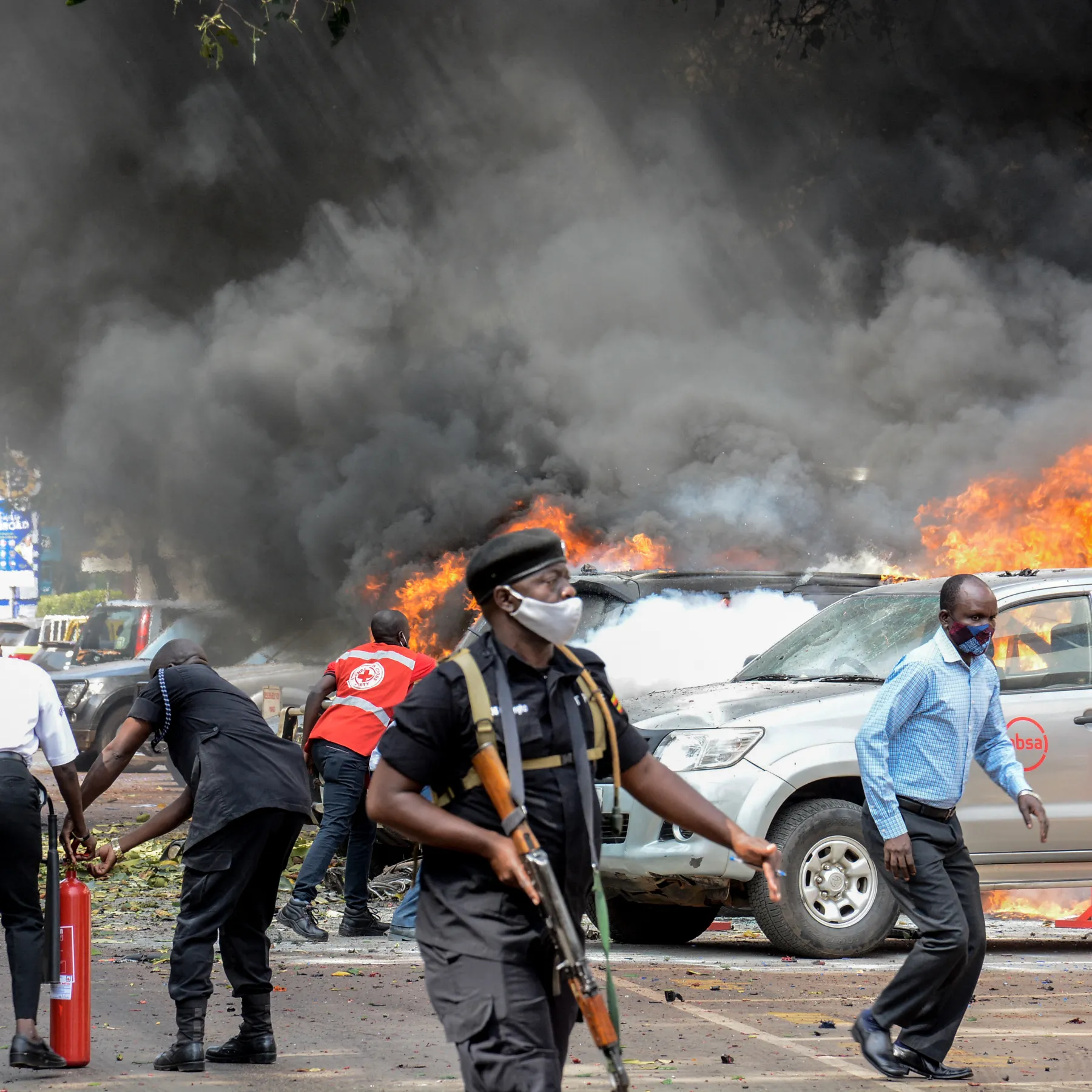
The violence has not been confined to rural communities.
In Wakiso District, businessman Edris Ssekindi was reportedly shot dead while returning home with his family.
The incident occurred near his residence in Kyengera Town Council.
According to the October 13 report, the attackers escaped without taking valuables from the vehicle, leaving investigators with questions about the motive.
His killing highlights the uncertainty surrounding some of the recent attacks.
In an ordinary robbery, investigators often examine what property was stolen and how the attackers escaped. But when victims are killed and valuables remain untouched, determining the motive can become more complicated.
Such circumstances do not automatically establish that a killing was planned or targeted.
They do, however, underline the importance of thorough investigations that examine evidence rather than relying on speculation.
For residents, the fear is understandable. If someone can be attacked while returning home with family members, the boundary between public danger and private safety begins to feel increasingly fragile.
Western Uganda Struggles With Repeated Killings
In western Uganda, the security situation has become serious enough to attract the attention of Parliament and senior police commanders.
On September 29, 2026, lawmakers raised concerns about killings in Kiruhura and Kazo districts.
Kashongi County MP Genesio Tumuramye reported that five people had been killed in their homes over the preceding month. Kazo County MP Dan Atwijukire told Parliament that 10 people had been killed in his constituency between August 17 and September 27.
Together, the accounts presented to Parliament described at least 15 deaths in the two areas.
The lawmakers called for urgent investigations, greater protection for residents and assistance to affected families.
Responding to their concerns, Second Deputy Prime Minister Crispus Kiyonga acknowledged the seriousness of the situation and called for closer cooperation between communities and security agencies.
The reports have heightened concerns about the ability of police to prevent further violence, particularly in communities where households are separated by considerable distances.
For residents, the fear is not only about what has already happened. It is also about the uncertainty of what could happen next.
What Is Behind the Uganda Night Attacks?
One of the most difficult questions facing investigators is whether the recent killings share a common cause.
Police investigations have considered robbery, property disputes and allegations of killings linked to ritual practices among possible explanations in different cases.
But there is no established evidence that all the attacks are connected or that a single organised group is responsible.
Some incidents have involved suspected theft. In others, the available accounts have not established a clear financial motive.
The differences matter.
Treating every attack as part of one criminal campaign could distract investigators from the individual circumstances surrounding each death.
At the same time, dismissing repeated attacks as isolated incidents without examining possible connections could leave important questions unanswered.
What communities need are investigations that establish who committed the crimes, why the victims were attacked and whether any suspects were involved in multiple incidents.
Rumours may spread quickly when people are frightened, but suspicion alone cannot replace evidence.
Police Face Pressure to Restore Public Confidence
The Uganda Police Force has deployed officers and intensified investigations in several affected areas.
In western Uganda, Inspector General of Police Abas Byakagaba and other senior security officials have been involved in efforts to respond to the violence.
Some suspects have been arrested in connection with individual cases.
In Kazo, local authorities also reported introducing additional patrols and movement restrictions in response to the insecurity.
These measures may provide immediate reassurance, but arrests and patrols alone will not necessarily resolve the broader concerns of residents.
People also want investigations to produce credible evidence, prosecutions and accountability.
In Mubende, local leaders have questioned aspects of the police response, including how quickly officers arrived following reported attacks.
Such concerns highlight the importance of effective communication between investigators and the communities they serve.
When residents receive little information about ongoing investigations, uncertainty can fuel rumours and deepen mistrust.
Police must therefore balance the need to protect sensitive evidence with the public’s legitimate interest in understanding what is being done to keep communities safe.
Uganda’s Crime Figures Tell a More Complicated Story
Interestingly, the latest national crime statistics suggest that overall reported crime has declined.
According to the Uganda Police Force Annual Crime Report 2025, the country registered 196,405 criminal cases in 2025, compared with 218,715 in 2024.
That represents a reduction of 10.2 percent.
The police also reported progress in submitting cases for prosecution and securing convictions.
But national statistics do not necessarily reflect the experiences of communities facing concentrated outbreaks of violence.
A district can experience a troubling series of killings even when the overall number of crimes reported nationally is falling.
That distinction is important when interpreting the current situation.
The 2025 figures describe the previous year’s crime patterns. They cannot, on their own, establish whether the night attacks reported in 2026 represent a nationwide increase in violent crime.
What they do show is the need to examine local crime patterns alongside national trends.
For someone living in a community where neighbours have recently been killed, a national decline in crime offers limited reassurance until the immediate danger is addressed.
Families Are Carrying the Heaviest Burden
Behind every reported killing is a family whose life has changed.
Children may lose parents. Relatives can find themselves responsible for dependants they had not expected to support. Families may face funeral expenses, emotional distress and the sudden loss of household income.
Survivors can also struggle to regain a sense of safety.
The effects extend beyond individual homes.
In communities where residents are afraid of moving after dark, businesses may close earlier and ordinary social activities can become difficult.
Neighbours may become suspicious of unfamiliar faces or even of people they once trusted.
This is one of the less visible consequences of repeated violence: fear can weaken the relationships that help communities function.
Affected families need more than expressions of sympathy. They need access to appropriate assistance, reliable information about investigations and a justice system capable of holding offenders accountable.
Why Community Security Matters
Uganda’s security agencies cannot maintain a permanent presence at every home.
That reality makes cooperation between local leaders, residents and police particularly important.
Local councils and community representatives can help residents report concerns, access emergency assistance and receive reliable security information.
But community involvement must be handled carefully.
Fear should not become an excuse for mob justice, arbitrary accusations or the targeting of innocent people.
Residents who have information about crimes should be encouraged to share it with lawful authorities rather than confronting suspected offenders themselves.
Likewise, security agencies must respond professionally and protect the rights of people involved in investigations.
Building trust is essential because communities are more likely to cooperate with officers they believe will take their concerns seriously.
Ending Uganda Night Attacks Requires More Than Arrests
There is an understandable demand for immediate action whenever a community experiences repeated killings.
More patrols, faster emergency responses and thorough criminal investigations are all important.
However, longer-term solutions also require attention to weaknesses in local policing, investigative capacity and access to justice.
Police officers need adequate resources to preserve crime-scene evidence, follow credible leads and conduct investigations that can withstand scrutiny in court.
Local authorities need reliable ways to communicate emergencies and coordinate responses.
Affected families need support, while communities need factual updates that reduce unnecessary speculation.
Most importantly, investigations must distinguish between incidents that are genuinely connected and those involving different suspects or motives.
Only then can the public develop a clearer understanding of the violence and the measures needed to prevent similar crimes.
Uganda’s Security Challenge Is Also a Crisis of Confidence
The recent night attacks have exposed a troubling reality: public confidence can be shaken quickly when violence reaches people’s homes.
A family may feel relatively secure for years, only to become fearful after learning that a neighbour has been attacked.
In Mubende, Wakiso, Kazo and other affected districts, restoring that confidence will require visible and credible results.
Residents need to know that reported crimes are investigated, evidence is properly handled and suspects are brought before the courts.
They also need reassurance that their concerns are being heard.
Uganda has invested considerably in its security institutions, but the effectiveness of those institutions is ultimately measured by how safe ordinary people feel in their communities.
For families affected by the killings, the priority is not a debate about national crime figures or security strategies.
It is the hope that those responsible will be identified, that justice will follow and that other families will not have to endure the same loss.
The country’s response to these attacks will therefore be judged not simply by the number of officers deployed or suspects arrested, but by whether communities can regain their sense of security.
Because the most basic expectation of any functioning society is that people should be able to return home, close their doors and feel safe.
For the Ugandan communities now living with uncertainty, restoring that simple sense of safety has become an urgent national responsibility.