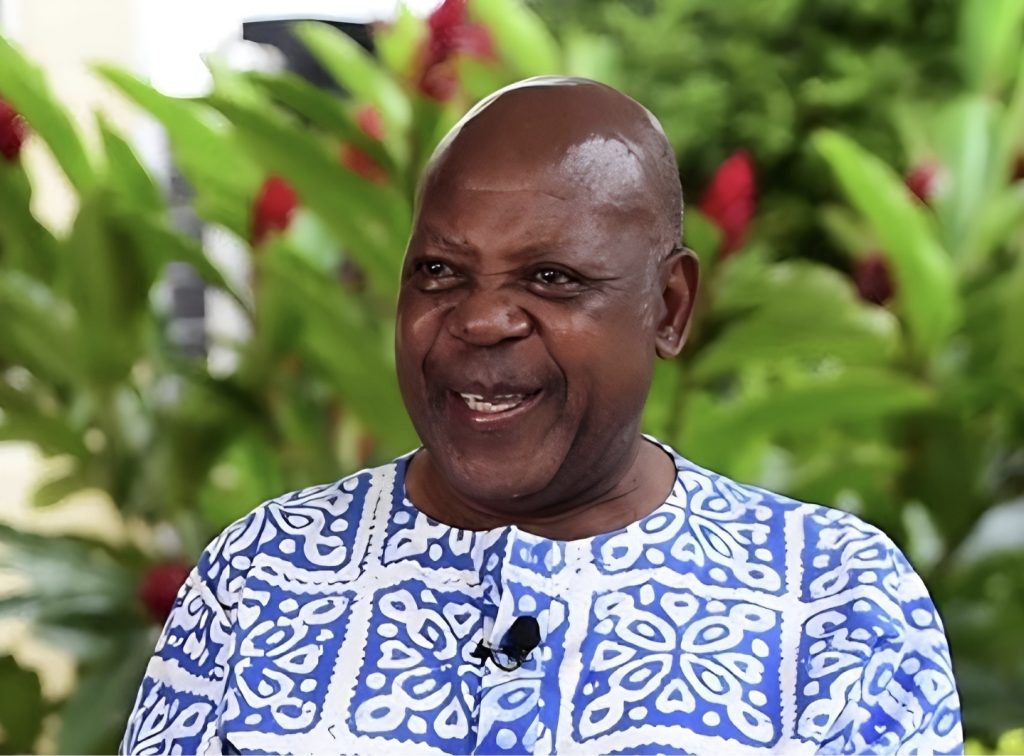
KAMPALA — Long before he travelled through the corridors of UNESCO headquarters in Paris, attended diplomatic meetings in New York, or visited nearly every country on the African continent, Dr. Jones Yosiya Kyazze was a young boy walking dusty roads between Nateete, Rubaga, Makerere and Mengo beside an elderly statesman who refused to ride in cars.
The old man was his grandfather.
A former Finance Minister in the Buganda Kingdom during the reigns of Kabaka Daudi Chwa and Kabaka Edward Muteesa II, Yosiya Kyazze belonged to a generation shaped by monarchy, colonial administration, constitutional negotiations, and the political transformations that preceded Uganda’s independence.
For the young Jones Kyazze, those walks became an education of their own.
In a reflective interview on Desert Island Discs with broadcaster Simon Kasyate on in 2021, Dr. Kyazze recalled how his grandfather frequently removed him from primary school classes in Nateete to accompany him on errands and visits to fellow retired civil servants.
The interruptions became so frequent that he eventually lost an entire year of formal schooling.
At the time, the experience frustrated his father, who wanted him to focus on education. Looking back decades later, however, Dr. Kyazze described those moments differently.
“I learned much, much more from my grandfather than what I would have learned in class,” he said during the interview. “I learned about service. I learned about being humble.”
The memory sits at the center of a life story that stretches across multiple worlds: Buganda traditional governance, post-independence East African academia, international diplomacy, cultural heritage preservation, literature, and global public service.
Over the years, Dr. Kyazze has increasingly emerged not only as a former international civil servant, but also as a chronicler of memory itself — documenting institutions, intellectual figures, genealogy, diplomacy, and cultural history through books, interviews, and public reflections.
From Nateete to the International Stage
Dr. Jones Yosiya Kyazze was born on 04 November 1943 at Mulago Hospital in Kampala.
He grew up in Nateete within a large family compound shared between his father, Oweek. Yake Yekoniya Siki Musoke Kyazze, and his grandfather, Yosiya Kyazze, near Mackay Memorial College in Mmengo.
The household occupied an important position within Buganda’s political and administrative life during the late colonial era.
His grandfather had served as Minister of Finance in the Buganda Kingdom during the reigns of Kabaka Daudi Chwa and Kabaka Edward Muteesa II. He later became known for acting as guardian to Muteesa II during the Kabaka’s studies at Cambridge University in the United Kingdom between 1945 and 1948.
The elder Kyazze also participated in the Namirembe Conference chaired by Professor Keith Hancock, discussions that later contributed to the 1955 Buganda Agreement and the eventual return of Muteesa II from exile.
Dr. Kyazze’s father later became Speaker of the Buganda Lukiiko.
The political environment surrounding his childhood exposed him early to questions of leadership, governance, public service, and tradition.
Yet some of his strongest memories are deeply personal rather than political.
During the Capital FM interview, he recalled how his grandfather insisted on walking long distances across Kampala despite the availability of cars.
“He would walk from Nateete to Rubaga to Mengo to see fellow retired civil servants,” Dr. Kyazze said. “People would stop their cars and ask where they could take him, but he would refuse.”
The young Jones often accompanied him on those journeys.
Looking back, Dr. Kyazze suggested that the experience shaped not only his character but also his understanding of humility, restraint, discipline, and what he described as service.
A Childhood Between Two Worlds
The tensions inside his own household also reflected broader social changes taking place in Uganda at the time.
During the interview, Dr. Kyazze described his mother, Mrs. Jane Namugenyi Namusisi Kyazze, as “a very beautiful girl” and “a very strong-willed lady” with strong business instincts.
She married his father at a young age while his father was significantly older and already active in Buganda politics.
Religious differences later contributed to the couple’s separation after his father converted from Anglicanism to Seventh-day Adventism.
The transition, Dr. Kyazze suggested, proved difficult for his mother.
Yet he also described her as resilient and entrepreneurial, later establishing herself in business and becoming associated with a well-known establishment in Kamwokya known as Yellow Bar.
In the dedication of his memoir, The Making of an International Civil Servant: My Incredible Journey, Dr. Kyazze paid tribute to his mother for loving, consoling, and counselling him during periods when he lived away from home with his stepmother.
The memoir, published in 2020, later became one of his most widely discussed books.
Schools, Kingship and Student Leadership
Dr. Kyazze began his education at a local school in Nateete before transferring to Aggrey Memorial School, an institution founded by African educators who had resigned from King’s College Budo following disagreements with colonial administrators.
The school occupied a location near the Buganda royal establishment and exposed students closely to palace culture and kingdom activities.
During the Capital FM interview, Dr. Kyazze recalled participating as a child in preparations surrounding royal celebrations, including repairing reed fences near the palace during Kabaka birthday events.
“That was the first grounding of kingship-loving in me,” he said.
He later attended Makerere College School before transferring to Old Kampala Senior Secondary School, a move influenced less by academics than by fascination with the school’s extracurricular culture.
He described being attracted by the scouting equipment, sports programs, boxing activities, and the sophistication he observed among students during scouting jamborees.
At Old Kampala, where the majority of students were Asian at the time, he became heavily involved in athletics, scouting, drama, and student leadership.
He eventually served as both Sports Captain and Head Prefect.
The period also exposed him to multicultural Kampala during the years leading toward independence and the early post-colonial era.
Makerere and the Pursuit of French
Following secondary school in the mid-1960s, Dr. Kyazze initially travelled to Tanzania to study law at the University of Dar es Salaam because Makerere University had not yet established a law program.
The experience was short-lived.
He later described discomfort with the academic and social atmosphere under the Ujamaa socialist policies of President Julius Nyerere and withdrew after only a brief stay.
Returning to Uganda, he enrolled at Makerere University, then part of the University of East Africa, where he pursued a Bachelor of Arts degree focusing on History and French.
Initially, he also studied English before deciding to concentrate on French.
Despite not having studied French during secondary school, he excelled in the subject:
- Graduated with distinction in French
- Ranked top of his class
- Earned a scholarship for postgraduate studies in France
The Makerere environment of the late 1960s represented one of East Africa’s major intellectual centers, bringing together students, writers, future politicians, scholars, and civil servants from across the region.
Dr. Kyazze resided in Northcote Hall, later known as Nsibirwa Hall, and became active in drama, athletics, travelling theatre groups, and student government.
Among Baganda students, he held the title “Ssaabaganda,” a role associated with leadership among Baganda students during the University of East Africa era.
France, UNESCO and a Global Career
Following his studies at Makerere, Dr. Kyazze travelled to France, where he obtained a Licence-ès-Lettres from the University of Besançon.
He later pursued additional studies in the United Kingdom:
- University of London — Postgraduate Diploma in Education
- University of Sussex — Doctor of Philosophy (D.Phil.)
His professional journey with UNESCO began shortly afterward through a competitive recruitment and training process.
What was initially expected to become a short international assignment evolved into a career spanning approximately thirty-two and a half years.
He served in multiple international postings including:
- Paris, France
- Dakar, Senegal
- New York, United States
- Various assignments across Africa and beyond
His work focused on education, diplomacy, cultural heritage, and international cooperation.
Speaking during a 2025 interview on , Dr. Kyazze reflected on the scale of his travels across the continent.
“Working for the UN, I was able to visit all 54 countries in Africa, except Equatorial Guinea — my flight was delayed,” he said.
The remark, delivered humorously, nevertheless reflected the breadth of a career that unfolded across multiple regions, political systems, and historical transitions.
During his years at UNESCO, Dr. Kyazze became associated with efforts linked to the inscription of the Kasubi Royal Tombs on UNESCO’s list of World Cultural Heritage sites, recognition that elevated the international profile of one of Buganda’s most historically significant landmarks.
Returning Home and Turning to Writing
After retiring from UNESCO, Dr. Kyazze increasingly shifted his attention toward writing, historical preservation, Rotary activities, and cultural affairs.
Following his return to Uganda, he also served in the Buganda Government between 2005 and 2007 as Minister for Tourism and Wildlife following appointment by Kabaka Ronald Muwenda Mutebi II.
Retirement, he later explained, created opportunities that international service had not allowed.
“My work with the UN didn’t give me time to write,” he said during the NBS interview. “So retirement gave me the opportunity to author books and novels.”
His publications now span memoir, biography, education policy, genealogy, fiction, and cultural history.
Among them:
- The Making of an International Civil Servant: My Incredible Journey (2020)
- Thirty-Six Years Later: A Unique Love Story (2018)
- Education for All: The Ugandan Experience
- Reflections on the Uganda National Commission for UNESCO
- Omutuba Ndogoobukaba N’omukululo Gwagwo (2022)
- Prof. William Senteza Kajubi: The Man and His Legacy (2024)
Speaking about his memoir during the NBS interview, Dr. Kyazze explained his motivation for writing the book.
“Why did I write this book? I thought it would be unfair to keep such an interesting life from the public — either for their enjoyment or to draw lessons from the journey of a young international civil servant.”
The statement reflected a recurring theme throughout his work: the belief that personal experiences, institutional histories, and cultural memory should be documented rather than lost with time.
Family, Rotary and Clan Responsibilities
Beyond writing, Dr. Kyazze remains active in Rotary International and clan leadership structures.
He joined Rotary in 1989 through the Rotary Club of Greater Freetown in Sierra Leone and later served in multiple leadership positions across Uganda and internationally.
He has participated in:
- 18 Rotary District Conferences and Assemblies
- 18 Rotary International Conventions
- 5 Zone Institutes
- 2 Presidential Conferences
He is also recognized as a Paul Harris Fellow, Major Donor, and Benefactor of The Rotary Foundation.
During the Capital FM interview, Dr. Kyazze also described increasing involvement in family and clan affairs during retirement, particularly within the Lugave clan and the Ndogoobukaba lineage.
He explained that responsibilities had expanded further as senior clan leadership figures experienced declining health and delegated day-to-day responsibilities to a smaller group of senior members.
In recent years, Dr. Kyazze’s interviews have increasingly focused not only on diplomacy and history but also on writing itself.
Speaking to aspiring authors during the NBS interview, he offered simple advice:
“The important thing is to start.”
The statement echoed the larger trajectory of his own life.
From a child walking through Kampala beside a retired Buganda statesman to an international civil servant travelling across nearly every African country, and later to an author documenting memory, institutions, genealogy, diplomacy, and education, Dr. Kyazze’s story now exists partly as personal history and partly as an effort to preserve fragments of Uganda’s intellectual and cultural past before they disappear from living memory.