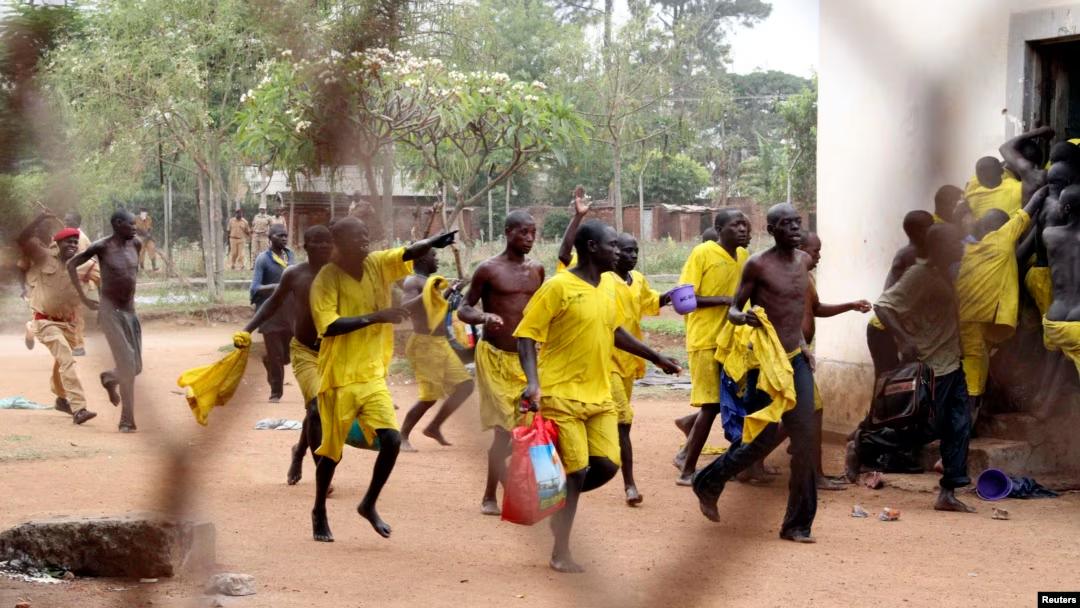
Uganda prisons overcrowding has become a severe humanitarian emergency. In fact, facilities now operate at 353% of their intended capacity. According to the Uganda Prisons Service (UPS), 269 prison units held 79,653 inmates as of December 8, 2025—despite being built for only 22,569 people. As a result, Uganda ranks among the top five countries with the most overcrowded prisons. Consequently, national authorities and human rights groups are urgently calling for reform.
Beyond the numbers, overcrowding causes daily suffering for thousands of detainees. Specifically, 42,458 inmates are convicts, while 36,485 remain on remand—some for years without trial. Additionally, the system holds 710 debtors and 287 children who stay with their imprisoned mothers. Notably, 62% of inmates are between 18 and 30 years old. This clearly shows how heavily the justice system impacts Uganda’s youth.
According to Senior Commissioner of Prisons Frank Baine, the crisis stems from systemic failures. While inmate numbers continue to rise, prison infrastructure has barely expanded. For example, Deputy Commissioner General Samuel Akena stated in August 2025 that the prison population grows by 8% each year. However, new construction remains almost nonexistent. Moreover, arrests linked to political tensions ahead of the 2026 General Election—many involving violence—will likely worsen the situation.
Unsurprisingly, former inmates describe life in these prisons as unbearable. For instance, Norman Tumuhimbise, executive director of Digitalk Online TV, called it “hell on earth.” When new arrivals enter, they get packed into tiny cells. Then, a prisoner-appointed “RP” arranges everyone to maximize space. Because inmates sleep shoulder to shoulder on their sides, no one can turn over without the whole row moving together. As Tumuhimbise explained, “There is no space to turn your body at night.” Clearly, this confinement takes a serious mental and physical toll.
Similarly, Richard Kintu, a former Red Pepper editor, shared harrowing experiences from his 2017 remand at Luzira Prison. He recalled rooms so packed that body heat made everyone sweat. Even the walkways filled with sleeping bodies. If someone needed the toilet at night, they had to raise a hand. Only then would the RP shift inmates to clear a path. Although meals consist of morning porridge and beans with posho at midday, poor conditions strip even these basics of dignity.
Meanwhile, the Uganda Human Rights Commission (UHRC) has repeatedly condemned Uganda prisons overcrowding as a human rights violation. Its 2024 report identified two main causes: excessive pre-trial detention and jail sentences for minor crimes. Between January and August 2025, 24 prisons operated above 600% capacity. To illustrate, Kicheche Prison—designed for eight people—held 80, a 1,000% overload. Likewise, Kapeeka and Kyegegwa Prisons reached 990% and 927% occupancy. In contrast, only 25 of the 269 facilities stayed below 200% capacity.
This extreme crowding severely compromises sanitation, health, and safety. Consequently, disease spreads quickly, and violence becomes more common. At Kitalya Prison, inmates reportedly take sleeping pills just to rest. Given these conditions, the UHRC stressed that Uganda is violating its obligations under the Universal Declaration of Human Rights and the International Covenant on Civil and Political Rights. After all, every person in custody deserves humane treatment.
Fortunately, practical solutions exist—but they require strong political will. For example, activists urge courts to grant more bail to non-violent suspects. They also recommend faster trials to reduce remand times. Furthermore, expanding presidential pardons and parole for low-risk convicts could ease pressure. Between 2020 and 2025, President Museveni pardoned 1,798 inmates. While this helped, it fell far short of what is truly needed.
Therefore, fixing Uganda prisons overcrowding demands a multi-pronged approach. First, reform the justice system to cut unnecessary pre-trial detention. Second, invest in prison infrastructure or expand existing facilities. Third, adopt alternatives to incarceration for petty offenses. Without these changes, prisons will continue to function not as places of rehabilitation but as warehouses of despair. As the 2026 elections draw near, Uganda must act decisively to uphold the dignity and rights of all its people—inside and outside prison walls.
READ: Family of Seven Killed in Road Accident Laid to Rest Amid Grief