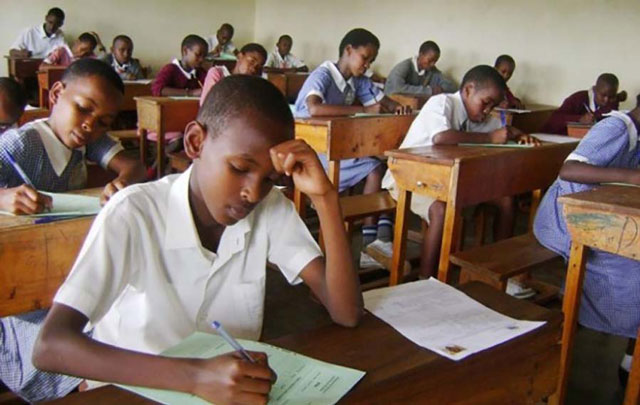
The 2025 education crisis in Uganda began with anxious parents awaiting Primary Leaving Examination (PLE) results—only to face a sharp drop in top scores. Fewer pupils achieved the coveted Aggregate 4, especially in elite Kampala schools. This unexpected decline sparked outrage among parents, who pressured school leaders for answers. The Ministry of Education offered no clear explanation. Analysts, however, suggested the dip followed an artificial rise during the pandemic, when some underprepared P6 pupils sat for PLE.
In Kampala and Wakiso, some parents accused the Uganda National Examinations Board (Uneb) of under-marking their children. A few even threatened legal action. Tensions rose further when Uneb withheld results from certain schools over suspected exam malpractice—a routine but controversial measure that deepened distrust.
The year worsened with back-to-back teacher strikes. On June 6, 2025, over 10,000 humanities teachers under the Uganda Professional Humanities Teachers’ Union (UPHTU) walked out. They demanded equal pay with science teachers. “We won’t return until all teachers with similar qualifications earn the same,” declared the union’s national chairperson. They sought Shs6.5 million for head teachers, Shs4.5 million for deputies, Shs4 million for graduate teachers, and Shs2.2 million for diploma holders.
The strike gained national attention when teachers threatened to boycott continuous assessment submissions to Uneb. President Museveni intervened. He invited union leaders to State House Entebbe and announced key concessions: a 25% salary increase over four years starting in 2026/2027, a PAYE tax cut from 30% to 10% from 2025/2026, Shs20 billion for the teachers’ SACCO, free education for teachers’ children, and housing support. Satisfied, UPHTU called off the strike.
But calm was short-lived. On September 15, 2025, the Uganda National Teachers’ Union (Unatu) launched a nationwide strike. Over 100,000 members demanded a 300% pay rise to match science teachers’ salaries. Public primary schools ground to a halt. The pay gap was stark: a degree-holding arts teacher earned a net Shs841,931 monthly, while a science teacher took home Shs2,858,000. Diploma arts teachers received Shs639,108—less than half of their science peers’ Shs1,616,000.
Educators warned of serious consequences. Dr. David Kabugo of Makerere University said the strike harmed students psychologically. “Learning isn’t just about covering the syllabus,” he noted. “It’s about the teacher’s presence and support.” The disruption peaked during October’s Uganda Certificate of Education (UCE) exams, when many arts teachers refused to supervise. The government stepped in, deploying private school staff to fill the gap. Unatu later suspended industrial action after talks with Speaker Anita Among.
Despite the turmoil, 2025 also brought hope. The government raised the education budget from Shs4.2 trillion (2020–2025) to Shs5.04 trillion for 2025/2026. Finance Minister Matia Kasaija said the increase would fund free education, teacher training, school construction, and digital learning reforms.
Structural changes also took shape. Parliament passed the Technical and Vocational Education and Training (TVET) Bill, 2024. It merged the Uganda Business and Technical Examinations Board (UBTEB) and the Directorate of Industrial Training (DIT) into the new Uganda Vocational and Technical Assessment Board (UVTAB). Similarly, the Uganda Allied Health and Uganda Nurses and Midwifery Examinations Boards became the Uganda Health Professions Assessment Board (UHPAB). These moves aim to streamline oversight and strengthen technical and health education.
Though turbulent, 2025 exposed deep inequities in Uganda’s education system—and sparked long-overdue reforms. The 2025 education crisis in Uganda may yet become a turning point toward fairness, quality, and resilience in learning.