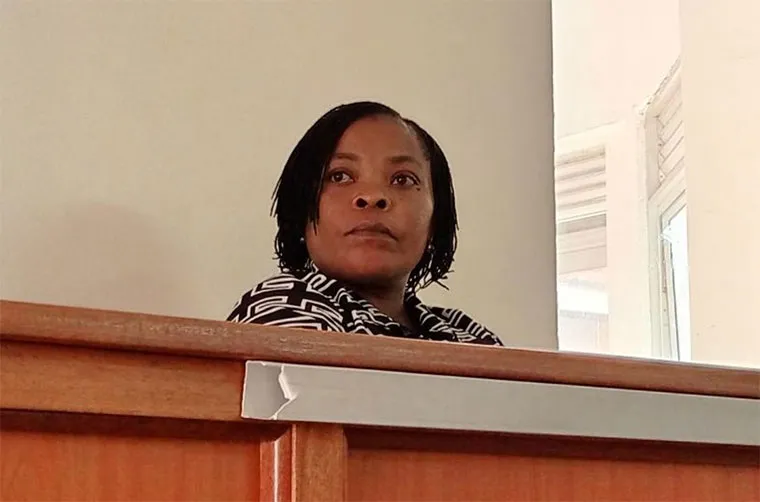
The selective prosecution debate has intensified following the conviction of Agnes Nandutu in Uganda’s high-profile Karamoja iron sheets scandal. While the Anti-Corruption Court relied on evidence to reach its decision, the outcome has triggered widespread concern about fairness, consistency, and political influence in the justice system.
The court found that Nandutu knowingly received and retained 2,000 iron sheets intended for vulnerable communities in Karamoja. These materials formed part of a government programme funded to support disarmament and community empowerment. However, as her case concludes, attention has shifted toward the uneven accountability among those linked to the same scandal.
Selective prosecution and the Nandutu case
Justice Jane Okuo convicted Nandutu of dealing with suspect property under the Anti-Corruption Act. Evidence presented in court showed that she facilitated the collection of the iron sheets and arranged transport through her assistant.
The iron sheets were initially delivered to a private residence in Wakiso before being moved to her home in Seeta, Mukono District. Investigators later recovered 1,617 sheets from her farm, while 383 remained unaccounted for.
As a result, the court concluded that she knowingly retained government property diverted from a public programme. The ruling emphasized that her position required a higher level of responsibility and awareness.
Selective prosecution concerns grow
Despite the conviction, selective prosecution concerns continue to dominate public discussion. The Karamoja iron sheets programme involved multiple officials, yet prosecution has not been uniform.
Some individuals faced charges, while others experienced delays or had cases dropped. This uneven approach raises questions about whether justice is applied consistently.
If the wrongdoing involved several actors, then accountability should reflect that scope. When only a few individuals face consequences, the justice system appears selective rather than impartial.
Mitigation, sentencing, and public reaction
During mitigation, Nandutu made an emotional appeal for leniency. She asked for forgiveness from the people of Karamoja, her constituents, and the appointing authority.
She also cited her health condition, explaining that she suffers from lung complications that sometimes cause her to lose consciousness. In addition, she told the court that she is a single mother of seven and the sole caregiver to her mother, who is over 80 years old.
Furthermore, she highlighted that she returned the iron sheets and compensated for those that were missing. She urged the court to consider these actions as a basis for a non-custodial sentence.
However, the prosecution opposed a lighter penalty. It argued that the iron sheets remained in her possession for several months, suggesting premeditation. It also maintained that recovery occurred only after police intervention.
Ultimately, the court imposed a four-year prison sentence and barred her from holding public office for ten years.
Political influence in selective prosecution
The case has reignited debate about political influence in Uganda’s justice system. Although institutions emphasize independence, outcomes in high-profile cases often appear inconsistent.
Some individuals face swift legal action, while others remain under investigation without clear timelines. This contrast fuels the perception that selective prosecution may be influenced by political considerations.
Moreover, timing plays a key role. Authorities often act decisively under public pressure. Yet, once attention fades, progress in related cases slows.
Why some cases move and others stall
Prosecutors frequently explain that cases progress based on evidence strength. Indeed, strong documentation allows quicker prosecution.
However, this reasoning does not fully address public concerns. If investigations identify multiple actors, focusing only on a few creates an incomplete sense of justice.
Additionally, the lack of updates on other suspects raises further questions. When transparency is limited, public suspicion grows.
Read Also
Masaka Businessman Crash Kills Bosco Senyonjo
Pamela Tumwebaze Death: What Happened
Selective prosecution and public trust
Public trust depends on fairness and consistency. When citizens perceive selective prosecution, confidence in legal institutions declines.
In this case, the iron sheets were intended for vulnerable communities. Therefore, expectations for accountability are high. Any sign of unequal enforcement becomes more controversial.
Furthermore, selective justice creates a troubling precedent. It suggests that consequences may depend on influence rather than conduct.
A system under scrutiny
The conviction of Nandutu represents a major legal outcome. However, it also highlights broader concerns about how justice operates in Uganda.
Citizens continue to question whether the law applies equally to all. The selective prosecution debate reflects a deeper demand for accountability, transparency, and fairness across the system.