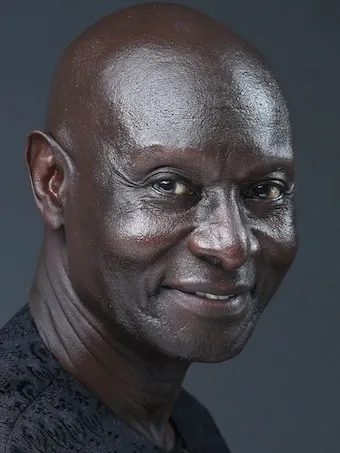
Ugandan veteran diplomat and statesman Olara Otunnu has entered the global contest to become the next Secretary-General of the United Nations, putting Uganda firmly into one of the world’s most closely watched diplomatic races.
The Olara Otunnu UN bid was formally submitted by the Republic of Uganda on July 24, 2026, according to official United Nations records. His entry makes him one of seven candidates seeking to succeed António Guterres when the Portuguese diplomat completes his second five-year term at the end of 2026.
Otunnu brings decades of international diplomatic experience to the contest, including previous service at the highest levels of the United Nations.
Who is Olara Otunnu?
Olara Otunnu, 75, is one of Uganda’s best-known international diplomats.
His career has included service as Uganda’s Permanent Representative to the United Nations, a brief period as Uganda’s foreign minister, and senior positions within the UN system.
One of his most prominent international assignments came when former UN Secretary-General Kofi Annan appointed him Under-Secretary-General and Special Representative of the Secretary-General for Children and Armed Conflict.
Otunnu held that position from 1997 until 2005, putting him at the centre of international efforts to protect children affected by wars and other armed conflicts.
His extensive UN experience is expected to form a major part of Uganda’s argument that he has the diplomatic background needed to lead the organisation.
Uganda formally backs Olara Otunnu UN bid
The Ugandan government formally nominated Otunnu for the Secretary-General position on July 24.
The United Nations subsequently added his name to its official list of candidates for the position.
Uganda’s Permanent Representative to the United Nations, Adonia Ayebare, said Otunnu was in New York engaging with delegations as part of the campaign for the position.
His candidacy therefore marks more than a personal political comeback. It places Uganda in the middle of a major diplomatic contest involving some of the world’s most experienced political and international figures.
Seven candidates seeking UN’s top job
Otunnu joins six other candidates currently competing to succeed Guterres.
The field includes former Chilean President Michelle Bachelet, Costa Rican diplomat Rebeca Grynspan, former Ecuadorian Foreign Minister María Fernanda Espinosa, Guyanese diplomat Carolyn Rodrigues-Birkett, International Atomic Energy Agency chief Rafael Grossi of Argentina, and former Senegalese President Macky Sall.
The diverse field means Otunnu faces formidable competition.
Several candidates come from Latin America and the Caribbean, a region considered particularly influential in this selection cycle because of the UN’s informal tradition of geographic rotation.
There has also been significant diplomatic pressure for the United Nations to appoint a woman as Secretary-General for the first time in its history.
What Olara Otunnu wants to change at the UN
Otunnu has entered the contest at a time when the United Nations faces major questions about its effectiveness in dealing with wars, climate change, emerging technologies and divisions among global powers.
His platform includes proposals for institutional reform of the United Nations, stronger approaches to resolving conflicts, action on climate change that takes economic development into account, and greater international oversight of artificial intelligence.
The focus on artificial intelligence could become particularly significant as governments debate how emerging AI technologies should be governed internationally.
Otunnu has advocated the creation of an international oversight structure for AI as part of a broader effort to make the UN more responsive to emerging global challenges.
How the next UN Secretary-General will be chosen
Winning the position is far more complicated than receiving the support of a simple majority of UN member states.
The United Nations Security Council plays the decisive initial role.
Its 15 members conduct consultations and informal polls before eventually recommending one candidate to the UN General Assembly.
Crucially, a successful candidate must avoid a veto from any of the Security Council’s five permanent members: China, France, Russia, the United Kingdom and the United States.
That requirement means diplomatic acceptability across competing geopolitical blocs can be just as important as a candidate’s experience.
After the Security Council agrees on a candidate, it sends its recommendation to the General Assembly for appointment.
The successful candidate is expected to take office on January 1, 2027, after Guterres completes his second term.
Otunnu could emerge as a compromise candidate
Otunnu entered the contest later than some of his rivals, creating a challenge as several candidates had already spent months building diplomatic support.
However, his long experience inside the United Nations could also work in his favour.
AP reported that his background and standing as a veteran international diplomat could position him as a possible compromise candidate if divisions among Security Council members prevent one of the early frontrunners from securing sufficient support.
Such scenarios have mattered in previous UN leadership contests because the eventual winner needs to be acceptable to countries with sharply different geopolitical interests.
For Uganda, therefore, the campaign may depend heavily on whether Otunnu can build support beyond Africa while avoiding opposition from any of the five permanent Security Council members.
Africa seeks influence in UN leadership race
Otunnu is not the only African candidate.
Former Senegalese President Macky Sall is also competing for the position, giving Africa more than one contender in the current field.
Africa last produced a UN Secretary-General when Ghana’s Kofi Annan led the organisation from 1997 to 2006.
Otunnu’s candidacy consequently carries wider symbolic significance for Uganda and the continent, even though geographic rotation could favour a candidate from Latin America and the Caribbean during the current selection process.
A major diplomatic moment for Uganda
Whatever the eventual outcome, the Olara Otunnu UN bid gives Uganda a significant presence in a global leadership contest that will help determine the direction of the United Nations for years to come.
Otunnu enters the race with decades of diplomatic experience, previous service as a UN Under-Secretary-General and firsthand knowledge of the organisation he now hopes to lead.
The bigger challenge will be turning that experience into diplomatic support.
With Security Council consultations continuing and further informal polling expected, the race remains open.
For Uganda, the prospect of one of its most internationally recognised diplomats becoming Secretary-General would represent one of the country’s most significant achievements on the global diplomatic stage.