
A recommendation from a colleague, neighbour or community leader can introduce you to a SACCO, but it should not replace your own checks.
Before contributing money, establish who operates the institution, whether its registration and licensing are appropriate, and what rights you receive as a member.
To check a SACCO in Uganda, verify its exact registered name, confirm its current financial-services licensing status with the relevant authority, review its financial statements and read its savings, shares, lending and withdrawal rules. Verify deposit-protection claims separately.
A registration certificate, attractive office or history of paying dividends does not independently prove that your money is safe.
Your SACCO Checklist at a Glance
| Area | What to verify |
|---|---|
| Identity | Exact registered name, number and operating address |
| Registration | Status with the cooperative registrar |
| Licensing | Current status with the applicable financial regulator |
| Financial condition | Audited accounts, loan performance and liquidity |
| Membership | Eligibility, fees, shares and responsibilities |
| Savings | Interest, withdrawal conditions and charges |
| Loans | Total cost, security and guarantor obligations |
| Governance | Elections, meetings, oversight and conflicts of interest |
| Payments | Official collection channels and receipts |
| Protection | Whether eligible deposits have confirmed coverage |
Use the answers to compare SACCOs rather than joining the first one that promises a loan.
1. Obtain the SACCO’s Exact Identity
Ask for:
- Full registered name.
- Registration number.
- Financial-services licence details.
- Head-office address.
- Names of authorised management contacts.
- Official telephone and payment channels.
Compare these details across the certificate, application form, receipts and bank-account information.
Similar names can cause confusion. An organisation using another SACCO’s name or documents should not be treated as the same institution.
If there has been a name change, merger or relocation, ask for supporting records.
2. Verify Cooperative Registration Independently
SACCO registration falls within Uganda’s cooperative registration framework.
Ask the Registrar of Cooperative Societies, through the Ministry of Trade, Industry and Cooperatives, how to confirm the institution’s current registration details. Use the ministry’s official channels to reach the appropriate registry service.
Check:
- Whether the society exists in the records.
- Whether its name and number match.
- Whether any registration condition needs clarification.
- Whether the information supplied is current.
A photograph of a certificate is not independent verification.
If an online search produces no clear result, ask the registrar for assistance before concluding that the SACCO is either legitimate or fraudulent.
3. Check Financial-Services Licensing Separately
Cooperative registration and permission to provide financial services are different checks.
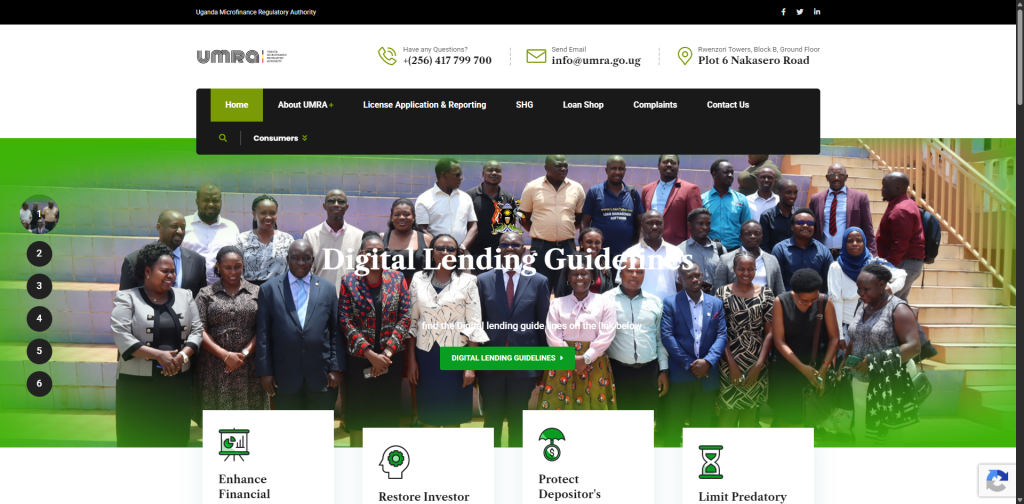
UMRA licenses and supervises SACCOs within its mandate. Large qualifying SACCOs fall under Bank of Uganda’s separate licensing framework.
Ask the SACCO which authority supervises its financial operations, then confirm directly with that authority.
Avoid relying on an old list
An official list may be genuine but several years old. Check its publication date.
UMRA’s website, for example, contains historical licensing publications. Appearing on an old list does not independently establish current status.
Ask whether the licence is valid, whether renewal is complete and whether there are conditions relevant to the service you intend to use.
UMRA publishes 0800 111 449 and +256 417 799 700 for assistance.
What about large SACCOs?
Bank of Uganda’s published framework identifies qualifying large SACCOs using voluntary savings above UGX 1.5 billion and institutional capital above UGX 500 million.
Licensing arrangements can involve transitional requirements. Ask Bank of Uganda to confirm the particular institution’s position rather than interpreting a pending application yourself.
4. Visit the Office and Check Payment Channels
Visit the stated premises where practical.
Observe whether:
- The name matches the documents.
- Staff can explain products clearly.
- Charges and contact details are available.
- Receipts identify the institution.
- Complaints have an established route.
An office visit is useful but does not establish financial soundness.
Before paying, confirm the authorised collection method. If a personal mobile money number is used, request a clear explanation and written confirmation from the institution.
Do not assume that a staff member’s personal number is an approved savings account.
5. Read the Membership Rules Before Signing
Request the bylaws and applicable membership terms.
Establish:
- Who qualifies to join.
- Joining and recurring fees.
- Required share purchases.
- Compulsory savings.
- Voting rights.
- Meeting obligations.
- Disciplinary procedures.
- Exit conditions.
Ask for explanations in a language you understand.
Do not sign blank forms or accept that the rules will be supplied after payment. Keep copies of your completed application and membership agreement.
6. Separate Shares, Savings and Fees
Ask how every payment will be recorded.
| Contribution | What to clarify |
|---|---|
| Joining fee | Refundability and purpose |
| Shares | Ownership rights and transfer or exit conditions |
| Voluntary savings | Access, interest and minimum balance |
| Compulsory savings | Restrictions and release conditions |
| Loan deductions | Whether they are fees, insurance or retained savings |
If you contribute UGX 300,000, that does not necessarily mean you can withdraw UGX 300,000 later.
Part may represent shares or non-refundable charges. Request separate balances and written conditions.
7. Examine Withdrawal Rules
Ask the SACCO to explain a withdrawal from start to finish.
Questions include:
- Is advance notice required?
- Are withdrawals limited by amount or frequency?
- Is there a fee?
- What identification is needed?
- Can funds be transferred electronically?
- Can an outstanding loan restrict access?
- Can a guarantee affect available savings?
Ask existing members about actual experiences, including how problems were handled.
One delayed withdrawal does not establish insolvency. Repeated unexplained delays, changing instructions or demands for additional deposits deserve investigation.
Do not commit emergency funds to an arrangement whose access conditions you cannot meet.
Read Also:ABC Bank Uganda Limited
8. Request Recent Audited Financial Statements
Ask for the latest audited accounts and the period they cover.
Look for:
- The auditor’s report.
- Member savings liabilities.
- Share capital and reserves.
- Outstanding loans.
- Overdue or impaired loans.
- Provisions for possible losses.
- Cash and accessible funds.
- Operating income and expenses.
Read the auditor’s opinion and any explanation of qualifications or concerns.
An audit is important evidence, but it is not a guarantee against future loss. Old audited accounts also do not establish today’s position.
If the amount you intend to deposit is significant, consider asking an independent accountant to help interpret the records.
9. Ask About Loan Quality and Liquidity
A SACCO can report income while still experiencing pressure on cash.
Ask management:
- How much lending is overdue?
- How are expected loan losses recognised?
- How does the institution meet withdrawals?
- Are loans concentrated among a few borrowers?
- What external borrowing does it have?
These are practical questions about repayment risk and access to cash, not a request for confidential details about individual members.
A large loan book is not automatically a sign of success if repayments are weak.
Persistent borrowing simply to meet ordinary withdrawals requires careful explanation.
10. Check Governance and Member Oversight
Ask when the last annual general meeting took place and how members were notified.
Review:
- Board-election procedures.
- Leadership terms.
- Oversight arrangements.
- Approval of major decisions.
- Access to annual reports.
- Handling of conflicts of interest.
Ask how lending to directors, staff or related parties is controlled.
A SACCO is member-owned, but effective oversight requires more than describing everyone as an owner.
Be cautious where one person controls collections, lending decisions, records and complaints without meaningful checks.
11. Compare Loan Costs Before Joining for Credit
If access to a loan is your main reason for joining, obtain the loan policy first.
Confirm:
- Waiting period.
- Savings history required.
- Assessment criteria.
- Security and guarantors.
- Interest method.
- Processing charges.
- Late-payment consequences.
- Net amount disbursed.
- Total repayment.
A promise to lend “three times your savings” may still depend on affordability and other conditions.
Ask for a repayment schedule. Compare flat-rate and reducing-balance offers carefully rather than choosing the lowest-looking percentage.
12. Read Guarantor Obligations
A guarantee can put your own finances at risk.
Before signing for another member, establish:
- Maximum liability.
- Whether interest and charges are included.
- When recovery can begin.
- Whether your savings can be restricted.
- How the guarantee ends.
- What happens if the loan is extended or restructured.
Keep a copy.
Do not assume leaving the SACCO automatically cancels an existing guarantee.
13. Verify Deposit-Protection Claims
Do not assume all SACCO deposits are insured.
Bank of Uganda reports that licensed SACCOs have been onboarded to the Deposit Protection Fund, and the DPF publishes a SACCO listing. This makes institution-specific verification especially important.
Ask the DPF to confirm:
- Whether the exact institution participates.
- Which deposits qualify.
- Whether your proposed balance is eligible.
- The applicable limit.
- How multiple accounts are treated.
The published protection limit for eligible deposits is UGX 10 million per depositor per contributing institution, subject to the rules.
Do not assume share capital is protected simply because eligible savings are covered. A licensing document or government association is not a guarantee of every contribution.
14. Understand How You Can Leave
Before joining, ask for the exit procedure.
Check:
- Notice period.
- Outstanding fees.
- Loan repayment requirements.
- Treatment of guarantees.
- Share-transfer arrangements.
- Savings repayment conditions.
- Required forms.
Get written clarification of anything that could prevent immediate access to your money.
Joining is easier to assess when you also understand how the relationship ends.
Warning Signs That Deserve a Pause
Be cautious about:
- Guaranteed unusually high dividends.
- Rewards mainly dependent on recruitment.
- Refusal to permit independent verification.
- Unexplained payment accounts.
- Missing receipts.
- Contradictory member statements.
- Pressure to pay immediately.
- Withdrawal promises that keep changing.
- Claims that political connections eliminate financial risk.
Investigate the evidence rather than relying on rumours or promotional testimonials.
A Message You Can Send Before Joining
I am considering membership. Please provide your registration and current licensing details, membership rules, fee schedule, savings and withdrawal terms, loan policy, latest audited financial statements and complaints procedure.
Please also explain how shares are treated when membership ends and provide any deposit-protection information for independent verification.
A clear, documented response helps you assess transparency.
Frequently Asked Questions
Is a registration certificate enough?
No. Confirm registration, applicable financial licensing and the institution’s operational conditions separately.
Does licensing guarantee my money is safe?
No. Licensing is an important check, but financial condition, governance and product terms still matter.
Should I join because my employer recommends it?
Use the recommendation as a starting point. Perform the same checks and understand any payroll deductions.
Can I test a SACCO with a small deposit?
A smaller commitment may limit initial exposure, but one successful withdrawal does not prove long-term soundness. Complete the checks first.
What if management refuses to provide information?
Ask why and seek clarification from the relevant authority. You can postpone joining while important questions remain unanswered.
Where should I complain about suspected fraud?
Preserve records, notify the institution where appropriate and contact its regulator. Report suspected criminal conduct to police.
read Also: Diamond Trust Bank Uganda Limited