

A savings group brings people together to contribute money towards agreed goals. Depending on its model, members may receive contributions in rotation, borrow from a common fund or share accumulated savings at the end of a cycle.
A well-run group can encourage saving and provide useful financial support. However, trust alone is not enough. Members need clear rules, accurate records and safeguards that prevent one person from controlling everything.
To start a savings group in Uganda, agree on its purpose, choose a suitable savings model, select members, write a constitution and establish transparent money-handling procedures. Consult your local Community Development Office about registration before beginning operations.
This guide focuses on member-based savings groups. Starting a SACCO or collecting deposits from the public involves different requirements.
1. Agree on the Group’s Purpose
Begin with a discussion about what members want to achieve.
Possible objectives include:
- Building household savings.
- Preparing for school fees.
- Supporting small businesses.
- Financing agricultural activities.
- Meeting emergencies.
- Saving towards a shared purchase.
Avoid combining too many objectives immediately.
For example, a group collecting emergency contributions needs different rules from one providing business loans or distributing a rotating payout.
Write a short purpose statement that members understand and accept.
2. Choose the Savings Model
Different models create different responsibilities.
| Model | How it generally works | Main issue to address |
|---|---|---|
| Rotating savings group | Contributions are paid to members in an agreed order | Members continuing to contribute after receiving their payout |
| Accumulating savings and lending group | Savings build a fund from which members may borrow | Loan assessment, repayment and record-keeping |
| Goal-based savings group | Members save towards specified individual or collective goals | Ownership and withdrawal conditions |
| Welfare fund | Contributions support defined emergencies or events | Eligibility, limits and approval |
A Village Savings and Loan Association, or VSLA, commonly uses an accumulating savings-and-lending model with an agreed operating cycle.
Do not assume every model should use identical rules.
Keep welfare money separate
If members want an emergency fund, give it its own records and conditions. Do not mix welfare contributions with loan capital without a clear agreement.
3. Choose Members Who Can Participate Reliably
Invite people who understand the purpose, can meet realistic commitments and accept scrutiny.
Consider whether members:
- Can attend meetings.
- Understand the contribution requirements.
- Are willing to follow written rules.
- Accept transparent financial reporting.
- Can raise concerns without intimidation.
Avoid choosing members solely because they promise large contributions.
The group should be small enough to manage meetings and verify transactions, while meeting any applicable registration requirements. Ask the Community Development Office which requirements apply to your chosen arrangement.
4. Set Affordable Contributions
Choose an amount members can sustain during difficult months, not only when business is good.
Options include:
- A fixed weekly contribution.
- A fixed monthly contribution.
- A share-based system allowing contributions within agreed limits.
In a VSLA, “shares” may describe units of savings recorded during a cycle. Do not confuse these automatically with permanent share capital in a registered SACCO.
Illustrative contribution plan
Suppose 20 members each save UGX 5,000 weekly.
| Item | Amount |
|---|---|
| Weekly contribution per member | UGX 5,000 |
| Number of members | 20 |
| Expected weekly savings | UGX 100,000 |
| Expected savings over 40 meetings | UGX 4,000,000 |
This assumes everyone contributes as planned. It excludes loans, expenses, losses, welfare money and any earnings.
Use realistic projections rather than promising a guaranteed share-out.
5. Write and Approve a Constitution
The constitution should explain how the group operates.
Include:
- Name and purpose.
- Membership eligibility.
- Joining and exit procedures.
- Contribution rules.
- Meeting arrangements.
- Leadership and elections.
- Money custody.
- Savings access.
- Lending rules.
- Welfare arrangements.
- Complaints and disputes.
- Share-out or payout procedures.
- Dissolution.
Read the rules aloud and discuss examples before members sign.
Make the content accessible in a language everyone understands. A document nobody understands provides little practical protection.
Record how amendments will be approved. Leaders should not change contribution or repayment conditions privately.
6. Consult the Community Development Office About Registration
Uganda’s self-help-group framework provides for registration through the District Community Development Office or its equivalent in cities and municipalities.
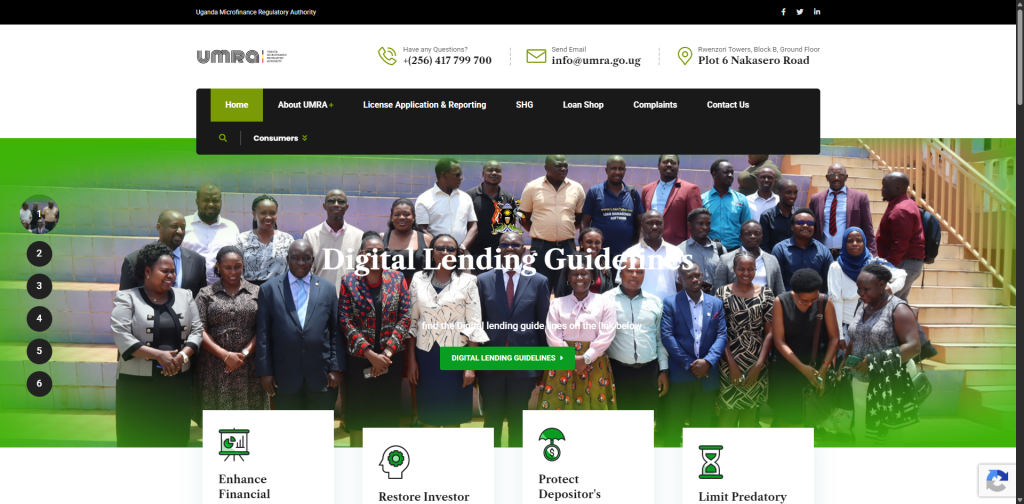
UMRA’s operational guidelines identify supporting documents including:
- A signed constitution or bylaws.
- A registration resolution signed by at least two-thirds of members.
- An LC1 recommendation.
- A previous share-out report, where applicable.
- Other required information.
Ask the responsible office for the current form, official fee, certificate validity and reporting obligations.
A new group should not invent a previous operating history. Explain that it is newly formed.
Obtain receipts for official payments. Registration does not automatically grant permission to operate a SACCO or accept public deposits.
7. Elect Leaders and Separate Responsibilities
Members should choose leaders through an agreed, transparent process.
Useful responsibilities include:
| Role | Main responsibility |
|---|---|
| Chairperson | Conducts meetings and ensures decisions follow the rules |
| Secretary or record-keeper | Records membership, minutes and transactions |
| Treasurer | Oversees agreed custody and financial procedures |
| Money counters | Independently count and verify cash |
| Oversight role | Reviews records and raises discrepancies |
The exact structure should match the applicable guidance and constitution.
Avoid allowing one person to collect money, approve loans, keep the only records and authorise withdrawals alone.
Agree what happens when a leader is absent, resigns or is suspected of misconduct.
8. Choose a Safe Way to Hold Funds
Consider security, access, cost and available controls.
Group bank account
Ask the bank about:
- Group documentation.
- Account name.
- Signatories.
- Approval controls.
- Charges.
- Statements.
- Changes when leaders leave.
Where possible, use an account recognising the group rather than placing all funds in one member’s personal account.
Suitable digital arrangement
Check whether the service supports group ownership, transaction visibility and appropriate authorisation.
Do not share a personal mobile money PIN among members. Sharing credentials makes accountability and security harder.
Cash custody
If cash must be held, establish documented limits and shared custody. A multi-lock cash box with separately held keys can reduce unilateral access, but it does not eliminate theft, fire or other risks.
Keep balances and storage locations private outside the group.
9. Record Every Transaction
Use a central ledger and an individual record for each member.
Record:
- Date.
- Member identifier.
- Savings contribution.
- Welfare contribution.
- Loan issued.
- Principal repaid.
- Interest or other agreed charge.
- Withdrawal.
- Running balance.
- Transaction reference.
Keep minutes of approvals and important decisions.
Reconcile at every meeting
Compare the recorded closing balance with actual cash and verified account balances.
Remember that outstanding loans are not cash available for immediate withdrawal or distribution.
Investigate discrepancies immediately. Do not carry an unexplained shortage forward as though the accounts balance.
Digital records can help, but keep backups and ensure members can inspect understandable reports.
10. Establish Lending Rules Before Issuing Loans
If the group will lend, decide:
- Who qualifies.
- When applications are considered.
- Maximum loan amount.
- Repayment term.
- Interest calculation.
- Security or guarantees.
- Late-payment handling.
- Approval of leaders’ applications.
- Treatment of hardship.
- Recovery and complaints procedures.
Assess repayment ability rather than relying only on membership or friendship.
Do not lend the entire fund without considering withdrawals, emergencies and operating needs.
Give borrowers a written agreement showing the amount received, charges, instalments and total repayment. Avoid blank agreements and humiliating collection practices.
11. Explain Loan Costs Clearly
A rate described as “small” may still be costly when applied frequently.
Clarify whether interest is:
- Flat or reducing-balance.
- Monthly or annual.
- Charged upfront or over time.
- Accompanied by fees.
For example, an illustrative flat charge of 2% monthly on UGX 100,000 equals UGX 2,000 per month. Over three months, that is UGX 6,000 before other charges.
This example is not a recommended rate.
Choose lawful, transparent terms and seek guidance where needed.
Read Also: Exim Bank Uganda: Services, Branches, and Ownership
12. Plan for Missed Contributions and Membership Changes
Agree in advance what happens if someone:
- Cannot contribute.
- Moves away.
- Leaves voluntarily.
- Dies.
- Defaults on a loan.
- Disputes a balance.
Distinguish temporary hardship from deliberate misconduct.
For a rotating group, address the risk of someone stopping contributions after receiving a payout. Members should understand the full cycle commitment before joining.
Keep next-of-kin information securely, but do not assume naming someone automatically determines legal entitlement after a death. Seek appropriate guidance when needed.
13. Plan the Share-Out Before the Cycle Starts
For an accumulating model, specify the cycle and distribution method.
Before distributing funds:
- Reconcile contributions.
- Establish the position of outstanding loans.
- Record expenses and losses.
- Separate welfare money.
- Calculate each member’s entitlement.
- Have the figures independently checked.
- Obtain acknowledgement of payment.
Do not count unpaid interest as money already collected.
Illustrative calculation
If a group has UGX 4,400,000 available for distribution and 800 eligible savings units, each unit has a share-out value of UGX 5,500.
A member holding 40 units would receive UGX 220,000 under that agreed method.
This assumes the amount is genuinely available, liabilities have been addressed and the constitution permits the calculation. Losses can reduce distributions.
14. Keep External Funding Separate
A grant or outside loan can change the group’s obligations.
Before accepting it, establish:
- Whether it must be repaid.
- Who is responsible.
- Permitted uses.
- Reporting requirements.
- Whether individual members provide guarantees.
- What happens if the group dissolves.
Record outside funding separately from members’ savings.
Do not promise members free government money simply because the group has registered.
15. Review Performance and Resolve Problems Early
At regular intervals, review:
- Contributions against plan.
- Overdue loans.
- Available cash.
- Expenses.
- Member complaints.
- Record accuracy.
- Leadership performance.
Use the constitution’s dispute procedure and involve an impartial person where appropriate.
Contact the Community Development Office or UMRA for guidance on compliance questions. Report suspected theft or fraud to police and preserve the records.
Frequently Asked Questions
Is a savings group the same as a SACCO?
No. They operate under different structures and requirements. Growing membership does not automatically convert a group into a SACCO.
Can we start with a small contribution?
Yes, provided the arrangement meets applicable requirements. Affordability and consistency are more useful than an unrealistic target.
Must the group give loans?
Choose the model first and confirm its applicable framework. A rotating group and an accumulating savings-and-lending group have different arrangements.
Can the chairperson keep all the money?
Avoid giving one person sole control. Use documented custody, approvals and independent reconciliation.
Are returns guaranteed?
No. Loan defaults, expenses, theft and other losses can affect the amount available for distribution.
Can registration help us obtain funding?
It may be relevant to programme eligibility, but registration does not guarantee a grant or loan.
Read Also: Equity Bank Uganda Limited: Services, Assets, and Growth