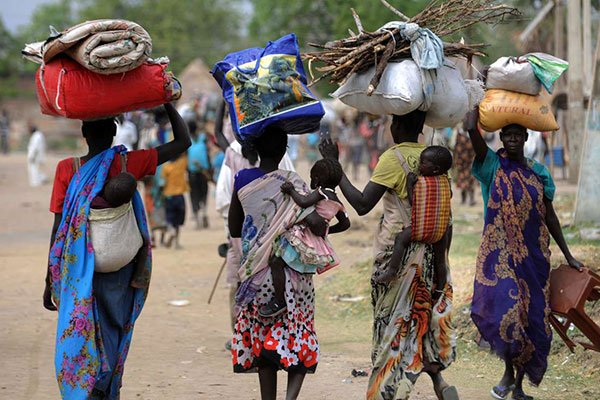
In summary: Countries put travel bans on southern African nations after the Omicron variant was first found there.
A WHO official said “putting in place travel bans that target Africa attacks global solidarity.”
South Africa said it feels punished, instead of applauded for finding and reporting the variant.
Johannesburg | The World Health Organization criticized countries for putting travel bans on southern Africa over the Omicron variant of the coronavirus, saying such an action “attacks global solidarity.”
Dr. Matshidiso Moeti, WHO Regional Director for Africa, said in a Sunday statement: “With the Omicron variant now detected in several regions of the world, putting in place travel bans that target Africa attacks global solidarity. COVID-19 constantly exploits our divisions.
“We will only get the better of the virus if we work together for solutions.”
The WHO labeled Omicron a coronavirus “variant of concern” on Friday. Scientists are concerned over its high number of mutations, but do not yet know what exact risks it poses to both vaccinated and unvaccinated people.
The variant was first detected in South Africa and Botswana, and a small number have now been spotted in other countries in Asia, North America, and Europe.
Many countries have put travel bans in place from countries in southern Africa.
South Africa said on Saturday that it felt it was being punished for finding the strain and warning the world, rather than praised.
“Excellent science should be applauded and not punished,” South Africa’s foreign ministry said on Saturday, the BBC reported.
“This latest round of travel bans is akin to punishing South Africa for its advanced genomic sequencing and the ability to detect new variants quicker.”
Thierno Balde, the incident manager of the WHO’s regional office in Africa’s COVID-19 emergency response, said travel bans “will just discourage different countries for sharing information which might be very important for global public health,” The New York Times reported.
Would you like to get published on this Website? You can now email Uganda Times: an Opinion, any breaking news, Exposes, story ideas, human interest articles or interesting videos on: [email protected]. Videos and pictures can be sent to +3197005035050 on WhatsApp
As the festive season kicks in, the police in Kampala have warned event organisers against staging parties during this period.
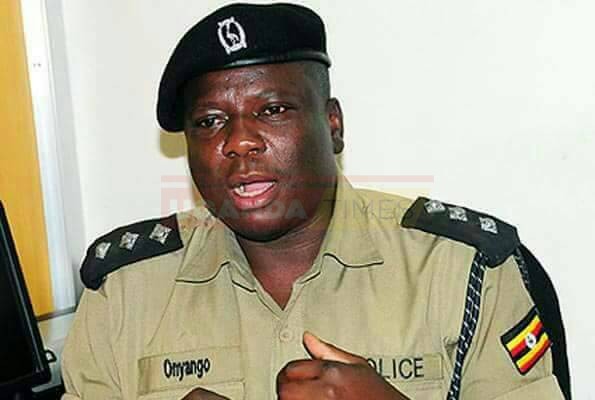
According to the Kampala Metropolitan Police spokesperson, Patrick Onyango, tough action shall be taken against both organisers and revellers who will be arrested taking part in any music show.
“We have read, listened and seen several advertisements both online and traditional media advertising parties in different places like hotels, beaches and other open arenas. Please don’t organise them,” said Onyango in a statement released on Thursday.
He said the ministry of Health guidelines and SOPs on Covid-19 still stand.
“The Public Health (Control of covid-19) rules, 2020, that was put in place to fight the spread of Coronavirus is still in operation.We want to warn the organisers of these parties to desist from breaking the law and stop advertising for the events,”he noted.
Onyango appealed to members of the public to report any party or event that breaches the Covid-19 regulations.
“We also warn any person that will attend such events that they will be arrested for breaching the law,”he said.
Would you like to get published on this Website? You can now email The Uganda Times: An Opinion any breaking news, Exposes, story ideas, human interest articles or interesting videos on: [email protected]. Videos and pictures can be sent to +256 750 501543 on WhatsApp
Government has resolved to among others, impose night curfew, ban private cars and ensure total lockdown as soon as immediately, for two weeks.
In a meeting held Sunday night, experts advised that restricting private cars to three occupants is equally risky.
To this, a ban on private cars and ensuring total lockdown was agreed upon.
“In a tough fight, some people have to be sacrificed and tough decisions made on time. We cannot save everybody,” Health Minister, Ruth Aceng is quoted to have said.
In our briefing, on security personnel and health workers will escape the lockdown.
President Yoweri Museveni is expected to announce these new measures in his address at 8pm tonight.
Francis Ocutu
Do you have a hot story or scandal you would like us to publish, please reach us through [email protected]
Arua, Uganda | THE UGANDA TIMES | South Sudanese refugees continue entering Uganda despite the closure of the country`s borders. President, Yoweri Museveni announced the closure of Uganda’s borders last week to contain the spread of the Corona virus alias COVID19.
The State Minister for Refugees and Disaster Preparedness, Musa Ecweru also announced last week that they had stopped receiving new refugees because of the COVID19 threat. Uganda has since registered 33 confirmed COVID cases.
However, Titus Jogo, the Adjumani Refugee Desk Officer told URN over the weekend that they receive between 30-34 South Sudanese nationals on daily basis.
He explained that the refugees enter Uganda through the porous border, which stretches from Moyo to Lamwo district.
He says that most of the refugees come to pick food and money distributed by humanitarian agencies and cross back into South Sudan.
Jogo however says they after holding a series of meetings with security, they have resolved to repatriate all refugees entering Uganda through porous borders.
Adjumani District Health Officer, George Bhoka says the continuous entry of South Sudanese refugees into Uganda compromises the health of residents and refugees in the district.
Nancy Aol, a resident of Adjumani town, says the continued entry of South Sudanese makes it difficult to fight the corona pandemic since they mingle freely with people in the district.
Denis Idro, another resident of Adjumani town observes that most of the new entrants neither speak English nor Ma`di, which makes it difficult for residents to guide them on hand washing.
URN
Do you have a hot story or scandal you would like us to publish, please reach us through [email protected]
The countries that have reported no cases so far come mainly from two continents-Africa and Asia. In Africa, the unaffected countries include; South Sudan, Burundi, Botswana, Western Sahara, Sierre Leone, Guinea Bissau, Lesotho, Comoros, Malawi and Sao Tome ne Principe.
Twenty-two countries in the world have not yet reported any case of COVID-19, even as the rest of the world is battling to contain the virus.
The countries that have reported no cases so far come mainly from two continents-Africa and Asia. In Africa, the unaffected countries include; South Sudan, Burundi, Botswana, Western Sahara, Sierre Leone, Guinea Bissau, Lesotho, Comoros, Malawi and Sao Tome ne Principe.
In Aisa; North Korea and other Middle East countries like Turkmenistan, Tajikistan and Yemen have not yet declared any confirmed cases. The other countries with no cases are located in the South Pacific waters; Marshall Islands, Cook Islands, Micronesia, Nauru, Palau, Samoa and Solomon Islands.
The disease was first reported last year in Wuhan city of China. Shortly after the outbreak was declared, cases of the disease were reported in South Korea, Malaysia and Iran.
In January 2020, cases of the disease were being confirmed in North America. The United States and Canada were the first countries to declare cases on the continent. As of today, according to World Health Organization, all countries in North America have confirmed cases with the United States having the highest number of confirmed cases globally at 104,837.
Europe confirmed its first cases in January, a few weeks after the outbreak was declared in China. France, Greece, Germany and Italy were some of the first countries to confirm cases. Just like North America, all countries in Europe have registered cases.
Through January 2020 and part of February, Africa was untouched by COVID 19. However, in mid-February, 2020, the first case was confirmed in Egypt. Shortly after cases were reported in Algeria, Morocco and South Africa. Today, over 2,000 cases have been confirmed, the majority of which are from South Africa.
While the number of cases in the world are on the rise and now standing at over 600,000 cases, it remains unclear how some countries without cases have managed to keep the disease out.
Countries like South Sudan, Burundi, Lesotho that are surrounded by cases have closed schools, stopped public gatherings and have banned all outbound and inbound flights. In addition to this, screening of travellers and mandatory quarantine measures have been set up in case travellers who entered the country present with symptoms. North Korea and other unaffected countries in Asia have also put up similar preventive measures.
While some of the measures that have been put up by these countries look extreme especially since they have no cases confirmed, the World Health Organization has praised them saying that it is better to be safe than sorry.
Dr Matshidiso Moeti, the WHO director Africa says that it is better for countries to take such precautions even when they do not have any reported cases.
“We encourage strong measures to contain the disease. The earlier these measures are put in place before cases are registered the better to stop transmissions from taking place. It is a wise thing to do to put these measures in place earlier rather than later,” Dr Moeti said.
So far, the number of people who have recovered from the disease is higher than those who have succumbed to it. As of March 28, 2020, 131,826 had recovered while 27,862 have succumbed to the disease.
Pamela Mawanda, URN
Do you have a hot story or scandal you would like us to publish, please reach us through [email protected]
Death toll from coronavirus outbreak in Italy increases 13.5 percent as no sign of let up in killer contagion.
The death toll from the coronavirus pandemic continued its relentless rise in Europe on Sunday with Italy announcing 651 dead in one day, bringing its total to 5,476.
It was an increase of 13.5 percent but down from Saturday’s figure when 793 people died.
The Canadian death toll from the coronavirus outbreak jumped almost 50 percent in less than a day, and the mayor of New York City – the US epicentre of the contagion – called the situation the greatest crisis since the Great Depression and warned hospitals would likely be overwhelmed in 10 days.
Globally, more than 13,000 people have now died from COVID-19. An estimated 92,000 of the 304,500 people who contracted the disease globally have recovered.
Here are the latest updates:
Sunday, March 22
20:05 GMT – Syria confirms first coronavirus case: minister of health
Syria said it had confirmed its first case of coronavirus, in a person who had come from abroad.
Health Minister Nizar al-Yaziji told state media the “necessary measures” had been taken.
There had been unconfirmed reports in recent weeks of coronavirus cases in Syria, whose health system, housing and infrastructure have been ravaged by nine years of civil war, but the authorities had denied them.
19:55 GMT – Johnson tells UK: Stay apart or face tougher coronavirus measures
Britain’s Prime Minister Boris Johnson speaks during a news conference on the ongoing situation with the coronavirus disease (COVID-19) in London [Ian Vogler/Reuters]
Britain may need to impose curfews and travel restrictions to halt the spread of the coronavirus people do not heed the government’s advice on social distancing, Prime Minister Boris Johnson has warned.
Pubs, clubs and gyms have already closed, but social media on Sunday was awash with pictures of people congregating in parks and food markets, apparently ignoring advice to stay two metres apart.
Parks in London are already closing down as authorities struggle to slow the advance of coronavirus through the population, the biggest public health crisis since the influenza pandemic of 1918. So far 281 Britons have died from coronavirus, and the number of confirmed coronavirus cases rose to 5,683 on Sunday, up from 5,018 on Saturday.
Johnson was blunt as he delivered his message to the public. “Stay two metres apart. It’s not such a difficult thing. Do it,” he said.
“Otherwise…. there is going to be no doubt that we will have to bring forward further measures and we are certainly keeping that under constant review.”
19:40 GMT – Germany’s Merkel to go into quarantine after contact with infected doctor
German Chancellor Angela Merkel leaves a media statement on the spread of the new coronavirus disease (COVID-19) at the Chancellery in Berlin [Michel Kappeler/Reuters]
Chancellor Angela Merkel will go into quarantine after coming into contact with a doctor who had tested positive for the coronavirus.
Merkel will continue to work from home and will submit to repeated tests over the next few days, her spokesman said. It was too soon for a conclusive test on her at the moment, he added.
Merkel on Friday afternoon received a vaccine shot against pneumococcus, a pneumonia-causing bacteria, from a doctor who later tested positive for the coronavirus.
19:30 GMT – Brazil’s Bolsonaro plays down coronavirus risk as cases top 1,000
Brazil’s President Jair Bolsonaro denied the country’s healthcare system will collapse next month, contradicting his own health minister as the number of confirmed cases in the country rose above 1,000.
In an interview with CNN Brasil on Saturday night, Bolsonaro also expressed his frustration with several states’ measures to essentially shut down commerce and restrict people’s movement, saying they have gone too far and are damaging the economy.
“I think Mandetta was exaggerating,” Bolsonaro said, referring to health minister Luiz Henrique Mandetta, who said on Thursday that Brazil’s fragile healthcare system will collapse under the weight of coronavirus by the end of April.
Bolsonaro said “collapse” was the wrong choice of words.
“What we’re doing is lengthening the infection curve. I don’t believe in a collapse,” he said.
19:20 GMT – Saudi coronavirus cases pass 500
A cleric calls for the prayer at an empty Al-Rajhi Mosque in Riyadh, Saudi Arabia [Ahmed Yosri /Reuters]
Saudi Arabia recorded 119 new cases of the virus for a total of 511, the highest in the Gulf Arab region, the health ministry said.
The tally of cases in the six-nation Gulf Cooperation Council (GCC) now stands at more than 1,700. Bahrain reported a second death on Sunday, a citizen evacuated from Iran, taking the GCC’s total to four.
The ministry said 72 of the new cases were Turkish nationals under quarantine in the holy city of Mecca after interacting with an infected compatriot.
18:05 GMT – First US senator tested positive for coronavirus
Rand Paul, the Republican of Kentucky has become the first US senator to test positive for coronavirus. A post on his official page said that Paul is “asymptomaniac” and was not aware of direct contact with any infected person.
Senator Rand Paul has tested positive for COVID-19. He is feeling fine and is in quarantine. He is asymptomatic and was tested out of an abundance of caution due to his extensive travel and events. He was not aware of any direct contact with any infected person.
17:23 GMT – Italy: Deaths rise by 651 in a day, bringing total to 5,476
A woman with her dog is seen crossing the deserted Piazza del Popolo while the Italians stay at home as part of a lockdown against the spread of coronavirus (COVID-19) in Rome [Alberto Lingria/Reuters]
The death toll from an outbreak of coronavirus in Italy has risen by 651 to 5,476, officials said, an increase of 13.5 percent but down on Saturday’s figure when some 793 people died.
The total number of cases in Italy rose to 59,138 from a previous 53,578, an increase of 10.4 percent, the Civil Protection Agency said – the lowest rise in percentage terms since the contagion came to light on February 21.
Of those originally infected nationwide, 7,024 had fully recovered on Sunday compared to 6,072 the day before. There were 3,009 people in intensive care against a previous 2,857.
The hardest-hit northern region of Lombardy remained in a critical situation, with 3,456 deaths and 27,206 cases against a previously given 3,095 and 25,515 respectively.
17:00 GMT – Germany to ban meetings of more than two people
People cross a nearly-empty street leading to the Victory Column at Tiergarten park in the city centre in Berlin, Germany [Sean Gallup/Getty Images]
Germany will ban public meetings of more than two people unless they are about work on slowing the spread of the coronavirus, the premier of North Rhine-Westphalia state said.
“The danger lies in the direct social interaction,” state premier Armin Laschet said, adding that the federal government and regional states had agreed on the stricter rules.
16:45 GMT – Bogota prison riot over coronavirus kills nearly two dozen
A prison riot in Colombia’s capital Bogota left 23 prisoners dead and 83 injured, the justice minister said as detainees protested sanitary conditions amid the global outbreak of coronavirus.
Seven prison guards were also injured late on Saturday and two are in critical condition, the minister said.
The Andean nation will enter a nationwide lockdown from Tuesday night. So far, 231 people have been confirmed infected with the disease in the country and two have died.
16:34 GMT – In Pictures: India holds 14-hour coronavirus lockdown
Nearly a billion Indians stayed indoors on Sunday, heeding Prime Minister Narendra Modi’s appeal to citizens to self-isolate as authorities battle to contain the fast-spreading coronavirus pandemic.
At least 324 people so far have contracted the disease while four have died in India, according to official data.
15:35 GMT – Canada death toll jumps by 50 percent in a day
People wearing face masks as a preventive measure against the spread of the COVID-19 in Vancouver, Canada [Anadolu Agency]
The Canadian death toll from the coronavirus outbreak jumped almost 50 percent to 19 in less than a day, official figures released by the federal government showed.
Ottawa said late on Saturday that 13 people had died but by 9am Eastern Time (13:00 GMT) on Sunday that number had grown to 19, a 46 percent increase. The number of confirmed cases rose to 1,302 from 1,099.
15:20 GMT – ‘Biggest US crisis’ since Great Depression: NYC mayor
Dawn breaks over Manhattan as the city struggles to contain the number of coronavirus cases [File: Spencer Platt/Getty Images/AFP]
The mayor of New York City, which has more than one-third of the nation’s coronavirus cases, described the outbreak as the biggest domestic crisis since the Great Depression and called for the US military to mobilise to help keep the healthcare system from becoming overwhelmed.
“If we don’t get more ventilators in the next 10 days people will die who don’t have to die,” said Mayor Bill de Blasio, as the nation’s most populous city saw cases top 8,000 and deaths hit 60. Nationwide cases are more than 25,000 with at least 340 dead.
“This is going to be the greatest crisis domestically since the Great Depression,” he told CNN, referring to the economic crisis of the 1930s. “This is why we need a full-scale mobilisation of the American military.”
“April is going to be a lot worse than March and I fear May could be worse than April,” de Blasio said.
15:10 GMT – Afghanistan reports first confirmed death
Afghanistan’s health ministry has reported the country’s first confirmed death from coronavirus.
A 40-year-old man died in the northern Balkh province, Ministry of Public Health spokesman Wahidullah Mayar said.
Afghanistan has 34 confirmed cases of the virus and there are fears its vulnerable health system, devastated by years of war, would be overwhelmed by an outbreak.
14:15 GMT – Emirates to stop all passenger flights by March 25
Emirates, one of the world’s biggest international airlines, will temporarily suspend all passenger flights starting Wednesday, it said on Sunday.
“As a global network airline, we find ourselves in a situation where we cannot viably operate passenger services until countries re-open their borders, and travel confidence returns,” Emirates Chairman Sheikh Ahmed bin Saeed al-Maktoum said in a statement.
Today we made the decision to temporarily suspend all passenger flights by 25 March 2020. SkyCargo operations will continue. This painful but pragmatic move will help Emirates Group preserve business viability and secure jobs worldwide, avoiding cuts. https://t.co/fkQ59ExVxA 1/3 pic.twitter.com/j7ytftExn2— Emirates Airline (@emirates) March 22, 2020
14:07 GMT – Coronavirus could destroy 10 million US jobs: Economists
With the economic fallout of the coronavirus pandemic still far from clear, researchers in the US are struggling to get to grips with how many American jobs could be lost to the crisis.
Many economists suggest that even with an unprecedented intervention by the federal government and the US Federal Reserve, millions of jobs could be permanently erased within months.
On Thursday, a US government report showed that 281,000 Americans were let go from their jobs the previous week – a 33 percent spike over the last report. But many analysts believe the number is set to skyrocket.
Singapore reported 23 new cases of coronavirus, mainly imported, taking the city state’s tally of the infection to 455, according to a health ministry statement.
Authorities said they will not allow any short-term visitors to transit or enter Singapore, a move aimed at trying to contain the spread of the virus and conserve resources for citizens who are returning from other countries.
13:10 GMT – Kenya police clash with traders in attempted closure
Riot police in Kenya fired tear gas and beat protesters with sticks after traders resisted police attempts to close a crowded market in Kisumu in a measure to curb the spread of the coronavirus.
This happened after Kisumu County Governor Anyang’ Nyong’o ordered traders to shut down their stalls.
Traders shouted “Nyong’o must go” and “[The] market must [stay] open”, as police patrolled and ensured the market remained closed.
“Some of the traders here are willing to take their chances with the coronavirus and die because we don’t have any other choice. But why should we be beaten and attacked with tear gas?” asked Mohamed Hassan, one of the traders at Kibuye Market.
12:50 GMT – Iraq orders lockdown until March 28
Iraq has imposed a nationwide lockdown until March 28 to fight the novel coronavirus as the number of cases rose and the death toll climbed to 20.
Most of Iraq’s 18 provinces had so far imposed their own local curfews but the new measures would include the entire country, according to a new decision by the government’s crisis cell.
Schools, universities and other gathering places would remain closed, as would the country’s multiple international airports, it said in a statement.
12:30 GMT – Palestinians to self-quarantine for 14 days
The Palestinian government ordered Palestinians in the Israeli-occupied West Bank to remain indoors for two weeks as a precaution against the spread of the coronavirus.
The order, announced by Prime Minister Mohammad Shtayyeh on television, goes into force at 10pm local time. Medical personnel, pharmacists, grocers and bakers would be exempt, he said.
12:20 GMT – Macron threatens travel ban from UK
French President Emmanuel Macron threatened to close France’s border with the UK on Friday if Prime Minister Boris Johnson failed to take more stringent measures to contain the coronavirus outbreak, French newspaper the Liberation reported.
“We had to clearly threaten him to make him finally budge,” the newspaper quoted an Elysee official close to Macron as saying, referring to the Johnson administration’s lenient approach to the pandemic.
The report echoed comments made by French Prime Minister Edouard Philippe, who also expressed the government’s displeasure over how the UK was dealing with the crisis.
12:00 GMT – Kosovo records first death
The Kosovo Public Health Institute announced that an 82-year-old man is the country’s first patient to die from the coronavirus.
“Patient already had chronic illness, cardio and pulmonary,” the statement said.
A country of some two million people, Kosovo has registered 31 cases of people infected with the virus.
11:50 GMT – Emirates suspends flights to Beijing, Seattle
Seattle and Beijing are the latest cities to be added to the UAE-carrier’s list of suspended destinations, the company announced on its website.
The state-run Dubai carrier has suspended flights to 109 different destinations, representing nearly 70 percent of its network of 159 international destinations, because of the coronavirus outbreak and its impact on travel demand.
11:45 GMT – Spain reports 394 new deaths
Spain’s death toll from the coronavirus epidemic soared to 1,720 on Sunday from 1,326 the day before, according to multiple media outlets citing the latest health data.
The number of registered cases in the country rose to 28,572 on Sunday from 24,926 in the previous tally announced on Saturday, the reports added.
11:30 GMT – Australia to shut down nonessential services
Australian Prime Minister Scott Morrison has ordered the closure of pubs, casinos, gyms and other public venues starting midday on Monday to combat the coronavirus after many people appeared to disregard health warnings.
“I am deeply regretful that those workers and those business owners who will be impacted by this decision will suffer the economic hardship that undoubtedly they will now have to face,” Morrison said in a national address.
After an initial relatively slow spread, the number of infections in Australia has quickly risen, climbing to 1,098 confirmed cases and seven deaths.
10:30 GMT – Oman bans public gatherings, shuts currency exchanges
Oman has restricted movement, banning public gatherings and limiting staffing at state entities, as it attempts to prevent the spread of the coronavirus. The Gulf state also shut currency exchange bureaus as part of its containment efforts.
Authorities in the sultanate, which has reported 55 cases of the virus, also asked the private sector to facilitate remote working and urged commercial businesses and individuals to limit cash transactions, state television reported.
10:15 GMT – Lockdown to combat coronavirus not enough: WHO
Mike Ryan, the World Health Organization’s top emergency expert, said locking down societies to stem the spread of the novel coronavirus will not suffice to exterminate it.
“What we really need to focus on is finding those who are sick, those who have the virus, and isolate them, find their contacts and isolate them,” Mike Ryan said in an interview on the BBC’s Andrew Marr Show.
“If we don’t put in place the strong public health measures now, when those movement restrictions and lockdowns are lifted, the danger is the disease will jump back up.”
9:50 GMT – Iran’s death toll from the coronavirus hits 1,685
Iran has announced 129 new deaths caused by the novel coronavirus, raising to 1,685 the official death toll in one of the worst-hit countries along with Italy and China.
“There were 1,028 new confirmed infected cases in the past 24 hours … and 7,913 people have recovered,” said health ministry spokesperson Kianush Jahanpur.
Members of firefighters wear protective face masks as they disinfect the streets of Tehran [Ali Khara/Reuters]
9:30 GMT – Malaysia reports 123 new coronavirus cases, total at 1,306
Malaysia has confirmed 123 new coronavirus cases, taking the total to 1,306 cases, with 10 deaths.
The health ministry said 34 of the new cases were linked to a religious gathering held late last month. Malaysia has the highest number of cases in Southeast Asia.
9:10 GMT – Indonesia registers 64 new coronavirus cases, 10 deaths
Indonesia confirmed 64 new coronavirus cases and 10 new deaths, a health ministry official told reporters on Sunday, bringing the total number to 514 and 48, respectively.
Nine coronavirus patients have recovered, the health ministry spokesman, Achmad Yurianto said, bringing the total number of recoveries to 29.
More than 500 people have tested positive for the virus in Indonesia [Willy Kurniawan/Reuters]
9:05 GMT – Britain to start producing new ventilators
Britain has received the first prototypes of new ventilators from manufacturers who had been asked to step up to help the health service handle the coronavirus pandemic, and production of new machines should start soon, housing minister Robert Jenrick said on Sunday.
“We’ve been overwhelmed by offers of support. There’s now a number of manufacturers who are working with us. We’re in receipt of some of the first prototypes, and we expect that manufacturing can start quite quickly,” Jenrick said in an interview with Sky News, adding that around 13,000 ventilators were currently available to Britain’s National Health Service.
“But we do need more, and we’re trying to ramp up production as quickly as we can.”
9:00 GMT – Czech coronavirus cases rise to 1,047
The number of coronavirus cases in the Czech Republic has risen to 1,047, according to the latest health ministry tally.
The country of 10.7 million people had 158 new cases on Saturday, the ministry said.
Six people have recovered, and there have been no deaths. Health workers had tested 15,584 people as of Saturday.
08:45 GMT – NHS nurse appeals to shoppers to not panic-buy
“You just need to stop it!” said a UK critical-care nurse, breaking down in tears as she left a supermarket where she has been unable to find any vegetables or fruits to eat.
08:24 GMT – Romania confirms first coronavirus death
A 67-year-old man who had been suffering from terminal cancer is Romania’s first death due to coronavirus.
The deceased was confirmed to be infected on March 18 and was being treated in a hospital in the southern Romanian city of Craiova.
Romania, which has recorded 367 cases of coronavirus to date, declared a state of emergency on March 16.
Illuminated by police car lights, a female police officer, left, wearing a protective mask stands near a hospital where COVID-19 infected patients are under treatment in Bucharest, Romania. [Andreea Alexandru/AP]
08:11 GMT – Libya UN-recognised government imposes curfew
As fighting in the south of Libya’s capital continues, the Tripoli-based Government of National Accord (GNA) declared a night-time curfew from 16:00 to 04:00 GMT to keep the coronavirus out of areas it controls.
The internationally recognised GNA has also ordered the closure of restaurants and cafes while parties, funerals and weddings have been banned.
No cases have been reported in Libya to date, but experts fear an outbreak could be catastrophic due to the country’s gutted health system.
08:01 GMT – Iran’s Khamenei sceptical about US offer to help Iran
The offer by the US to help Iran fight the coronavirus pandemic is strange, said Iran’s Supreme Leader Ayatollah Ali Khamenei.
Iran’s Supreme Leader Ayatollah Ali Khamenei delivered a broadcast speech on the occasion of Nowruz, the Iranian New Year [AFP]
“Several times, Americans have offered to help Iran to contain the virus. Aside from the fact that there are suspicions about this virus being created by America […] their offer is strange since they face shortages in their fight against the virus,” Khamenei said during a speech in Tehran broadcast live across Iran marking Nowruz, the Persian New Year.
“Iran has the capability to overcome any kind of crisis, including coronavirus outbreak.”
07:45 GMT – China witnessing increase in imported cases
For a fourth consecutive day, China reported an increase in the number of cases imported from overseas, mostly from Chinese people returning home.
The country recorded 46 new cases, all but one coming from outside China – a drastic reduction in the number of domestically transmitted infections.
China is stepping up measures to identify new cases, including diverting all flights due to arrive in Beijing to another airport where passengers will undergo virus screening, government agencies said.
07:24 GMT – Tokyo considering postponing Olympics: Reuters
The Tokyo Olympics Games organisers are considering alternatives to holding the event this summer, two sources told Reuters news agency.
If confirmed, the news would mark a change in direction by the Japanese government which has so far ruled out postponing the Olympics.
While the coronavirus outbreak has disrupted sports events around the world, Japan has been steadfast in saying the Games will go on.
07:10 GMT – Bike and automakers to halt activities in India
India’s giant bike maker Hero Motocorp is about to stop operations at all its manufacturing facilities until March 31 to protect its employees from the pandemic.
With plants in India, Bangladesh and Colombia, Hero accounts for more than 35 percent of the two-wheeler market in India.
Also, US carmaker Fiat Chrysler Automobiles announced it will suspend production at its plant in the western Indian state of Maharashtra until March 31.
A motorist rides through deserted New Dehli during a one-day curfew imposed as a preventive measure against the coronavirus, in New Delhi. [Sajjad Hussain/AFP]
06:45 GMT – Russia to send help to Italy
Russian President Vladimir Putin has offered to help Italy contain the spread of coronavirus.
In a phone call with Italian Prime Minister Giuseppe Conte, Putin offered his support in the form of mobile disinfection vehicles and specialists to help the worst-hit Italian regions, according to the Kremlin.
The Russian defence ministry said military transport planes would deliver eight mobile brigades of military medics, special disinfection vehicles and other medical equipment to Italy starting Sunday.
I will shortly be handing over this blog to my colleague Virginia Pietromarchi in Doha.
Here’s a summary of the main developments on Sunday morning:
– Italy has announced a tightening of its lockdown with all non-essential businesses ordered to close.
– Singapore has closed its borders to short-term visitors and transit passengers.
– Australia has closed beaches, and is considering more ‘draconian’ measures to get people to follow social distancing guidelines.
– Gaza has announced its first two cases of the disease.
05:45 GMT – Malaysia announces ninth death
A 48-year-old doctor has died from coronavirus in Malaysia, becoming the first medical worker to die from the disease.
The man, who was being treated in the northern state of Perlis, had a history of travel to Turkey, the health ministry said. He had not been involved in treating people with COVID-19.
The country on Sunday deployed the army to assist the police in getting people to follow a restricted movement order that is in force until March 31.
05:25 GMT – Malaysia mosque event organiser says worshippers cooperating
People who attended a mass gathering at a mosque in Malaysia that is now linked to 840 confirmed coronavirus cases across Southeast Asia are cooperating with authorities, an organiser said after the government said thousands of them were still being traced.
The four-day event is connected to 60 percent of Malaysia’s 1,183 cases, as well as clusters elsewhere in the region including Brunei, Cambodia and Singapore.
“After hearing reports of thousands of participants yet to be screened, many had returned to their district health departments or hospitals repeatedly until their names and details were recorded,” Abdullah Cheong, a leader of the event’s organising team, said in a statement on Saturday.
05:15 GMT – Ecuador’s health minister replaced after surge in cases
Ecuador’s health minister stepped down on Saturday, just hours after authorities announced the number of confirmed cases had shot up to more than 500, with seven deaths.
Hours after the announcement, officials confirmed the resignation of Health Minister Catalina Andramuno, without providing details, and appointed Juan Carlos Zevallos, a doctor who has worked in several universities, as her replacement.
The labour minister also resigned, a presidential announcement said.
04:35 GMT – First two cases confirmed in Gaza Strip
The Palestinian Health Authority has confirmed the first two cases of coronavirus in the occupied Gaza Strip.
The two people had recently returned from Pakistan.
04:10 GMT – Japan suspects new virus cluster in southwest
Japan’s Oita prefecture confirmed two new coronavirus infections at a medical centre on Sunday, bringing the total at the facility to 14 and making it a suspected cluster, according to Japanese newswire Kyodo.
Two female nurses who work at the Oita Medical Center, one in her 20s and another in her 50s, were diagnosed with the coronavirus although they showed only mild symptoms, Kyodo said.
The medical centre has already confirmed 12 cases, and the southwestern prefecture is conducting tests for about 600 staff and patients who are or were hospitalised there, they said.
Japan has recorded 1,055 cases of domestically-transmitted cases of coronavirus as of Sunday, up 40 from the previous day, according to public broadcaster NHK.
04:00 GMT – US vice president tests negative for coronavirus
The office of US Vice President Mike Pence says he and his wife have tested negative for the coronavirus.
The couple took the test after one of Pence’s staff was diagnosed with the virus.
03:50 GMT – Singapore closes to short-term visitors, transit passengers
Singapore has decided to close its borders to all short-term visitors given the “heightened risk” of the coronavirus.
The Ministry of Health says the measures are necessary because 80 percent of confirmed COVID-19 cases over the past three days came from overseas.
The country will also stop transit through Singapore.
The measures come into effect from 23 March at 11:59pm local time (15:59 GMT).
Singapore’s Changi Airport, one of Asia’s major hubs, has emptied as the coronavirus has prompted border closures [File: Edgar Su/Reuters]
03:10 GMT – Scepticism as North Korea claims no cases
North Korea watchers are expressing scepticism – and some alarm – about the government’s claim that the country is coronavirus-free.
Sources have informed them of a number of cases, and they worry that if it begins to spread within the wider community, the consequences would be devastating.
Turkey’s confirmed cases of coronavirus rose to 947, and the number of dead to 21, the health minister said on Saturday.
Health Minister Fahrettin Koca said some 2,953 tests had been conducted in the previous 24 hours.
The country is also planning a partial curfew for citizens over the age of 65 and those with chronic diseases. The interior ministry is expected to announce more details later.
02:50 GMT – Cases rise in the Philippines
The Philippines has reported 73 new coronavirus cases, bringing the total to 380, the health ministry said on Sunday.
It also announced six more deaths related to coronavirus, bringing total fatalities to 25.
Health Undersecretary Rosario Vergeire told DZBB radio that the increase in confirmed cases could be “artificial” because the government is catching up on a backlog of tests
02:40 GMT – India in 14-hour curfew to limit virus spread
India is about an hour into a 14-hour curfew as part of its attempts to curb the spread of the virus.
All citizens have been told to stay indoors from 01:30 to 15:30 GMT.
“Let us all be a part of this curfew, which will add tremendous strength to the fight against the COVID-19 menace,” Modi tweeted minutes before the curfew commenced.
In a few minutes from now, the #JantaCurfew commences.
Let us all be a part of this curfew, which will add tremendous strength to the fight against COVID-19 menace. The steps we take now will help in the times to come.
01:30 GMT – South Korea reports 98 new cases of coronavirus
The Korea Centers for Disease Control and Prevention reported 98 new cases of coronavirus, bringing the national total to 8,897.
01:20 GMT – Wuhan reports fourth day with no new cases
Wuhan, where the coronavirus first emerged late last year, said it had no new cases of coronavirus on Saturday, marking the fourth straight day without a new infection.
China reported 46 new confirmed cases, all but one of them imported from overseas.
It also said six more people died from COVID-19.
#Wuhan reports ZERO new #COVID19 infection for consecutive 4 days. 46 new COVID-19 cases are reported in Chinese mainland, with 45 imported cases. pic.twitter.com/OFgwXqeyuJ
01:00 GMT – Australia to consider ‘draconian measures’ to enforce social distancing
Australian Prime Minister Scott Morrison said states and territories would consider draconian measures to enforce social distancing after thousands of people thronged the country’s beaches amid unusually warm weather.
Most of Sydney’s main beaches, including Bondi Beach, were closed on Sunday.
“The measures that we will be considering tonight means that state premiers and chief ministers may have to take far more draconian measures to enforce social distancing,” Morrison said in Canberra.
A lifeguard explains the closure of Bondi Beach to surfers and swimmers after thousands of people flocked there in recent days, defying social distancing advice over COVID-19 [Loren Elliott/Reuters]
00:15 GMT – Conte says Italy will further tighten lockdown to tackle virus
Italy has ordered all but the most essential businesses to close until April 3.
“It is the most difficult crisis in our post-war period,” Prime Minister Giuseppe Conte said in a video posted on Facebook, adding “only production activities deemed vital for national production will be allowed.”
Conte did not go into detail on which businesses would have to close under the order which is expected to come into effect through an emergency decree on Sunday.
Supermarkets, pharmacies, postal and banking services will remain open and essential public services, including transport, will be ensured.
“We are slowing down the country’s production engine, but we are not stopping it,” Conte said.
00:00 GMT – UK urges more vulnerable to ‘stay at home’
Some 1.5 million people identified by the United Kingdom’s National Health Service (NHS) as being at higher risk of severe illness if they contract coronavirus are being urged to stay at home to protect themselves.
The people include those who have received organ transplants, those living with severe respiratory conditions or specific cancers, and some receiving certain types of drug treatments.
They will be contacted by their doctor and strongly advised to stay at home for a period of at least 12 weeks.
ALJAZEERA
Do you have a hot story or scandal you would like us to publish, please reach us through [email protected]
While all religious leaders in Uganda agreed to suspend church and Mosque prayers amidst threat of Coronavirus, Rev Father John Bazimenyera has defied the Presidential directives.
UPDF’s 35th Commanding officer Based In Kisoro district on the Uganda-Rwanda-Congo border arrested him.
News from the district indicate he has been handed over to police by the army.
“Mutolere Dean, Rev Fr John Bazimenyera currently giving statement at Police. He has just been arrested after being found leading a short mass at Gisoro Catholic parish”.
Fr Bazimenyera says that when he arrived at the Church from Voice of Muhabura studios for morning prayers, he met a group of people who requested for prayers.
He says he then opened one entrance and held prayers for the about 40 people.
Security teams led by the 35th batallion commander Nelson Bataringaya arrived midway and stopped the prayers before Holy Communion.
Six-time Ballon d’Or winner Lionel Messi answered former teammate Xavi’s call to complete the “10-touch toilet paper challenge” on Instagram on Thursday.
The Barcelona captain posted on Instagram stories of him displaying his renowned football skills but with a toilet roll for the challenge, which has spread across social media as athletes remain in lockdown because of the ongoing coronavirus pandemic.
Its premise is simple: juggle a toilet roll as you would a football and reach 10 touches before it hits the ground. You then challenge others to do the same.
Messi was challenged by his former Barcelona teammate Xavi, who is now manager of Qatar Stars League side Al Sadd. Xavi posted a video of himself completing the challenge in a palm tree-filled backyard before calling out Messi.
Barcelona’s all-time leading scorer offers an effortless display before kicking the toilet roll off camera. Messi then called out Barcelona teammates Arturo Vidal, Jordi Alba and Luis Suarez plus his Argentina national team strike partner Sergio Aguero of Manchester City.
The challenge has proved popular with the professional football fraternity – stars such as Manchester United’s Bruno Fernandes, Atletico Madrid’s Joao Felix and Juventus defender Mathis De Ligt have all joined in the fun.
More are expected to follow as players train from home with football suspended because of the spread of Covid-19 cases. The English Premier League announced it would not resume before April 30 on Thursday.
Do you have a hot story or scandal you would like us to publish, please reach us through [email protected]
Fans of soukous music allover the world are mourning the death of Paris-based musician Aurlus Mabele, who succumbed on Thursday to a coronavirus infection, coming as he was suffering the effects of a stroke years ago.
Sixty-seven-year-old Mabele was from Congo Brazzaville.
He checked into a hospital in Paris, France on March 19, 2020, and died later that night.
According to media reports, he developed complications arising from a stroke and coronavirus infection
The shocking news of Mabele’s death was announced by his daughter Liza Monet on her social media account.
“My dad died of coronavirus this morning [Thursday night] … Thank you for honoring his memory. He is a great legend of the Soukouss that the Congolese people are losing today. I am inconsolable and collapsed. My dad whom I love so much … Aurlus Mabele,” Liza posted on her Twitter account.
The Soukous music legend was born in 1953 in Brazaville, Congo.
Mabele was one of the founders of the legendary supergroup Loketo (hips) band, formed in the mid-1980s alongside Mav Cacharel and Diblo Dibala, which broke up a few years later.
He was one of the first Paris-based Soukous Stars and set the standards with several Long Plays (LPs) in the 1980s.
Mabele is known for hits such as Liste Rouge, Embargo among many others.
Bellow is President Museveni’s full Address on CoronaVirus
Countrymen and Countrywomen,
Greetings to you all.
Today, I have come to address you on the issue of the Corona virus, abbreviated as Covid19. They call it corona because, under the micro-scope, it looks like a crown (ekiruunga, engure). This is a new virus but it belongs to the family of the common-cold (Senyinga, Rubyamira) group of viruses. It makes some people very sick because, being a new virus, all of us do not have immunity against it because we had never been exposed to it.
Fortunately, after listening carefully to our scientists and after watching commentators in the countries where it is already active, it seems to have two characteristics that will help us to survive it and defeat it. Characteristic number one, is that it does not kill many of the people it infects. Out of the approximately 150,000 people that have been infected world-wide, only about 5,000 have died, which works out at 3%. With Ebola in Uganda, the percentage of the people dying was 67%. Secondly, this virus enters the body only through the soft parts of the body: the nose, the eyes and the mouth.
It cannot go through an intact skin like some of the diseases used to: yaws, leprosy, etc.
This, therefore, means that even when you get near a person with the virus in his/her body, he/she can only infect you if he/she sneezes (Okwetsyamura) or coughs (Okukororra) near you so that the tiny and invisible bimira (mucous from the nose) or spittle (machwaante) enter your nostrils or those infected materials from the body land on a surface (a table, a chair, a door handle, a hand kerchief, etc.) where the virus can stay alive for 3 hours and you, then, touch it and, then, touch your soft parts of the body (the eyes, the mouth and the nose). It is this characteristic that makes it very infective.
The Cabinet, under my Chairmanship, on Monday, the 16th of March, 2020, sat and decided as follows:
Although the kill ratio of the virus is not very high compared to, for instance, Ebola, this is if the victims are in perfect health. With the healthy young people, for instance, some information says that an infected person may not even know that he/she has any problem.
She/he may defeat the virus without even knowing that it ever attacked him or her. The real danger to society, however, is for old people, 70 years and above and people with other diseases they have been surviving with. Such diseases are like: TB, HIV, diabetes, hypertension, etc. It is these that will be very sick or even die. Since we have a very large number of people living with HIV (1.4 million), having diabetes (800,00), hypertension (4.8m), TB (100,000 per year), we must do everything possible to ensure that this enemy does not come here, does not find plenty of dry grass piled up and ready for flaming. What is the dry grass that can help to start and sustain fire of a corona-virus epidemic? It is the big masses of people, gathered together and in close proximity.
What are these masses of people that are gathered in groups that can easily aid the spread of the virus? They are the following:
1. The students. The NRM has promoted education. As a consequence, today, there are 10.7million children in the Primary Schools; 2m children in the Pre-Primary Schools; 2 million students in the Secondary Schools; 314,548 students in the Universities and Tertiary Institutions. This is a total of almost 15 million young Ugandans, distributed in 36,285 Primary Schools (Government and Private), 7,308 Pre-Primary Schools (Government and Private); 5,553 Secondary Schools (Government and Private) and 49 Universities and 1,543 Tertiary Institutions (Technical Schools, Teacher Training Colleges, Vocational Schools), etc., etc. This is a total of 50,688 points with concentrations of 1,000 or more persons each. When I visited Masaka SS in Masaka Town, it had 4,000 pupils without counting the other non-student people staying in that compound. It is wise that we temporarily remove these concentration points by closing all the Primary and Secondary schools as well as all the Universities and Tertiary Institutions for one month, starting with Friday, the 20th of March, 2020, starting at mid-day. All these institutions, without exception, should close so that we deny this virus those concentrations. The 42 million Ugandans are divided into about 8million homesteads. Once the Educational Institutions population goes home, they will disperse into these 8million homesteads that have much less concentrations. If the 15million were to disperse equally into the 8million homesteads, each homestead would take one and a half students. Since we cannot have a half a student, let us correct to the nearest whole number and we end up with 2 students per each homestead. It is a smart way of avoiding these concentrations in the face of this danger. I have decided to close the Educational Institutions even before the occurrence of a single corona incident because I have observed the situation in other countries. Once the epidemic breaks out, there is so much stampede that the first suspect to be affected is transport. You have seen how Airports were clogged with people. That crowding is perfect ground for new infections. Let us, therefore, move early to avoid the stampede.
2. Once we deal with the concentrations in the Educational Institutions, the next concentrations that we must deal with are the religious gatherings: prayers in Churches, in Mosques, open air prayers and services on Fridays, Saturdays and Sundays. In the interests of our people’s health, these should be suspended for a month with immediate effect. Why with immediate effect? The answer is, a question of logic: “What if a person that is not yet infected today with the virus is infected tomorrow, Thursday the 19th of March, 2020, was to be infected in the last Service that had been called “to pray for the last time?” How would God forgive us and how would we forgive ourselves?” When it comes to health, it is better to be a coward and be on the side of caution. If there is no danger after one month, that will be good. If there was danger, we would have avoided it. The Prayers will continue but in homes. The Religious leaders can use the TVs, Radios stations to continue preaching. His Holiness, Pope Francis, as usual set a good example of enlightenment on this by abandoning his customary preaching in St. Peters’ Square and is instead, using the TV.
3. Then the next category of mass meetings are the political or cultural ─ Public rallies, conferences, elections, etc. All these are hereby forbidden for 32 days with immediate effect.
4. Up to today, the 18th of March, 2020, Uganda, by the mercy of God, has been spared by not having even one case confirmed of the corona-virus. There has been many false alarms that our laboratories have proved false. However, there are countries in the world that have had many cases. We describe these countries as category one countries in terms of the epidemic. These countries are: Italy, France, South Korea, China, USA, United Kingdom, Netherlands, Switzerland, Sweden, Belgium, Germany, Spain, Norway Austria, Malaysia, Pakistan and San Marino. We, with immediate effect, ban all out-bound movement by Ugandans to or through these countries, again, for 32 days. Foreigners going to those countries are free to do so provided they do not intend to come back within the prohibited time. We extend our sympathies to those countries and commend them for fighting on the behalf of the human race.
5. We cannot stop Ugandans coming back from abroad, even from the category one countries that I read above. However, such Ugandans will be put in a mandatory quarantine in a designated place but they will pay the cost for their institutional quarantine ─ food, etc. If they want to avoid that inconvenience or cost, they can sit out the storm in the country of their temporary abode.
6. The next points of mass concentrations are the non-agricultural work places: factories, hotels, large plantations, markets, taxi-parks, etc. These should continue functioning but with SOPs (Standard Operating Procedures) put out by the Ministry of Health. These will include: compulsory hand-washing by all persons who enter or exit those work places, anybody with symptoms of sickness should not be allowed access for any reason, by the employers installing temperature monitors. The Ministry will publish the detailed SOPs as part of the Statutory Instrument to be signed by the Minister of Health with immediate effect.
7. Then, the issue of Uganda-style weddings that bring together a pentagon of groups: the clan members of the bridegroom (Kishweera); the clan members of the bride (Kishwerwa, Omugore); the maternal clans of the two couples (Obukojja – Obwihwa); the school alumni of that couple; and the neighbours and friends. These tend to be big gatherings of people coming from the 6 points of the compass. This multi-directional source of the Mbagga attenders, can be as source of great danger. It is, therefore, decided that the wedding of this type should be postponed for 32 days from today. If, however, the couples intending to marry are really in a hurry, they could go for a purely scientific wedding, only involving the core stakeholders who are: the bride-groom, the bride, the best-man, the assistant to the bride (matron), the Priest (or the CAO), etc., as long as the number is less than 10 people. The scientific marriage could, then, later, at an appropriate time, be followed by the Uganda-style one. Maama Janet and myself, used the scientific one in 1973 and we have not regretted. The “Corona-virus” that time was the Amin regime. Much, much later, with adult children and grand-children, Janet and myself, were able to celebrate the 40th anniversary of our marriage the Uganda-style with the whole Rwakitura compound full of people, with our grand-children as the brides-maids. The impatient intending couples could look at this model.
8. The other occasion that gathers alot of people is a funeral. Again, relatives, friends, associates, neighbours, etc., turn up in big numbers. Again, with this virus, this is a danger point. Many people could be infected there. We cannot ban or post pone burials for 32 days. It would not be rational. We, therefore, recommend that the burial is done by the relatives who are nearby. They should be the ones to Kuziika (to bury). Then the mourning (the kukungubaga – ekyosi) could be later when the rituals could be done. This may combine both science and culture. Most importantly, it would be safe for the participants. If the deceased is, however, suspected of dying from the corona-virus, the State will take over and bury the person in the scientific way without the involvement of the family as we did for the Ebola victims. We should not replicate the lack of enlightenment that was exhibited in West Africa where the ritual of washing dead bodies was maintained even when people were dying from Ebola. The consequence was that the “bathers of the dead bodies” ended up dying themselves in service of a non-scientific cultural practice. By confronting this disease with enlightened, scientifically based actions, we shall defeat it as we did with Ebola three times, with Marburg and with AIDS.
9. The other big category of Ugandans are the farmers ─ the crop people, the cattle keepers and the fishermen. These account for 10million families according to the 2014 Census, with a population of 33 million people. These, however, may not be a problem by themselves because they live in scattered homesteads and do not allow much concentration of persons. If they are not pulled by the Churches and Mosques or by politicians for political rallies, they will go about their most useful activities in their dispersed form that is not a danger to themselves or to others. However, they should all observe the hygienic practices recommended in this and subsequent communications. The Technical Committee on Health should, however, study more the issue of the fishermen. Although they fish separately, they live in concentrated landing sites. The Technical Committee will evolve the appropriate SOPs. With the other category of farmers (cattle keepers and cultivators), the other danger area are the monthly markets. These should also be suspended for the 32 days. Buying of crops and livestock (cattle, goats, chicken, etc.), can go on but from the homesteads. They do not have to congregate.
10. The next frontline with this virus is public transport ─ the boda-bodas, the taxis, the buses, the mini-buses and the trains. Everybody can see, the clear danger here, is of many people sitting next to one another in the confined space of the vehicle from Lira to Kampala etc. Therefore, the advice here is: “Do not travel unless it is absolutely necessary, if you are using public transport”. Additionally, the companies that operate these means of transport should be given mandatory SOPs by the Ministry of Health: hand-washing, not allowing sick people on board, temperature monitors etc. With these pre-cautions, public transport will continue. However, in the event of an outbreak in a given locality, public transport in that area will be forbidden and the area will be isolated.
11. The next frontline of fighting the virus is to stop the merry-making ─ the discos, the dances, bars, sports, music shows, cinemas and concerts. These are very dangerous gathering points with the virus around. Drunkards sit close to one another. They speak with saliva coming out of their mouth. They are a danger to themselves. All these are suspended for a month.
12. With these measures taken to deny the virus mass concentrations of Ugandans, the next area to look at is Hygiene. The virus, according to the facts known so far, spreads by okwetsyamura (sneezing) and kukorora (coughing) whereby, through your micro-mucous (ebimira) or your spittle (otuchwante), you pollute the air around you and the virus can now enter the nose of the nearby people through breathing. That is why it is important that anybody with a cough or cold should not go into public. You should self-isolate yourself or be isolated by force, if you are not responsible enough to govern yourself for the general good. Even at home, always cough or sneeze into a handkerchief which you should frequently wash, dry and iron with a hot flat-iron or use a disposable tissue which you should then, either flush in the toilet or incinerate in a Sigiri. Do not spray the public or your family with your mucous or spittle through primitively sneezing or coughing without precautions or blocking your output in the manner suggested. Once the individuals control coughing and sneezing, then the next danger point is touching surfaces with infected hands: tables, door-handles, telephone hand-sets etc. Here, the answer is to cough and sneeze into the tissue which you destroy so that your hands are not contaminated. In any case, you regularly wash these hands. Therefore, your hands do not pollute the surfaces. With money in markets and Banks, the Ministry of Health will publish SOPs governing that aspect, including disinfecting the coins, using mobile money, using online purchases etc. Once you avoid open coughing and sneezing and you wash your hands regularly, then you will not contaminate the surfaces ─ the tables, the door handles etc. That will protect the public. The virus, even if you have it, will remain with you until you get healed. It is good that for some time now, we have stopped the practice of shaking hands and hugging. There is also the side of everybody protecting oneself. As you heard, the virus only enters the body through the soft parts of the body: the mouth, the nose and the eyes. Even if the surfaces are contaminated with the virus and you touch those surfaces, yes the virus will be on your hand. However, it will not enter your body unless you touch yourself in the soft parts of your body before washing. These soft parts are: the eyes, the mouth and the nose. If you wash with soap, before you touch those soft parts, the virus will die.
13. Then, there is the issue of nutrition so as to eat foods that strengthen our body soldiers (the immune system) to fight the enemy. Apart from ensuring a balanced diet which the District Medical Officers, through fortnightly addresses to all of you, should inform you about, in the particular fight against this virus, there is the need to take in good quantities of Vitamin C, through eating oranges and lemon and also eating ripe bananas to get folic acid and Vitamins B6. The folic acid and the Vitamins B6 help the nervous system of the body. Ascorbic acid from the oranges helps your body to produce blood cells and build immunity. Therefore, apart from de-congesting population concentrations so as to deny the virus big bodies of our citizens to easily infect and spread, the other important measure is the one who is having a cold not to spray the innocent with okwetsyamura (sneezing) or coughing into the open air. Block your sneezing with the tissue, if you are the rich type that can afford tissues or into handkerchiefs that you frequently wash, dry and iron. Wash your hands with soap so that you remove the virus on your hands so that you do not contaminate the surfaces. Then, on the defensive side, make it a habit never to casually touch your mouth, your nose or your eyes with unwashed hands, in case you touched contaminated surfaces. Eversince 1959, at Mbarara High School, when I attended my confirmation course (Kitebwaho emikono), the Reverend Yustus Ruhiindi advised us to use our left hand to receive the bread for the Holy Communion because the right hand would have been contaminated with the greeting of people. It is now 61 years since. In all that time, my right hand is for greeting, opening doors, handling pens etc. The left hand is reserved for myself ─ blowing my nose, etc. This was long before these diseases ─Ebola, Corona-virus, etc. It was a wise advice. The Ugandans could look at it. I never allow my right hand to touch my left hand before washing. That is why I never clap hands. I normally bang the tables with the same right hand that I donated to the public long ago. I never want my right hand to contaminate my left hand which is strictly for myself.
Otherwise, Uganda is prepared. We have isolation centres. We have long had the testing capacity within the country eversince the first Ebola days. We have some factories providing hand sanitizers and we are going to have more. Some factories will start producing face masks of the different types. There is even some talk of treatment using the old choloroquine.
However, prevention is better than cure. On the side of the economy, there is no doubt that some sectors like tourism, hotels, sports, entertainment, etc., will be hit by the phenomenon of this disease. However, others like the manufacturing sector will get a boost. The countries of the World, by their selfish actions, are, again, waking up Africa that that it is ─ suicidal to depend on others. I have warned our people to stop talking like the selfish foreigners by trying to stop the little we have, being exported to other African countries. We can keep abit for ourselves but we shall share with the others whatever we have. The blocking of imports should, therefore, get the long-sleeping Ugandans to wake up and use the huge amount of money they long earned by turning our market into a dumping point for foreign goods to build our own manufacturing capacity. Through the BUBU, we shall help those groups. Everything you have been importing, except for petroleum products for now, now make here. The US$7bn you have been using to import, keep it here. Turn misfortune into an opportunity.
On Saturday 21st March, the 41st Anniversary of the defeat of Idi Amin’s forces at Rugando by the TPDF Force of 80 KJ and Task Force BN and Fronasa Forces, I have invited the top leaders of the Faiths for National Prayers at Entebbe State House. The few of us will pray for the whole country together. All of you pray in your homes, God will hear us.
In order to synchronize the dates with the closure of the schools on Friday, the actions of suspending the other activities that are starting immediately will run for 32 days not 30 days.
Summery Video
Date: Wednesday, March 18, 2020
Do you have a hot story or scandal you would like us to publish, please reach us through [email protected]