Wall Street volatility has intensified after sharp reversals hit some of the most popular trades of the past year, rattling investors across asset classes. Precious metals plunged after record highs, bitcoin slid to its weakest level in months, and Asian equity markets suffered steep losses, underscoring growing nervousness about speculative excess.
The past few trading sessions have been unusually erratic. Gold and silver, long viewed as safe havens, suffered violent pullbacks following a ferocious rally earlier this year. At the same time, cryptocurrencies weakened and global equity markets showed signs of strain as investors reassessed risk, leverage, and momentum-driven trades.
Wall Street Volatility Sparks Precious Metals Sell-Off
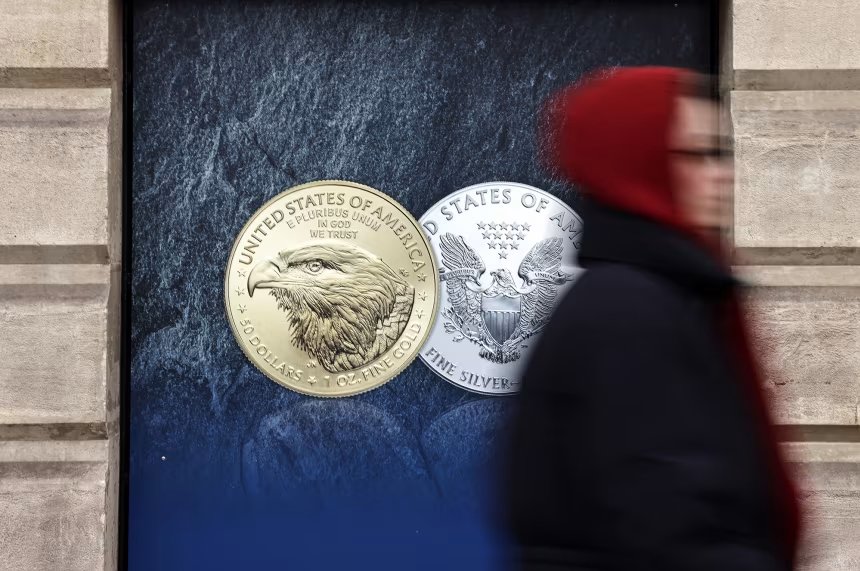
Gold surged to a record above $5,550 a troy ounce on Wednesday before collapsing 11% on Friday. Silver fell even harder, plunging 31% in a move that stunned traders. Early Monday, gold briefly dropped to about $4,423 before recovering to trade near $4,740.
Market strategists say the abrupt reversal reflects speculative positioning rather than a sudden deterioration in fundamentals. Matt Maley, chief market strategist at Miller Tabak + Co, said leverage and momentum trading had built rapidly as individual investors piled into precious metals.
Jim Reid, global head of macro research at Deutsche Bank, described the rally as having a pronounced speculative element. Ole Hansen, head of commodity strategy at Saxo Bank, said the correction had been widely anticipated but arrived with unexpected speed and depth.
Hansen added that strong demand from Chinese investors, especially for silver, had helped fuel the rally. However, fear of missing out increasingly drove prices higher, leaving the market vulnerable to a sharp pullback.
Speculative Excess and FOMO Exposed
Analysts note that when gold and silver become frequent topics in everyday conversations, it often signals a late stage in the rally. In this case, the correction acted as a reminder that even traditional safe-haven assets are not immune to speculative bubbles.
Despite the steep sell-off, gold remains up about 9% this year, while silver has gained roughly 12%. Still, traders expect heightened volatility as crowded positions continue to unwind and short-term sentiment shifts.
Bitcoin Slides Amid Risk Reassessment
Bitcoin also struggled as Wall Street volatility rippled through digital assets. Over the weekend, bitcoin fell from above $83,000 to as low as $74,570, marking its lowest level since April. The cryptocurrency is now down nearly 12% this year and far below its October record high above $126,000.
Often promoted as “digital gold,” bitcoin has failed to attract safe-haven inflows amid geopolitical uncertainty. Instead, it has behaved more like a high-risk asset, sensitive to tightening liquidity and shifting investor confidence.
Read Also
Trump Nominates Kevin Warsh for Federal Reserve Chair
Gold Price Surge Amid Political Uncertainty
Panama Supreme Court Ruling Explained
Asian Markets Add to Global Jitters
Market stress extended beyond the United States. South Korea’s benchmark Kospi index sank 5.26% on Monday, its worst session since April. The index had surged 76% in 2025, fueled largely by optimism around artificial intelligence and technology exports.
The sudden reversal reflects rising concern about corporate spending on AI and whether earnings growth can justify elevated valuations. Similar questions are being raised on Wall Street as investors scrutinize big tech balance sheets during earnings season.
US Stocks Hold Ground Despite Turbulence
US equities showed resilience at the start of February. The Dow Jones Industrial Average rose about 300 points, or 0.6%, early Monday. The S&P 500 gained 0.45%, while the Nasdaq Composite climbed 0.65%.
Julian Emanuel, senior managing director at Evercore ISI, described recent moves in gold, silver, copper, and South Korean technology stocks as “exuberant” or “parabolic.” Even so, he said his outlook for US equities remains constructive and projected roughly 13% upside for the S&P 500 this year.
Darrell Cronk, chief investment officer for wealth and investment management at Wells Fargo, cautioned that markets are increasingly vulnerable to extremes after strong multi-asset gains.
Wall Street Volatility Driven by Crowded Trades
Some analysts played down fears of systemic risk. Mohit Kumar, chief economist and strategist for Europe at Jefferies, said the sharp drop in gold appeared to be an unwind of crowded positions rather than a sign of deeper financial stress.
Attention is now turning to China, which has been a major driver of precious metals demand in recent months. According to Hansen, local prices in China have traded at a premium to London, making shifts in Chinese sentiment particularly influential.
Policy Signals and the Dollar Shape Markets
Political developments also influenced sentiment. President Donald Trump’s announcement that he nominated Kevin Warsh as Federal Reserve chair contributed to a shift in expectations around monetary policy.
The US dollar index rose 0.6% on Monday after posting its strongest daily gain since June on Friday. A stronger dollar can pressure commodities and emerging-market assets, adding another headwind to already volatile markets.
Gold futures slipped 0.4% Monday morning, while silver futures edged up 0.7%. Despite recent losses, Deutsche Bank reiterated its forecast for gold to reach $6,000 a troy ounce by year-end, citing long-term diversification away from dollar-denominated assets.
Markets Brace for More Volatility
Investors are now focused on upcoming corporate earnings, including results from Alphabet and Amazon, as well as key economic data such as the January jobs report. Markets will also closely follow Warsh’s remarks during his confirmation hearings.
The recent turbulence highlights how quickly sentiment can reverse after prolonged rallies. Even assets with strong long-term fundamentals can suffer sharp corrections when speculation builds too far. In that sense, the latest swings serve as a clear reminder of the risks embedded in periods of elevated Wall Street volatility.
RELATED COVERAGE
Amazon Layoffs Expand Amid Restructuring
UPS Announces Job Cuts as Costs Rise