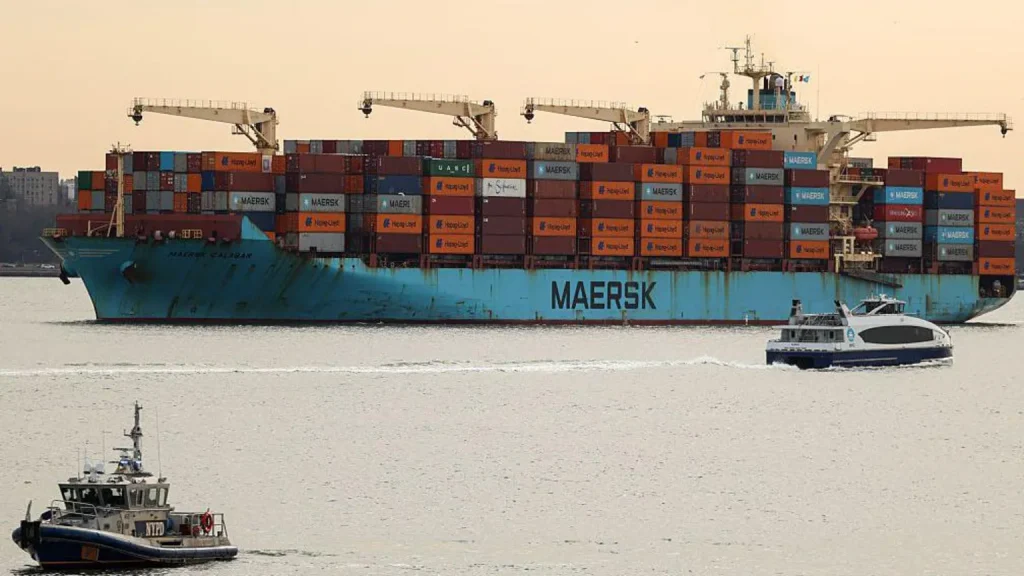
Oil Prices Surge past $100 per barrel as tensions in the Middle East intensify and markets react to threats against global energy supplies. The sharp increase marks the first time crude oil has crossed the $100 mark since Russia’s invasion of Ukraine in 2022.
Energy markets moved rapidly over the weekend as traders assessed the risks of a broader regional conflict. U.S. oil futures climbed about 18 percent to around $108 per barrel. At one point Sunday evening, crude briefly reached $110 per barrel.
Meanwhile, Brent crude, the global benchmark, rose roughly 16 percent and approached $108 per barrel.
The dramatic increase reflects growing fears that the conflict involving Iran could disrupt the flow of oil through one of the world’s most critical shipping routes.
President Donald Trump reacted to the price surge in a social media post, saying higher energy costs were acceptable given the broader security concerns.
Oil Prices Surge amid Middle East tensions
Trump argued that higher oil prices would only be temporary while military operations continued. He wrote that rising costs were a small price to pay for global security and stability.
Markets reacted strongly because the Strait of Hormuz remains under threat. Roughly 20 percent of the world’s oil supply moves through that narrow waterway each day.
Iran has warned it could target tankers passing through the strait if the conflict escalates further. As a result, traders have begun pricing in the possibility of severe supply disruptions.
Homayoun Falakshahi, a crude market analyst at Kpler, said oil could reach $150 per barrel if shipping through the strait remains restricted.
He explained that the market will remain volatile until tensions decrease and shipping resumes normal operations.
Because the strait represents a crucial energy corridor, any prolonged disruption would send shockwaves through global markets.
Stock markets react as oil prices surge
Financial markets have already begun reacting to the sudden spike in energy costs.
Dow futures fell more than 800 points on Sunday as investors worried about inflation and slower economic growth. Meanwhile, futures tied to the S&P 500 and Nasdaq also dropped sharply.
Investors fear that sustained energy price increases could push inflation higher again. Higher fuel costs often ripple through transportation, manufacturing, and consumer prices.
The sudden rise in gasoline prices has already reached American drivers. According to AAA data, the average gasoline price in the United States climbed to $3.45 per gallon.
That represents a 16 percent increase compared with the previous week.
Analysts say continued increases could place additional pressure on household budgets and consumer spending.
Read Also
US economy shows weak signs as retail sales stall
US economy adds 130000 jobs in January
Ford faces $900M higher tariff costs
Strait of Hormuz fears drive oil prices surge
The Strait of Hormuz remains at the center of the global energy crisis.
The waterway sits between Iran and Oman and serves as one of the world’s most important shipping corridors for crude oil.
Nearly one-fifth of the world’s oil supply travels through this narrow route. Therefore, any disruption can rapidly affect global energy prices.
Iranian officials warned Sunday that the conflict had entered a new phase following Israeli strikes on Iranian oil storage facilities.
A senior Iranian official suggested retaliation could target energy infrastructure across the region.
The official also indicated Iran may seek greater control over the strait until its strategic objectives are achieved.
Because of these threats, some maritime insurers have already refused to cover vessels traveling through the area.
Without insurance protection, many shipping companies remain reluctant to move oil through the region.
Government steps aim to calm oil markets
The Trump administration announced measures designed to stabilize energy markets and maintain the flow of oil shipments.
Officials said the government would provide insurance coverage for oil tankers traveling through the Strait of Hormuz.
In addition, the White House indicated that naval escorts could be arranged for ships passing through the region.
However, shipping companies remain cautious. Many operators say they will avoid the route until the security situation improves.
Energy analysts believe the government plan may help reduce risk but will not completely calm markets.
Falakshahi said markets will likely remain volatile until there is clear evidence of de-escalation.
Energy supply pressures grow worldwide
Another challenge facing global oil markets involves storage capacity.
Following the recent attacks on oil storage facilities, some producers now face difficulties storing their output.
Because storage capacity is limited, several producers have begun reducing production.
That reduction could tighten global supply even further.
As a result, the surge in oil prices reflects not only geopolitical risk but also structural pressures within the global energy system.
Analysts say the coming weeks will determine whether markets stabilize or move toward even higher price levels.
Ford faces $900M higher tariff costs amid policy shift
Wall Street volatility rattles gold, bitcoin, tech stocks