Uganda financial inclusion has improved steadily over the past three years, driven largely by expanding access to mobile money services and gradual growth in formal banking, according to new findings released by the Uganda Bureau of Statistics (UBOS).
The data is contained in the Uganda Harmonised Integrated Survey, an annual programme that combines the Uganda National Panel Survey and the Annual Agricultural Survey. The latest report provides insight into changing household welfare, access to financial services, poverty trends, and agricultural livelihoods across the country.
According to the findings, access to formal banking services among Ugandans aged 15 years and above increased from 10.7% in 2022 to 13.4% in 2025. Ownership of active bank accounts also rose during the same period, increasing from 6.0% to 8.1%.
The report points to a broader shift toward digital financial platforms, with mobile money continuing to dominate financial access across Uganda.
Uganda financial inclusion driven by mobile money
UBOS data shows that the proportion of Ugandans aged 15 years and above accessing mobile money services increased sharply from 34.4% in 2022 to 47.7% in 2025.
The growth highlights the increasing importance of digital financial services in daily transactions, savings, and money transfers, particularly in areas where traditional banking infrastructure remains limited.
Mobile money has become a critical financial tool for millions of Ugandans, especially in rural communities where access to physical bank branches is often restricted. Analysts say the continued expansion reflects growing mobile phone penetration and increased trust in digital financial platforms.
Read Also
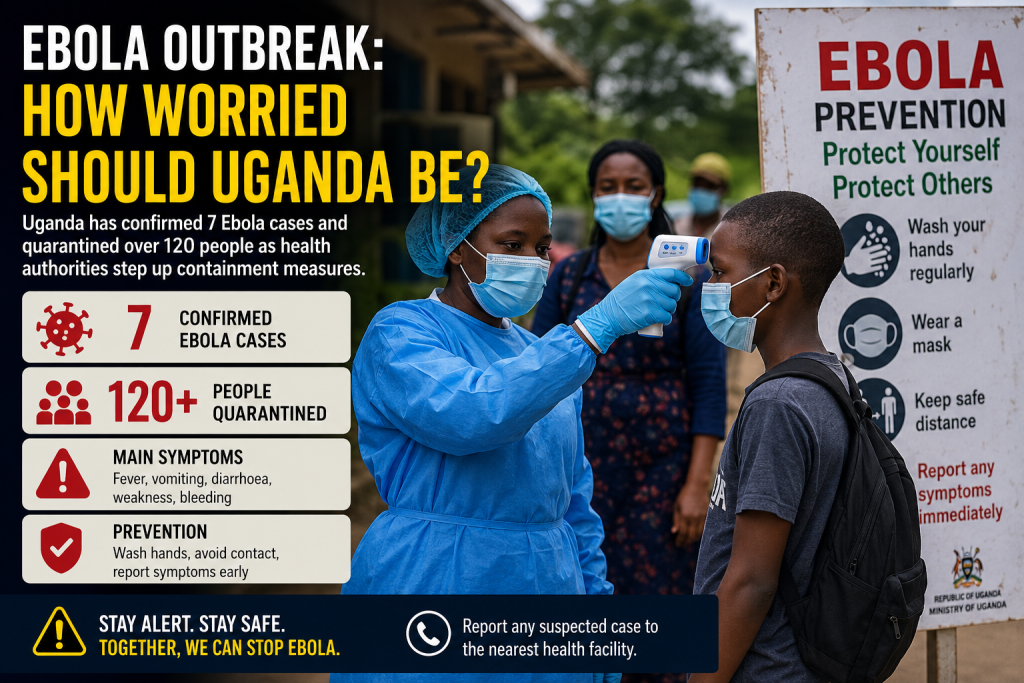
Ebola Outbreak: How Worried Should Uganda Be?
However, the report also revealed declines in some traditional forms of borrowing and credit access. The proportion of persons obtaining cash credit fell from 15.3% in 2022 to 13.4% in 2025.
Similarly, access to credit in kind declined from 16.1% to 14.1% during the same period, suggesting possible tightening household spending conditions and changing borrowing patterns.
Beyond financial services, the survey highlights changes in household economic activity across Uganda. The proportion of households operating small enterprises increased from 36.9% in 2022 to 38.8% in 2025.
Rural areas also recorded growth in household enterprises, rising from 34.3% to 36.3% over the same period. The findings suggest many households continue relying on small income-generating activities to supplement earnings and manage economic pressures.
Uganda financial inclusion reflects mixed poverty trends
UBOS notes that household enterprises remain important sources of survival and resilience, especially in rural regions where formal employment opportunities remain limited.
The report further indicates improvements in access to basic services and housing conditions. Access to improved water sources increased from 70.2% to 78.4%, while electricity access rose from 65.2% to 74.8%.
These improvements may help support better living standards and broader economic participation, although disparities between urban and rural households continue to exist.
According to UBOS, 8.9% of households remained chronically poor throughout all three survey years. Meanwhile, 14.5% of households moved into poverty, while 9.7% managed to move out of poverty during the same period.
Read Also
Kiba Hydropower Project Gains Urgent Government Push
The figures highlight the fragile nature of household incomes and economic stability for many Ugandans. Rising living costs, climate-related pressures, and fluctuating agricultural incomes continue affecting household resilience.
Agriculture remains central to Uganda’s economy and household livelihoods. The report shows that 63.9% of households were engaged in agriculture during the 2024/2025 survey period.
Among those, 56.6% consistently participated in agricultural activities across all three survey years, underlining the sector’s continued importance to rural communities.
The UBOS findings show that crop farming continues to dominate Uganda’s agricultural landscape. Among households consistently engaged in agriculture, 90.9% were involved in crop growing activities.
Crop farming remains dominant in rural Uganda
The report also recorded growth in the number of households cultivating key staple and cash crops between the 2021/22 and 2024/25 periods.
Coffee-growing households increased by 4.7%, while cassava cultivation rose by 5.1%. Banana production for food, commonly known as matooke, also expanded during the period under review.
The survey further revealed improvements in access to agricultural support services. The proportion of agricultural households receiving extension services increased by 3.1% between 2021/22 and 2024/25.
Agricultural experts say better access to extension services may help improve farming techniques, productivity, and resilience against climate and market challenges.
Read Also
Target Reshapes Leadership Amid Retail Turnaround
UBOS concluded that the findings reflect both measurable progress and persistent structural challenges in Uganda’s economy. While digital financial services continue expanding rapidly, many households still face unstable incomes, poverty risks, and dependence on small-scale agriculture for survival.