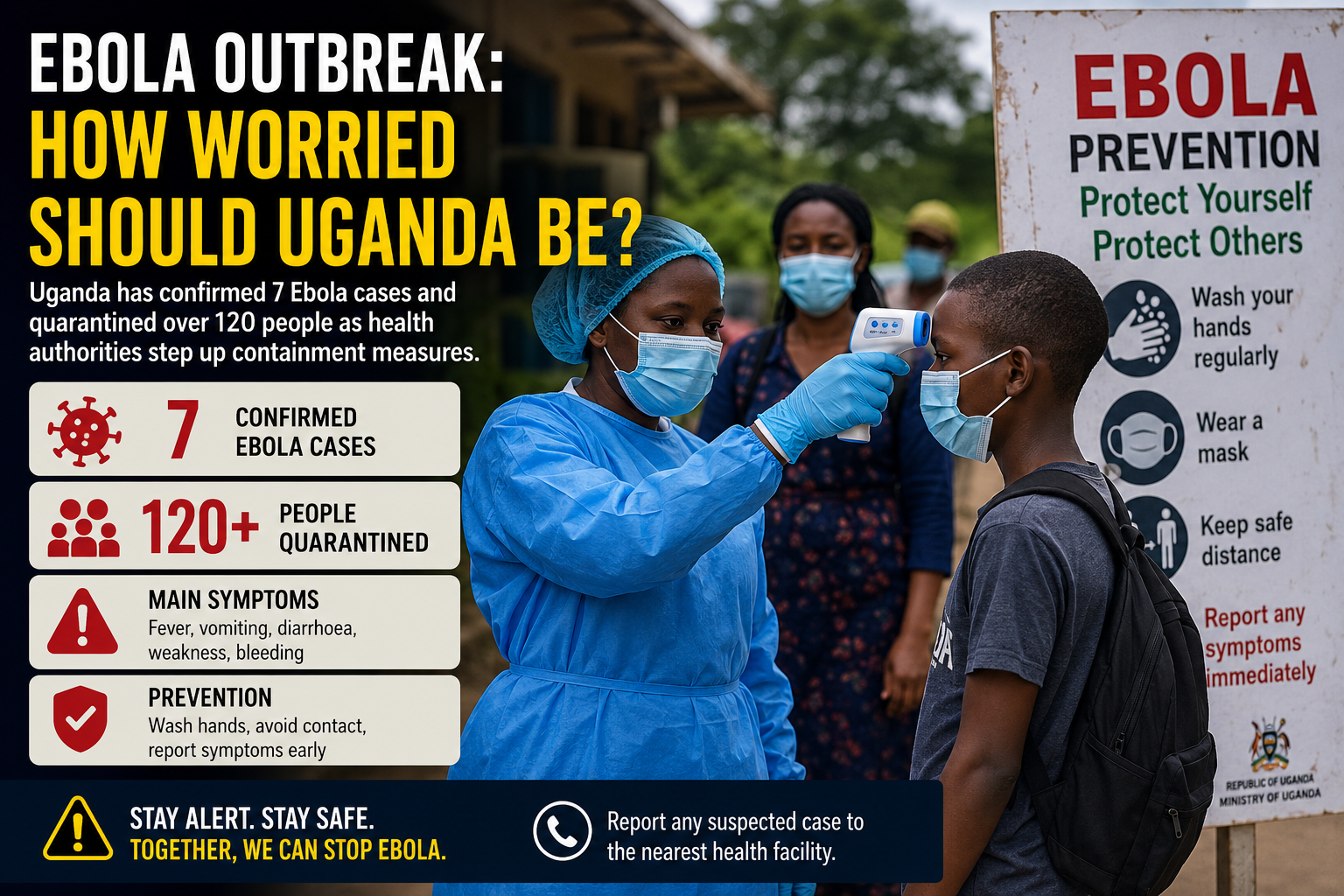
Ebola Outbreak concerns are rising in Uganda after the Ministry of Health confirmed seven Ebola Virus Disease cases and quarantined more than 120 people.
Authorities have introduced strict containment measures in affected areas. The restrictions are already disrupting transport, trade, and daily activities in some communities.
Health experts, however, urge Ugandans to stay alert without panicking. They say the country can still control the outbreak through prevention and quick response measures.
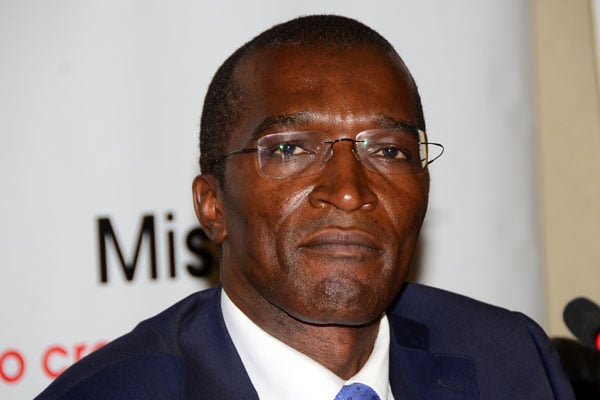
Speaking in an exclusive interview, Prof Pontiano Kaleebu, the executive director of the Uganda Virus Research Institute (UVRI), warned that Ebola remains a dangerous disease because of its deadly history across Africa.
“We should worry, but not worry too much,” Prof Kaleebu said.
“The reason is that Ebola is a dangerous disease. It kills, and we have experience. People have died; we saw they died in Gulu, they died in West Africa, and recently, many died in DR Congo,” he added.
Uganda has battled several Ebola outbreaks over the years. Health officials usually rely on surveillance, isolation, and contact tracing to contain infections quickly.
Ebola Outbreak Raises Economic Concerns
Prof Kaleebu warned that rising Ebola infections could trigger serious economic and social problems if authorities fail to contain the disease early.
“If it increases, then movement, people’s activities may be curbed, which is not good, and people and the country will be affected socially and economically,” he said.
Health officials fear that more infections could disrupt schools, businesses, transport services, and tourism activities.
Prof Kaleebu stressed that prevention remains the strongest weapon against Ebola.
The virus spreads through direct contact with infected bodily fluids or contaminated materials. People can also contract Ebola after interacting closely with infected individuals showing symptoms.
“So we need to prevent the spread. It can affect us socially, it can affect us economically, it can affect us in many other ways, but it can be prevented from spreading,” he said.
The Ministry of Health continues to encourage the public to report symptoms early and avoid unnecessary physical contact in high-risk areas.
Bundibugyo Ebola Strain Worries Doctors
Dr Tonny Musoke Sekikongo, a consultant physician at Mulago Ebola Treatment Facility, said the current Ebola Outbreak involves the Bundibugyo strain.
He explained that doctors still lack an approved vaccine or treatment specifically designed for this strain.
The Bundibugyo strain previously caused outbreaks in Uganda and the Democratic Republic of Congo. Past outbreaks recorded fatality rates between 30 percent and 50 percent.
“In the previous outbreak, we had case fatality rates ranging from 30-50 percent. It is a very deadly disease,” Dr Sekikongo said.
Medical experts say supportive treatment remains critical because approved therapies for this strain do not yet exist.
Doctors mainly focus on hydration, monitoring, symptom management, and infection control during treatment.
Prof Kaleebu said experts cannot easily determine whether one Ebola strain is more dangerous than another.
He explained that survival often depends on how quickly doctors diagnose and manage patients.
According to Prof Kaleebu, patients improve their survival chances when they seek treatment early and receive proper medical care.
Public Cooperation Remains Important
Health authorities say public cooperation will determine how successfully Uganda controls the Ebola Outbreak.
Officials continue to encourage handwashing and early reporting of symptoms. They also advise the public to avoid physical contact with suspected patients.
Common Ebola symptoms include fever, vomiting, diarrhoea, weakness, and bleeding.
Contact tracing teams have already quarantined more than 120 people linked to confirmed cases.
Health experts also warned against spreading rumours and misinformation during the outbreak.
They say fear can discourage infected individuals from seeking treatment early. Panic can also weaken cooperation with health surveillance teams.
Instead, officials urge communities to follow updates from the Ministry of Health and trained medical experts.
Uganda Relies on Ebola Experience
Uganda plans to rely on lessons learned from previous outbreaks to strengthen the current response.
Over the years, the country has improved disease surveillance systems and laboratory testing capacity. Authorities have also strengthened emergency response teams.
Uganda previously earned praise for controlling Ebola outbreaks quickly, especially in remote districts.
Health experts believe the country can contain the outbreak if communities cooperate with health workers and follow safety guidelines.
Even so, officials continue to warn that Ebola can spread rapidly when communities ignore prevention measures.
As quarantine operations continue, health authorities say the next few weeks will remain critical in determining whether Uganda can stop further transmission.