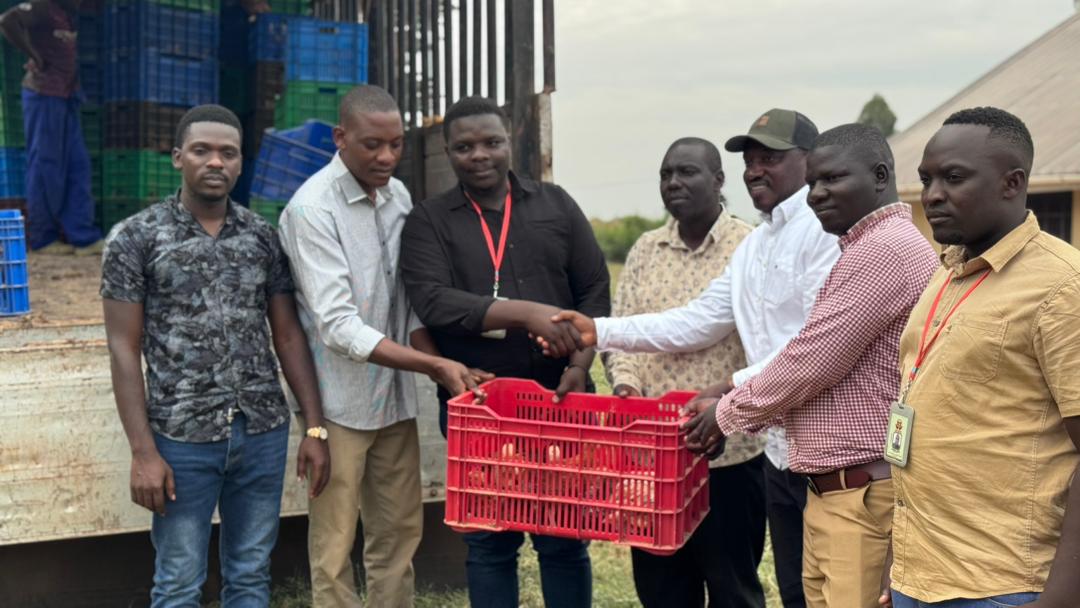
More than 80 Ugandan farmers have gained direct access to buyers through the Alliad Open Market Day, an initiative designed to create reliable markets for locally produced food while strengthening economic opportunities in Buliisa District.
The programme brings farmers together every Friday at Buliisa District Headquarters, where they can supply fresh fruits and vegetables directly for local demand, including Alliad’s operations in the area.
For farmers who often struggle with unpredictable markets, transport costs and layers of middlemen, the initiative offers something simple but important: a regular place where produce can meet demand.
Alliad says the scheme is intended to provide more stable income opportunities while increasing local sourcing and strengthening relationships between its operations and surrounding communities.
Alliad Open Market Day Gives Farmers Direct Market Access
The market takes place every Friday from 9am to 2pm at the Buliisa District Headquarters.
Rather than farmers waiting for traders to arrive at their farms or transporting produce long distances without knowing whether it will sell, the programme creates a predictable meeting point between producers and buyers.
That reliability can be particularly important for farmers selling fresh produce.
Unlike crops that can remain in storage for long periods, fruits and vegetables can lose value quickly if farmers cannot find customers after harvesting them.
A regular market gives producers a clearer idea of when and where they can sell.
For some households, that can make the difference between farming primarily for survival and beginning to treat agriculture as a more dependable source of income.
More Than 80 Ugandan Farmers Have Joined the Scheme
Alliad says more than 80 farmers have already participated in the programme.
Both men and women have taken produce to the weekly market, offering foods including oranges, matooke, sweet potatoes and tomatoes.
Those products are widely grown and consumed in Uganda, but farmers can still face difficulties turning production into dependable earnings.
Producing food is only one part of running a successful agricultural business.
Farmers also need access to customers willing to buy consistently and at prices that make production worthwhile.
The Alliad initiative is attempting to address that second part of the equation.
Why Reliable Buyers Matter to Ugandan Farmers
Market access remains one of the biggest challenges facing small-scale agriculture.
A farmer can produce a good harvest and still struggle financially if there is no reliable buyer when the crop is ready.
In some cases, farmers are forced to accept lower prices because produce must be sold quickly.
Others spend money transporting goods to larger markets without any guarantee that they will find enough customers.
When farmers can sell closer to where they live, those uncertainties can be reduced.
Alliad says its Open Market Day was designed partly to improve local sourcing and reduce transport costs while helping farmers meet demand from its camps in the area.
The model therefore creates a relationship in which the company obtains fresh local food while nearby farmers gain another market for what they produce.
Farmer Says Orange Earnings Doubled
One participant has described a noticeable difference after joining the programme.
Farmer Baleke Kasono said his income from orange sales doubled on his first Open Market Day compared with what he had previously earned in other markets.
He also said the initiative gave him greater exposure and direct contact with customers interested in fresh local produce.
One farmer’s experience cannot determine what every participant will earn.
Prices and income will naturally vary depending on the crop, quantity, quality, season and market demand.
However, the example demonstrates why direct access to buyers can matter.
When farmers have more opportunities to meet customers, they may have greater ability to negotiate and make informed decisions about what to produce.
Alliad Open Market Day Supports Local Sourcing
The scheme is also part of a broader local procurement strategy.
Instead of sourcing all food supplies through distant suppliers, Alliad can purchase more produce from communities close to its operations.
That keeps a larger portion of procurement spending within the surrounding economy.
A local farmer earns income.
Transport distances can potentially be reduced.
Businesses involved in agriculture may gain new customers.
And food consumed by workers in nearby camps can come from farms operating within the same district.
Alliad says the model is intended to strengthen its relationship with local communities while supporting economic activity around its operations.
Buliisa Farmers Gain Opportunity From Local Demand
Buliisa District sits within Uganda’s oil-producing Albertine region, where major projects have brought significant economic activity alongside new expectations about how surrounding communities should benefit.
Alliad describes its Open Market Day as part of its commitment to inclusive growth within the Tilenga area.
The approach shows how local participation around major developments does not have to be limited to direct employment.
Communities can also benefit through supplying food, goods and services required by companies operating nearby.
For farmers, food procurement can be especially important because demand is recurring.
Workers need meals every day.
A reliable supply relationship can therefore potentially create repeated business rather than a one-time purchase.
Agriculture Remains Central to Rural Livelihoods
Agriculture continues to provide livelihoods for a large share of Uganda’s population, particularly in rural communities.
Buliisa is no exception.
Families grow food both for household consumption and for sale, making access to agricultural markets central to income security.
Alliad notes that smallholder farmers commonly grow crops such as maize, beans, cassava, bananas and sweet potatoes.
Yet agricultural potential does not automatically translate into strong household incomes.
Farmers need storage, transport, information, financing and reliable markets alongside suitable land and favourable growing conditions.
Projects that address market access can therefore complement efforts focused on increasing production.
There is little benefit in encouraging farmers to produce more if they have nowhere dependable to sell the additional harvest.
Cutting Out Unnecessary Market Barriers
One attraction of a direct-market approach is simplicity.
Traditional agricultural supply chains can involve several stages between the farm and the final consumer.
Each stage can provide a useful service, such as transport, aggregation or storage. But long chains can also leave farmers with a smaller share of the final selling price.
Bringing farmers closer to large buyers can shorten that chain.
It does not mean intermediaries have no role in agriculture.
Transporters, wholesalers and distributors remain essential, particularly when produce must travel long distances or be sold in large volumes.
But giving farmers additional selling options can strengthen their bargaining position.
A farmer who knows there is a weekly local market may be less dependent on accepting the first price offered at the farm gate.
Local Procurement Can Strengthen Communities
Corporate procurement can have a significant effect on communities when businesses intentionally purchase more goods and services locally.
Instead of money leaving the area immediately, part of it can circulate within the district.
Farmers who earn more from their produce may spend that income in local shops, pay school expenses, invest in their farms or hire workers.
Those activities can create secondary economic benefits.
This is one reason Alliad Country Manager Aggrey Ashaba described the Open Market Day as a “hand-up” rather than a handout, saying the objective is to build more resilient communities while supporting local economic growth.
The distinction matters.
A farmer who has a sustainable customer relationship is generating income through production rather than depending on temporary assistance.
Buyers Also Benefit From Fresh Local Produce
The programme is not designed to benefit farmers alone.
Buyers can also gain from having organised access to local producers.
Fresh produce can be sourced closer to the point of consumption, while establishing regular market days can make procurement more predictable.
For large operations feeding significant numbers of workers, maintaining a consistent food supply is essential.
Local farmers can form part of that supply chain if they can meet requirements for quality, quantity and reliability.
Over time, a dependable buyer can also encourage farmers to improve planning.
If producers understand what types of food are in demand, they can make better decisions about what to plant and when to harvest.
That can gradually shift agricultural production from being driven mainly by tradition towards being influenced more strongly by actual market demand.
Alliad Open Market Day Could Encourage Commercial Farming
One of the longer-term opportunities created by initiatives such as the Alliad Open Market Day is helping farmers think more commercially.
A reliable market gives producers information.
Which crops sell fastest?
What quality do buyers expect?
How much demand exists each week?
Which products are undersupplied?
Those answers can influence future production decisions.
A farmer who consistently sees demand for tomatoes, for example, may decide to expand production if land, water and finances allow.
Another may discover that customers are prepared to pay more for higher-quality oranges.
Market information can therefore become almost as valuable as the physical marketplace itself.
Women Farmers Can Benefit From Better Market Access
Alliad says both male and female farmers have participated in the initiative.
Improving access for women can have particular importance in rural agricultural communities, where women often contribute heavily to food production while facing obstacles in reaching larger commercial markets.
A regular local market can reduce some barriers associated with travelling long distances to find customers.
It can also provide a more visible space where farmers build relationships directly with buyers.
Over time, stronger commercial connections can help smaller producers develop from occasional sellers into more consistent suppliers.
Oil Region Development Creates Demand for Local Businesses
Buliisa’s position within the wider Tilenga development area makes local economic participation especially important.
Large projects create demand for accommodation, transport, food, maintenance and other services.
For surrounding communities, the key question is how much of that demand can be met locally.
The Open Market Day provides one example of how procurement needs can be connected with existing economic activities in surrounding villages.
Instead of agriculture and the emerging energy economy operating as completely separate sectors, local procurement can create links between them.
Farmers do not need to become oil-sector workers to benefit from economic activity associated with large projects.
They can participate through the supply chain.
TotalEnergies and Sinopec Stakeholders Praise Initiative
Alliad says stakeholders from TotalEnergies and Sinopec have praised the programme, while the Petroleum Authority of Uganda has highlighted its contribution to sustainable development.
That recognition reflects wider expectations surrounding local content in Uganda’s emerging petroleum industry.
Communities around major developments increasingly expect investment to produce opportunities that extend beyond construction sites.
Supporting local businesses and farmers through procurement is one method of spreading some of those economic benefits.
The effectiveness of such programmes, however, ultimately depends on whether they remain consistent and can grow beyond small pilot groups.
Farmers Need Sustainable Markets, Not One-Off Purchases
The real test for the Alliad initiative will be sustainability.
One successful market day can provide welcome income.
A market that continues every week can influence how farmers plan their businesses.
Consistency allows producers to prepare around expected demand.
That could encourage farmers to improve quality, increase production or invest in equipment because they have greater confidence that customers will be available.
The programme’s weekly schedule is therefore one of its most important features.
Alliad says the market is held every Friday, giving farmers a recurring opportunity rather than relying on occasional purchasing events.
Market Linkages Could Help Reduce Post-Harvest Losses
Better market access can also help address another challenge facing fresh-produce farmers: post-harvest losses.
Tomatoes, fruits and vegetables can deteriorate quickly if they are not sold or stored properly.
When a farmer harvests without knowing when the next buyer will arrive, some produce can spoil before it generates any income.
Predictable buying opportunities can help farmers coordinate harvesting more closely with demand.
That does not eliminate post-harvest losses entirely.
Storage, packaging, handling and transportation remain important.
But connecting producers more efficiently with customers can reduce the amount of time food spends waiting for a market.
The Bigger Opportunity for Ugandan Agriculture
Uganda has strong agricultural potential, but turning production into higher rural incomes requires more than increasing yields.
Farmers need functioning connections to consumers.
That means better roads, storage, financing, market information, processing and buyers.
The Alliad Open Market Day is relatively simple compared with large national agricultural programmes, but its underlying idea addresses a fundamental problem.
Farmers should know where they can sell what they grow.
When that connection becomes reliable, agriculture can become a stronger business.
For Buliisa farmers, the weekly market provides one additional route from farm to customer.
Alliad Open Market Day Shows Potential of Direct Farmer-Buyer Links
More than 80 farmers participating in one programme may appear modest when compared with the millions of Ugandans who depend on agriculture.
But the model illustrates how businesses operating in rural areas can connect their procurement requirements directly with local production.
Alliad gets access to fresh food for its operations.
Farmers gain an organised marketplace.
Transport requirements can be reduced, while more procurement spending remains within surrounding communities.
For participating farmers, the most important benefit may simply be certainty.
Knowing that buyers will be available every Friday creates an opportunity to plan production around a real market instead of hoping customers appear after harvesting.
If maintained and expanded, the Alliad Open Market Day could provide a useful example of how major businesses can use everyday purchasing decisions to create meaningful economic opportunities in the communities where they operate.
For Uganda’s farmers, reliable buyers can be just as important as fertile land.
Connecting the two is where the real value begins.