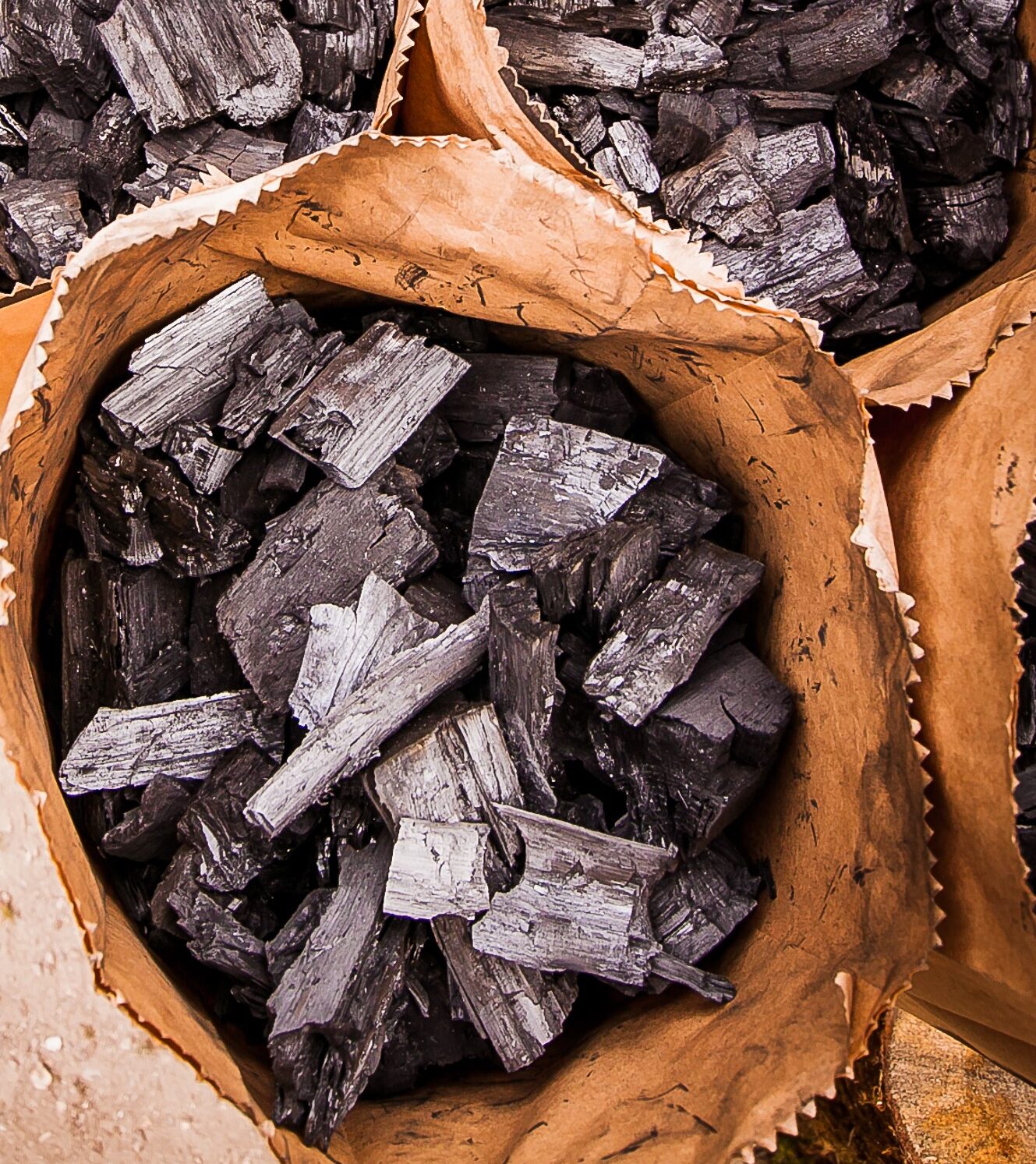
Ugandan security authorities have ordered an immediate halt to the transportation of charcoal entering the country from South Sudan as enforcement of the Uganda charcoal ban intensifies across Northern Uganda and West Nile.
The Uganda People’s Defence Forces (UPDF) says charcoal dealers will no longer be allowed to transport consignments through Ugandan territory, warning that charcoal intercepted by security agencies will be confiscated and handed to nearby communities rather than returned to traders.
The directive follows renewed enforcement of President Yoweri Museveni’s Executive Order No. 3 of 2023, which restricted commercial charcoal production and trade across several parts of northern and northeastern Uganda.
The latest crackdown puts traders who have been sourcing charcoal from neighbouring South Sudan under particular scrutiny.
Uganda Charcoal Ban Takes Immediate Effect
Maj Gen Felix Busizoori, commander of the UPDF Fourth Infantry Division, announced that transportation of charcoal through the affected areas would no longer be tolerated.
The directive took effect on August 11, 2026, with security officials warning that trucks found transporting charcoal in violation of the order risk having their consignments impounded.
Busizoori said no charcoal dealer should be permitted to operate in Northern Uganda and West Nile under the renewed enforcement operation.
The move signals a tougher approach by authorities after years of concern that charcoal continued moving through the region despite the presidential directive.
Charcoal remains an important source of cooking fuel for many households and businesses, but its production has also been linked to extensive cutting of trees, particularly in areas where commercial charcoal dealers operate on a large scale.
UPDF Targets Charcoal Coming From South Sudan
The latest Uganda charcoal ban enforcement has also closed what traders had described as a legal route for obtaining charcoal from South Sudan.
Eria Ssenyonjo, chairman of the Charcoal Dealers Association in Uganda, told authorities that charcoal entering Northern Uganda and West Nile was being imported from South Sudan rather than produced locally.
However, Busizoori rejected that justification.
The UPDF commander said South Sudan outlawed charcoal production and export in 2019. On that basis, he argued that charcoal being transported from South Sudan into Uganda cannot be treated as a legitimate import.
Uganda Radio Network similarly reported that authorities were targeting what they described as illicit charcoal imports from South Sudan amid concerns over cross-border trade and its environmental impact.
The development means traders will no longer be able to rely on claims that charcoal originated outside Uganda to bypass restrictions governing the trade in the north.
More Than 40 Charcoal Dealers Under Investigation
The crackdown has already placed dozens of people under investigation.
NTV Uganda reported that more than 40 charcoal dealers, together with security and government officials accused of facilitating the trade, are being investigated.
Separate reporting said about 40 dealers were handed over to police for investigation as authorities intensified enforcement.
The involvement of government and security officials in the investigation is significant because authorities have previously raised concerns that enforcement of charcoal restrictions was being undermined by corruption.
In 2024, the UPDF said an operation in Amuru, Nwoya and Adjumani was partly aimed at tackling allegations that corrupt officials were allowing charcoal traders to continue moving consignments through restricted areas in exchange for payments.
Authorities now appear determined to target not only traders but also anyone within government or security agencies suspected of helping illegal consignments move through checkpoints.
Impounded Charcoal Will Be Given to Communities
Security authorities have also changed how seized charcoal will be handled.
Busizoori directed that charcoal impounded during enforcement operations should be handed over to communities living near where the consignments are intercepted.
NTV reported that authorities warned dealers that confiscated charcoal could be distributed to members of the public free of charge.
The approach is intended to remove the commercial incentive for traders to attempt to recover or resell seized consignments.
For dealers, it creates a potentially significant financial risk. A truck intercepted while carrying charcoal could result in the loss of the entire consignment rather than a temporary seizure.
Museveni’s 2023 Directive Behind Uganda Charcoal Ban
The current enforcement drive is rooted in Executive Order No. 3, issued by President Museveni in May 2023.
The directive targeted commercial tree cutting and charcoal production in parts of Northern and Northeastern Uganda, including areas of Acholi, Lango, Teso, Karamoja and West Nile.
The measure followed growing concern over uncontrolled tree cutting and the environmental damage associated with commercial charcoal production.
Museveni argued at the time that large-scale charcoal production was contributing to destruction of vegetation and needed stronger intervention from government and security agencies.
Despite the restrictions, reports in subsequent years showed that commercial charcoal continued moving from some affected districts, prompting repeated enforcement operations.
The latest directive therefore represents less of an entirely new policy and more of a tougher enforcement of restrictions already in place.
Uganda Charcoal Ban Raises Questions Over Household Energy
The tougher crackdown also brings Uganda’s household energy challenge back into focus.
Charcoal remains widely used for cooking, particularly in urban communities where households may not have access to affordable alternatives.
Restricting supply can therefore create a difficult policy balance.
Authorities want to protect forests and discourage destructive commercial tree cutting, while consumers still need affordable and dependable cooking energy.
Long-term success of the Uganda charcoal ban may consequently depend on more than security checkpoints and confiscation.
Expanding access to cleaner cooking technologies and affordable alternative fuels could reduce demand for charcoal while limiting the economic pressure that encourages illegal trade.
Environmental Concerns Drive Crackdown
Northern Uganda’s forests and woodlands have faced significant pressure from commercial charcoal production.
The original 2023 executive order was introduced specifically amid concern about tree cutting for commercial charcoal in Northern and Northeastern Uganda.
Environmental groups welcomed the restrictions at the time, arguing that effective enforcement could reduce pressure on threatened forests such as the Zoka Central Forest landscape.
Charcoal production becomes particularly damaging when trees are harvested faster than forests can regenerate.
The problem can grow even more serious when commercial networks operate across districts and international borders because demand in large urban markets can encourage continuous cutting far from the consumers who ultimately use the fuel.
Security Agencies Join Forces on Enforcement
The renewed operation involves more than the army.
The UPDF said discussions on enforcement brought together representatives from the Ministry of Water and Environment, Uganda Revenue Authority, Uganda Police Force, Internal Security Organisation and other stakeholders.
Such coordination will be important because controlling the trade requires action at several stages.
Security agencies monitor transportation routes, environmental authorities deal with illegal harvesting, while customs officials oversee goods crossing international borders.
Reports also indicate that the Uganda Revenue Authority has been directed to prevent prohibited charcoal consignments from being cleared through border points.
Tougher Test for Uganda’s Charcoal Crackdown
The latest Uganda charcoal ban sends a strong warning to traders who have continued transporting the commodity through Northern Uganda and West Nile.
From August 11, authorities say charcoal transported through the affected areas in violation of the directive can be seized, while traders and officials suspected of facilitating the business may face investigation.
The bigger challenge will be maintaining enforcement over the long term.
Previous restrictions have struggled to completely stop the trade, particularly where strong demand, valuable consignments and allegations of corruption create incentives for charcoal to keep moving.
This time, security authorities are signalling that they intend to close both domestic and cross-border routes.
Whether the crackdown delivers lasting environmental gains will depend on consistent enforcement, accountability among officials and Uganda’s ability to provide households with practical alternatives to charcoal.
For now, however, the message from security agencies is clear: charcoal entering from South Sudan and moving through restricted parts of Uganda will no longer be treated as business as usual.