Dr Ian Clarke has called for greater professionalisation of Robusta coffee farming in Uganda, arguing that improved farming practices could help producers raise quality and tap into higher-value coffee markets.
Clarke, a Ugandan businessman and public figure with interests in agriculture, said farmers need to approach coffee production as a professional enterprise rather than relying solely on traditional methods.
His comments come as Uganda continues to expand its coffee production and seek greater value from one of the country’s most important agricultural exports.
Professionalise Robusta coffee farming
Robusta coffee is an important part of Uganda’s coffee industry, with the crop supporting millions of farmers and contributing significantly to export earnings.
However, farmers face challenges including inconsistent quality, limited access to improved inputs, inadequate post-harvest handling and fluctuations in international coffee prices.
Professionalising Robusta coffee farming can help address some of these challenges by encouraging farmers to treat their farms as businesses.
This includes keeping proper farm records, improving soil management, using quality planting materials, controlling pests and diseases and adopting better harvesting and processing practices.
Quality can unlock premium coffee markets
One of the biggest opportunities for Uganda’s coffee sector is moving beyond volume and placing greater emphasis on quality.
Higher-quality coffee can attract buyers looking for specific characteristics and consistent supplies. For farmers, this can create opportunities to earn better returns when quality premiums are available.
Robusta has traditionally been viewed differently from Arabica in international markets, but demand for high-quality Robusta is growing in several segments of the coffee industry.
Improving the quality of Uganda’s Robusta could therefore help change perceptions of the crop and create new commercial opportunities.
Better farming starts at the farm level
Professional coffee production begins with how farmers manage their plantations.
Farmers can improve productivity by maintaining healthy coffee trees, replacing old or unproductive plants, managing weeds appropriately and applying suitable soil fertility practices.
Regular monitoring of pests and diseases is equally important.
Good farm management can increase both yields and the consistency of the coffee produced.
Post-harvest handling matters
Even when coffee is produced well in the field, poor post-harvest handling can reduce its quality.
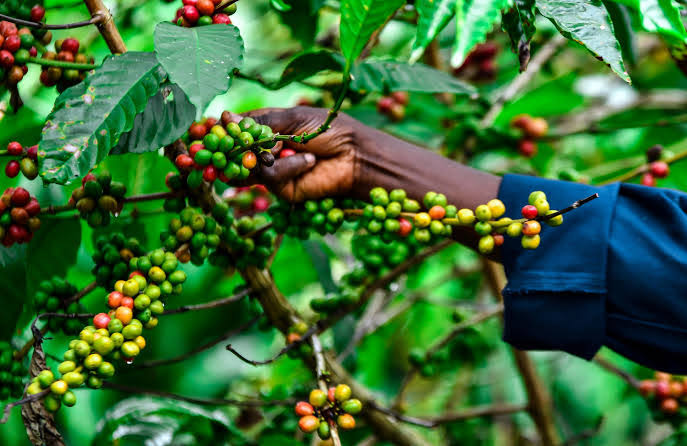
Farmers need to pay attention to harvesting ripe cherries, sorting, drying and storage.
Coffee cherries that are harvested at different stages of ripeness or improperly dried can result in inconsistent quality.
Better post-harvest practices can therefore complement improved farming methods and help producers meet buyer requirements.
Farmers need stronger market connections
Professionalising Robusta coffee farming also means improving the relationship between farmers and markets.
Farmers who understand quality requirements, pricing mechanisms and buyer expectations are better positioned to make informed decisions about production.
Cooperatives and farmer organisations can also play an important role by helping smallholders access training, inputs, finance and markets.
Stronger farmer organisations can make it easier to aggregate coffee and negotiate with buyers while improving traceability.
Uganda’s opportunity in the global coffee market
Uganda is one of Africa’s major coffee-producing countries, and Robusta remains central to its coffee industry.
The crop is particularly important to smallholder farmers, making improvements in productivity and value potentially significant for rural households.
Rather than focusing only on increasing the quantity of coffee produced, the sector can benefit from improving quality, consistency and value addition.
That approach could help Uganda capture a larger share of the value generated along the coffee supply chain.
From farming to agribusiness
The call to professionalise Robusta farming reflects a broader shift towards treating agriculture as a commercial enterprise.
For coffee farmers, this means viewing the farm as a business that requires planning, investment and careful management.
Farmers can track production costs, monitor yields, plan for seasonal expenses and assess which practices provide the best returns.
Such an approach can also make it easier for farmers to engage financial institutions and potential investors.
What professional Robusta farming could mean for farmers
If adopted more widely, professional farming practices could provide several potential benefits:
- Improved coffee quality
- Higher and more consistent yields
- Better farm management
- Reduced post-harvest losses
- Stronger relationships with buyers
- Improved traceability
- Greater access to specialised markets
- Potential access to quality premiums
However, achieving these benefits requires investment in farmer training, extension services, infrastructure and market access.
The road ahead for Uganda’s Robusta sector
Uganda’s coffee industry has significant potential, but farmers cannot unlock premium markets through production volume alone.
Quality has to be maintained throughout the entire supply chain, from the coffee plantation to harvesting, processing, storage and export.
Professionalising Robusta farming can therefore form part of a broader strategy to strengthen Uganda’s position in the global coffee market.
Conclusion
Dr Ian Clarke’s call to professionalise Robusta coffee farming highlights an important opportunity for Uganda’s agricultural sector.
Improved farm management, better harvesting and post-harvest handling, stronger market connections and greater attention to quality could help farmers compete more effectively in premium coffee markets.
For Uganda’s Robusta farmers, the opportunity is not simply to produce more coffee but to produce coffee that consistently meets higher-value market expectations.