Primary science kits are becoming an increasingly important part of Uganda’s effort to move science education beyond textbooks and blackboards.
The Ministry of Education and Sports is expanding the distribution of portable mini-laboratory equipment to government-aided primary schools, giving pupils an opportunity to observe, experiment and understand scientific ideas through practical lessons.
The programme is designed to address a long-standing challenge in many primary schools, particularly those without conventional science laboratories or enough equipment for practical lessons.
According to the Ministry of Education and Sports, Uganda has procured and distributed 3,156 mini-laboratory science kits to the same number of government-aided primary schools over the five financial years since 2021/22. The long-term goal is to reach all 12,433 government-aided primary schools in the country.
Primary science kits bring experiments into ordinary classrooms
The biggest advantage of the primary science kits is their portability.
Instead of requiring schools to build expensive laboratories before pupils can conduct experiments, the kits bring basic scientific equipment directly into classrooms.
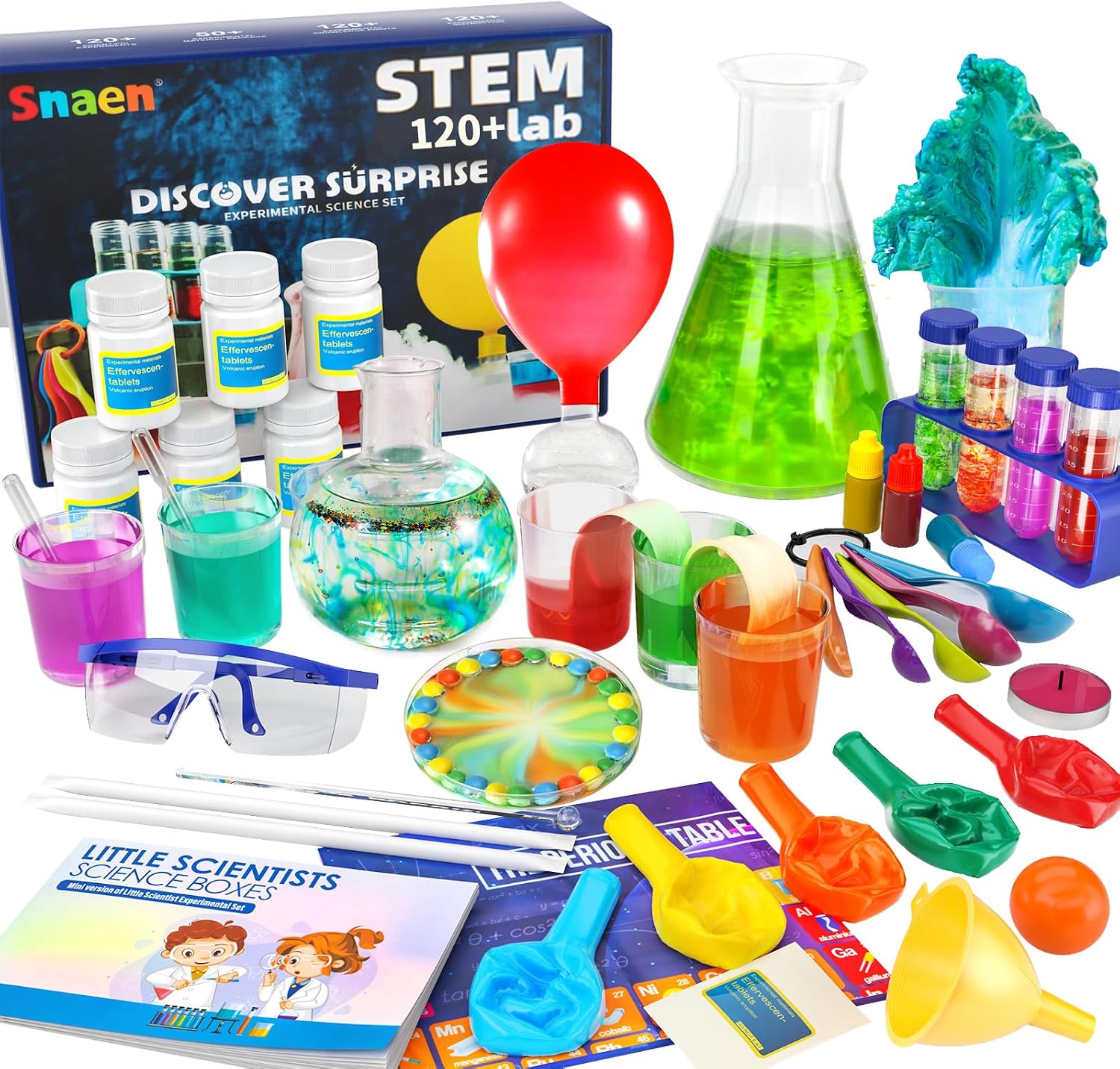
They contain materials that allow teachers to demonstrate concepts involving areas such as measurement, electricity, magnetism and human biology.
Some kits include microscopes as well as models of the human eye and circulatory system, allowing pupils to see and interact with concepts they might otherwise encounter only as diagrams in textbooks.
That can make an enormous difference for younger learners.
A child who reads about magnets, for example, may remember a definition for an examination. But allowing that pupil to experiment with magnets can help them understand why the concept works.
The same principle applies across much of science.
Government wants science lessons to become more practical
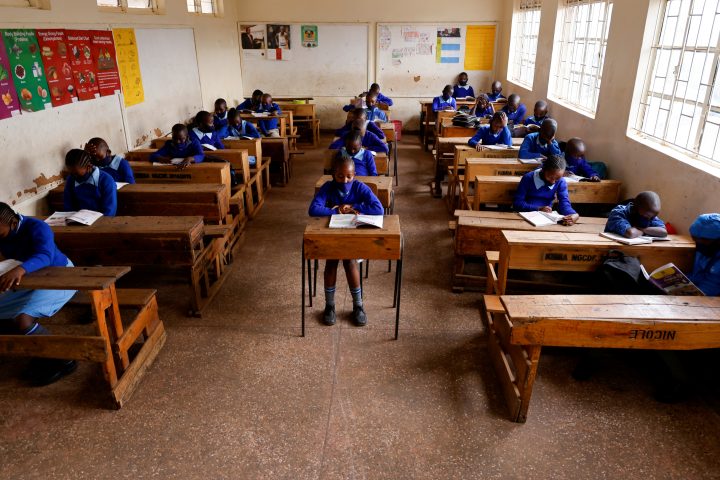
For years, many Ugandan primary schools have taught science largely through theory because they lack adequate equipment.
The new programme is intended to change that.
In August 2026, 20 primary schools in Buhweju District received mini-laboratory kits as part of the national rollout. District education officials said the equipment would allow learners to conduct experiments, understand concepts more clearly and develop an interest in STEM subjects earlier in their education.
Similar distributions have taken place elsewhere.
Twenty selected primary schools in Maracha District received science kits in August under Phase VII of the programme. The group included 15 higher-performing schools and five lower-performing schools, an approach intended to both support strong performers and help schools facing academic challenges.
Ibanda District also received kits for 20 government-aided primary schools. The equipment included electricity experiment sets, measuring tools and materials for teaching magnetism.
Primary science kits support learner-centred education
The programme fits into Uganda’s broader move towards competency-based and learner-centred education.
Under that approach, pupils are expected to do more than memorise information.
They are encouraged to observe, ask questions, experiment, solve problems and apply what they learn.
Primary science kits give teachers practical tools for making that happen.
The Ministry has said the equipment allows learners to move beyond theory and begin observing and experimenting with scientific concepts using real teaching materials.
That experience can help pupils build skills that are difficult to develop through note-taking alone.
Science becomes something they participate in rather than simply read about.
Teacher training is critical to making the kits useful
Providing equipment is only part of the solution.
Teachers also need to know how to use it effectively.
That lesson has already emerged during earlier phases of the programme. In some schools, equipment was delivered before teachers had received enough practical training, meaning some materials remained unused.
The Ministry and its partner River Flow International have therefore been training teachers alongside the distribution programme.
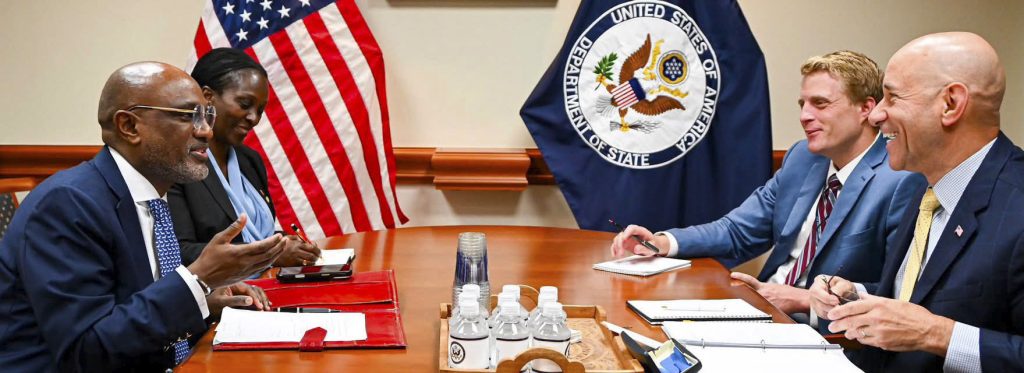
In August 2026, science teachers from 15 Universal Primary Education schools in Tororo Municipality received specialised training at St Kizito Primary School.
The sessions focused on helping teachers use the primary science kits to conduct interactive, practical and learner-centred lessons that match the curriculum.
Teacher preparation could ultimately determine how much value schools receive from the equipment.
A microscope sitting in a cupboard changes very little. A teacher who confidently uses it to show pupils something they have previously seen only in a textbook can transform a lesson.
Bukedea schools also receive primary science kits
Bukedea District is another area benefiting from the initiative.
The Ministry of Education and Sports, working with River Flow International, distributed primary science kits to 20 schools in the district as part of efforts to strengthen science education.
Education officials said schools that had previously received similar equipment were already recording improvements in learner performance.
The kits are deliberately designed around learner participation.
Instead of a teacher demonstrating every concept while pupils watch from their desks, students can take a more active role in experiments and classroom activities.
That interaction can make lessons more memorable and can also encourage curiosity.
Science learning begins long before secondary school
Uganda has placed considerable emphasis on science, technology and innovation as part of its development plans.
But creating future engineers, doctors, researchers and technicians does not begin when learners enter university or secondary school.
Interest often starts much earlier.
A pupil who enjoys experimenting in Primary Five may be more willing to pursue science later than one who spends years viewing the subject as little more than difficult notes and examinations.
That is one reason the primary science kits initiative matters.
It introduces practical science at a stage when pupils are still discovering what subjects interest them.
The Ministry says the programme is aligned with Uganda’s Human Capital Development agenda and National Development Plan IV, with the broader aim of supporting a skilled and science-driven workforce.
Rural schools could see some of the biggest benefits
The initiative may be particularly valuable in rural and under-resourced schools.
Building and equipping a traditional laboratory requires significant funding. Schools may need specialised rooms, furniture, storage facilities, water, electricity and additional equipment.
Portable mini-laboratories offer a more immediate alternative.
They cannot replace every benefit of a fully equipped laboratory, but they allow schools to introduce meaningful practical science without waiting for major infrastructure projects.
The government has previously targeted disadvantaged schools where access to science equipment is limited. In 2025, the Ministry procured science kits worth about Shs2.4 billion to support practical lessons in selected schools.
Expanding the programme could therefore help narrow differences in learning opportunities between schools with strong laboratory facilities and those with very limited resources.
Schools must protect and properly use the equipment
Distribution alone will not guarantee success.
Schools will also need to maintain the equipment.
During the Maracha handover, local leaders urged headteachers to ensure that the kits were properly used, secured and maintained to prevent theft, vandalism or misuse.
Similar responsibility will be necessary nationwide as more schools receive the equipment.
Science materials can become ineffective if important components disappear or are damaged.
Headteachers and teachers will therefore need systems for storage, supervision and regular classroom use.
The goal should be for the kits to become part of normal science teaching rather than equipment brought out only during inspections or special demonstrations.
Primary science kits could change how pupils view science
One of the programme’s most important effects may be difficult to measure immediately.
It could change children’s perception of science.
Science can seem intimidating when pupils encounter it mainly through definitions, diagrams and examinations.
Practical activities make the subject more tangible.
Learners can see electricity produce an effect, examine objects through a microscope, measure quantities themselves and test whether their predictions are correct.
Those moments can turn an abstract subject into something understandable and enjoyable.
Earlier assessments of Uganda’s mini-laboratory initiative have highlighted the same idea: practical learning can help pupils develop scientific skills, critical thinking, problem-solving and analytical abilities from Primary Four through Primary Seven.
Uganda’s challenge is taking the programme nationwide
The ambition behind the programme is significant.
With 3,156 government-aided primary schools having received kits over five financial years, thousands of other schools still need to be reached before the government meets its target of covering all 12,433 institutions.
That will require sustained investment, teacher training and monitoring.
Schools receiving the equipment will also need continued technical support so that damaged or missing components do not gradually make the kits unusable.
But the direction is clear.
Uganda wants practical science to begin much earlier in a child’s education.
If the primary science kits are consistently used rather than simply distributed, the programme could give thousands of pupils something many schools have struggled to provide: the chance to learn science by actually doing it.