A new Taiwan Uganda dispute has emerged after Taiwanese authorities said Ugandan immigration officials withheld the passports of Taiwanese travellers at Entebbe International Airport and demanded that they produce passports issued by China.
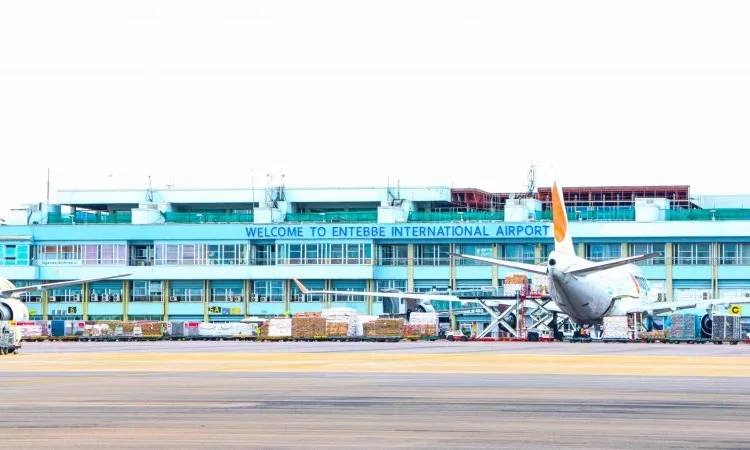
Taiwan’s Ministry of Foreign Affairs said three Taiwanese nationals encountered difficulties after arriving at Entebbe on August 12, 2026. According to Taipei, the travellers were eventually permitted to enter Uganda, but immigration officials initially refused to return their Taiwanese passports unless Chinese passports were provided for immigration stamps.
The incident has intensified concerns in Taipei about Taiwan’s shrinking diplomatic space in Africa, where most governments maintain formal relations with Beijing and recognise the People’s Republic of China under their respective one-China policies.
Uganda, for its part, has repeatedly and publicly reaffirmed its commitment to the One-China Principle. Its Foreign Affairs Ministry said in November 2025 that Kampala recognises the government of the People’s Republic of China as the sole legal government representing China and does not maintain official diplomatic relations with Taiwan.
The passport controversy, however, raises a separate practical question: how Uganda’s diplomatic position toward China should affect ordinary Taiwanese travellers arriving at its borders.
Taiwan Uganda Dispute Erupts at Entebbe Airport
Taiwan’s Foreign Ministry said the latest incident involved three Taiwanese travellers arriving at Entebbe International Airport at around 3 p.m. local time on August 12.
According to the ministry’s account, Ugandan immigration officers took their Taiwanese passports and said the travellers needed to present Chinese passports because of Uganda’s adherence to the One-China Principle.
Taipei said its representative office in Somaliland, which handles matters involving Uganda, worked with the Taiwanese business community in Uganda to assist the travellers.
The incident was not the first of its kind.
Taiwan’s Foreign Ministry said two earlier Taiwanese travellers had also experienced problems with Ugandan immigration officials. One of those travellers was eventually denied entry and sent back.
The repeated cases prompted Taiwan to advise its citizens to reconsider non-essential tourism and business travel to Uganda while it seeks clarification.
Taiwan Urges Citizens to Postpone Uganda Travel
On August 13, Taiwan’s Ministry of Foreign Affairs formally urged Taiwanese citizens to postpone tourism and business travel to Uganda following the airport incidents.
Taipei said it was attempting to clarify the situation with Ugandan authorities and determine whether there had been an official change in immigration policy.
Crucially, Taiwan said it had not been formally notified of any new Ugandan visa or entry rule applying to Taiwanese passport holders.
That distinction is important.
Uganda’s political recognition of Beijing is well established. But a diplomatic One-China policy and the practical handling of travel documents at an airport are not necessarily the same issue.
Until Uganda formally clarifies its immigration rules, Taiwanese travellers may face uncertainty over whether their passports will be accepted normally upon arrival.
Uganda Firmly Backs the One-China Principle
Uganda’s diplomatic position itself is not new.
In a November 11, 2025 statement marking 63 years of Uganda-China diplomatic relations, Uganda’s Ministry of Foreign Affairs reaffirmed what it described as its firm commitment to the One-China Principle.
The ministry said Kampala recognises the People’s Republic of China government as the sole legal government representing China and regards Taiwan as part of China.
Uganda also stated that it does not maintain official or diplomatic relations with Taiwan and opposes efforts aimed at creating what it described as “two Chinas” or “one China, one Taiwan.”
That places Uganda firmly within Beijing’s diplomatic camp on the Taiwan question.
However, Uganda’s published foreign-policy statement does not itself set out an immigration requirement saying Taiwanese residents must carry passports issued by mainland China.
That is why the latest airport incidents have become a source of controversy.
Why Chinese Passports Are a Major Issue for Taiwanese Travellers
For Taiwanese citizens, being asked to produce a passport issued by the People’s Republic of China creates an obvious problem.
Taiwan operates its own government, immigration system and passport regime. Beijing claims sovereignty over Taiwan, while Taiwan’s current government rejects Beijing’s sovereignty claims. This political dispute has existed for decades and remains one of the most sensitive issues in relations between Beijing and Taipei.
Taiwanese travellers normally travel internationally using passports issued by authorities in Taipei.
Therefore, asking a Taiwanese visitor to produce a mainland Chinese passport is not simply an unusual documentation request. It directly touches the fundamental political disagreement between Beijing and Taipei over Taiwan’s status.
Taiwan’s Foreign Ministry has consequently criticised the reported demand and urged Uganda not to impose politically driven restrictions on ordinary travellers.
Taiwan Uganda Dispute Comes Amid Wider Africa Pressure
The Uganda incident is not happening in isolation.
Taiwan has experienced several diplomatic setbacks across Africa during 2026 as governments aligned with Beijing have taken increasingly restrictive positions toward Taiwanese officials, travellers or representatives.
In June, Taiwan accused Kenya of preventing Taiwanese delegates from attending the Our Ocean Conference in Mombasa. Taiwan said some participants had visas revoked and their passports and phones confiscated for more than 20 hours.
China praised Kenya for adhering to the One-China Principle, while Taiwan strongly protested the treatment of its delegates.
The incident led Taiwan’s Foreign Minister Lin Chia-lung to describe increasing Chinese pressure on Taiwan’s international participation as a growing feature of the diplomatic environment.
African Airspace Has Also Become Part of the Dispute
Another major confrontation occurred earlier in 2026 when Taiwan President Lai Ching-te planned a trip to Eswatini.
Taiwan said Seychelles, Mauritius and Madagascar withdrew permission for Lai’s aircraft to cross airspace they controlled, forcing the trip to be postponed. Taipei accused Beijing of using economic pressure to influence those governments. China denied coercion and praised the countries for supporting its One-China Principle.
Lai eventually travelled to Eswatini in May under revised arrangements.
The episode demonstrated how the diplomatic contest between Beijing and Taipei is increasingly affecting not only formal recognition but also travel, aviation and participation in international events.
The Uganda passport controversy adds immigration procedures to that expanding list.
Eswatini Remains Critical to Taiwan in Africa
Africa has become particularly challenging territory for Taiwanese diplomacy.
Eswatini remains Taiwan’s sole formal diplomatic partner on the continent, making Taipei’s relationship with the southern African kingdom strategically important.
Most African governments maintain diplomatic relations with Beijing, while China has built extensive economic ties across the continent through trade, infrastructure financing, investment and development cooperation.
That gives the Taiwan question significance well beyond diplomatic protocol.
For Beijing, recognition of the One-China Principle is a core condition in its official relationships.
For Taipei, every additional restriction imposed on Taiwanese travellers, officials or organisations is viewed as further erosion of its ability to participate internationally.
China and Taiwan Hold Fundamentally Different Positions
The disagreement ultimately reflects two incompatible political positions.
Beijing regards Taiwan as part of Chinese territory and opposes treating it as an independent sovereign state. China has repeatedly encouraged governments with which it maintains diplomatic relations to reject formal state-to-state engagement with Taipei.
Taiwan’s government, meanwhile, rejects Beijing’s claim that the People’s Republic of China has sovereignty over Taiwan and insists that Taiwanese people have a right to participate internationally.
Uganda has formally aligned itself with Beijing’s interpretation.
Its Foreign Affairs Ministry has gone beyond simply saying that Kampala recognises Beijing. Uganda has explicitly said it regards the Taiwan question as China’s internal affair and supports efforts toward what Beijing describes as reunification.
Against that backdrop, the latest immigration dispute is politically sensitive even though it involves only a small number of travellers.
Business Links Could Be Affected
Taiwan has also highlighted the commercial implications of the dispute.
According to Taiwan’s Foreign Ministry, nearly 70 Taiwanese nationals live in Uganda and approximately 35 Taiwanese-invested companies operate in the country.
That means uncertainty over travel documents could extend beyond tourism.
Business owners, employees and investors need predictable immigration procedures when travelling between countries. If Taiwanese passport holders cannot be certain that their documents will be accepted at Entebbe, companies may have to reassess travel arrangements until Kampala provides clearer guidance.
Taipei has argued that politically motivated restrictions could therefore affect ordinary economic and people-to-people exchanges, not merely diplomacy.
Ebola Restrictions Add Another Layer to the Dispute
The timing also comes against a separate immigration disagreement between Taiwan and Uganda.
Taiwan introduced temporary entry restrictions affecting travellers from Uganda and the Democratic Republic of Congo from June 2, 2026, citing concerns linked to Ebola. The measures were announced as a 90-day public-health precaution and included suspending visa issuance for most affected travellers.
A Taiwanese foreign ministry official said earlier Ugandan airport cases could potentially be connected to those restrictions, although Taiwan said it could not rule out a broader policy change linked to Uganda’s One-China stance.
There is currently no publicly verified evidence establishing that Uganda’s reported treatment of Taiwanese travellers was retaliation for Taiwan’s Ebola-related restrictions.
The distinction matters because the two governments’ motivations should not be assumed without an official Ugandan explanation.
Uganda Has Yet to Publicly Clarify a New Passport Rule
One of the biggest unanswered questions is whether the incidents at Entebbe represent a formal nationwide policy.
Taiwan said on August 13 that Uganda had not formally announced any change to entry or visa requirements for Taiwanese nationals.
Uganda’s Ministry of Foreign Affairs publicly states its support for Beijing’s One-China Principle, but its November 2025 statement addresses diplomatic recognition rather than setting out specific passport procedures for private Taiwanese travellers.
That leaves several questions unresolved.
Are Taiwanese passports no longer accepted for entry?
Were the Entebbe incidents isolated immigration decisions?
Is there a new directive that has not yet been publicly announced?
Or are officials interpreting Uganda’s One-China policy more broadly than before?
Until Kampala provides an official immigration clarification, those questions remain open.
Taiwan Uganda Dispute Could Become a Wider Diplomatic Test
The immediate dispute concerns only a handful of travellers, but its importance extends much further.
If Uganda formally stops recognising Taiwanese travel documents for immigration purposes, the move would represent a significant tightening of how Kampala applies its One-China policy.
It could also encourage closer scrutiny of how other African countries treat Taiwanese travellers.
Recent developments in Kenya, Uganda and elsewhere show that the competition between Beijing and Taipei increasingly affects areas that ordinary travellers may once have considered separate from high-level diplomacy.
Passports, visas, conference attendance and even overflight permissions are becoming part of the geopolitical contest.
What Happens Next?
Taiwan says its representatives will continue discussing the matter with Ugandan authorities while assisting affected citizens. It has advised people considering tourism or business travel to Uganda to postpone their trips while the situation remains unclear.
For Uganda, the next important step would be clarification of its immigration policy.
Kampala’s diplomatic position on China and Taiwan is already unambiguous. Uganda openly supports Beijing and does not recognise Taiwan as a separate state.
What remains unclear is whether that position now means Taiwanese-issued passports themselves will face restrictions at Uganda’s borders.
That question is at the heart of the Taiwan Uganda dispute.
If the Entebbe cases amount to a formal change in policy, Taiwan will have suffered another tangible diplomatic setback in Africa. If they were isolated incidents, clear guidance from Uganda’s immigration authorities could prevent the disagreement from growing.
Either way, the controversy shows how the China-Taiwan rivalry is increasingly moving beyond embassies and diplomatic statements and into the everyday movement of people across borders.