Lawyers and civil society activists say Kampala’s Constitutional Square should remain public space as government considers a proposal for a hotel and shopping complex.
A group of lawyers and civil society activists has urged President Yoweri Museveni to reject a proposal that could open part of Kampala’s Constitutional Square to commercial development.
Their concern follows an August 30 directive from Museveni asking Kampala Capital City and Metropolitan Affairs Minister Minsa Kabanda to study a proposal from businessman Hassan Bulwadda.
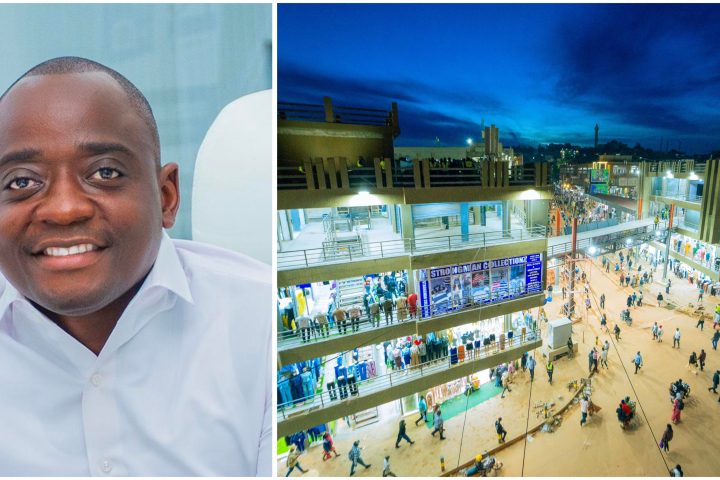
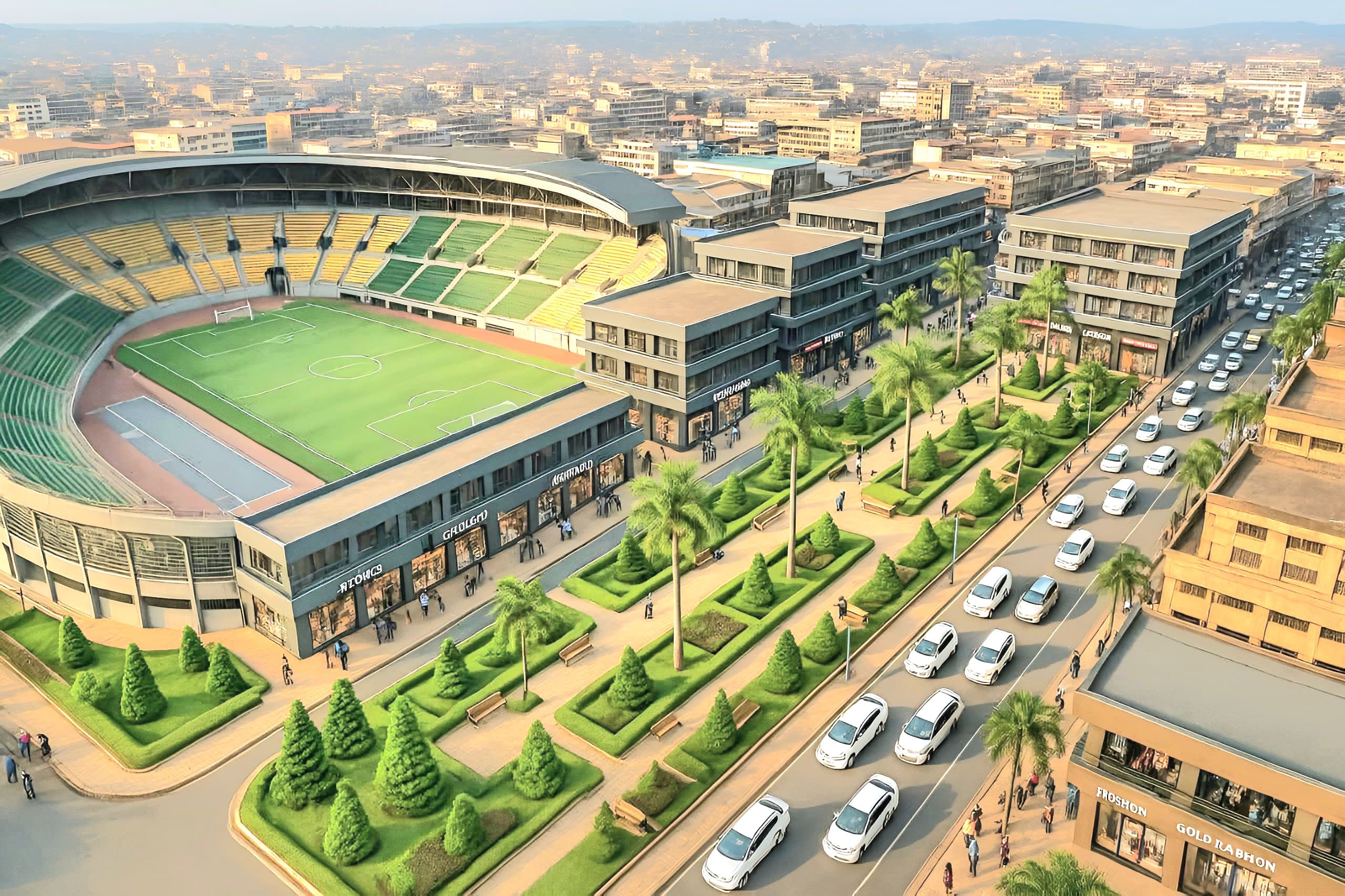
Bulwadda wants to develop about two acres of the square into what has been described as a modern, environmentally friendly real estate complex with a hotel, shopping mall and other commercial facilities.
Museveni has not approved the project. His directive asked the minister to examine the proposal with Kampala Capital City Authority and report back before any decision is taken.
For the lawyers opposing the idea, however, even considering commercial development on Constitutional Square raises serious legal and public-interest questions.
Lawyers say Constitutional Square should remain public
In an open letter to Museveni, the lawyers and activists argued that Constitutional Square is not ordinary government land that can simply be offered to a private developer.
They say the land is held for public use and should remain available to citizens rather than being converted into a commercial property.
Their argument relies partly on Article 237 of Uganda’s Constitution, which provides that government and local governments must hold certain categories of land in trust for the public and protect land reserved for ecological and touristic purposes for the common good.
The group says that principle should guide any decision on the square.
They have asked Museveni to reject the proposal rather than allow it to proceed through further assessment.
What Museveni actually directed
The controversy has at times been framed as though the President has already decided to hand over the square.
That is not what his August 30 letter says.
Museveni told Kabanda to study Bulwadda’s proposal, consult KCCA and return to him with a report.
The President’s Deputy Press Secretary, Faruk Kirunda, has also said no decision has been made to allocate the land to an investor. According to Kirunda, Museveni is waiting for the relevant authorities to assess the proposal before determining what should happen next.
Kabanda has similarly said she cannot simply give away the land and that any decision would have to follow the required legal procedures.
That distinction matters because the proposal remains under consideration rather than approved.
The plan includes a hotel and shopping mall
Bulwadda’s proposal would transform roughly two acres of the central Kampala space into a mixed-use development.
The concept includes a hotel, shopping mall and other commercial facilities, with solar power and other green features forming part of the pitch.
Supporters of projects of this kind may point to investment, jobs, new commercial space and additional city revenue.
Critics, however, argue that describing a project as eco-friendly does not answer the bigger question of whether a major public green space should be developed in the first place.
That debate has become especially important in central Kampala, where open public land has steadily come under pressure from construction and commercial activity.
Constitutional Square already has protected status
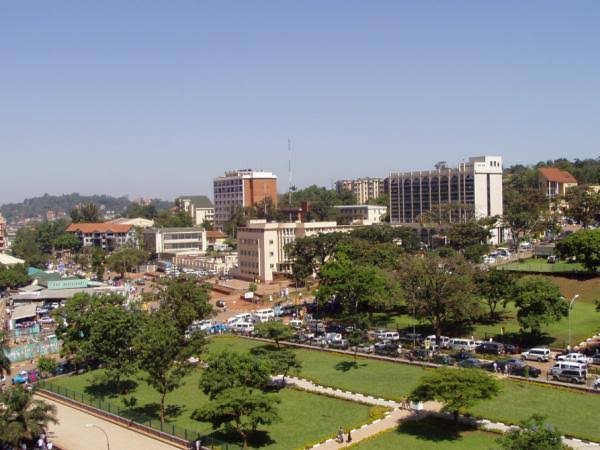
The square has a long history as one of Kampala’s most important public spaces.
In 2007, the government formally declared Constitution Square a protected object under the Historical Monuments Act through Statutory Instrument 30 of 2007.
That status has become one of the key issues raised by opponents of the latest development proposal.
Kampala Lord Mayor Ronald Balimwezo has also asked the Attorney General to advise government against approving the project.
Balimwezo argues that the square has historical, environmental and civic importance and should remain an open public space.
He has described it as an important green area in Kampala’s increasingly built-up central business district.
Kampala’s Lord Mayor also opposes the plan
Balimwezo formally joined the opposition in a September 12 letter to Attorney General Sam Mayanja.
He argued that KCCA has a duty to protect the land and asked government to reject proposals that would turn it into a private commercial development.
His objections go beyond ownership.
Balimwezo says the square provides valuable green space in a part of Kampala dominated by buildings, roads and paved surfaces.
He also argues that it helps absorb stormwater, provides shade and gives people who work or study in the city centre somewhere to sit and gather without having to pay.
His office wants the square maintained as a permanent public and heritage space.
The dispute has a long history
This is not the first time Constitutional Square has been at the centre of a fight over commercial development.
More than two decades ago, the former Kampala City Council attempted to lease the site to businessman Hassan Basajjabalaba.
That decision eventually became part of a long legal dispute involving Basajjabalaba, government compensation and Legal Brains Trust.
The Constitutional Court later ruled against aspects of the arrangement, but the case did not end there.
In September 2025, Uganda’s Supreme Court set aside the Constitutional Court judgment after finding that the lower court did not have jurisdiction to determine a petition involving disputed facts and enforcement issues in the way the case had been brought.
That Supreme Court decision is important to the current debate.
Some opponents of the new proposal argue that broader legal protections applying to Constitutional Square remain relevant despite the 2025 ruling.
However, the Supreme Court did set aside the Constitutional Court’s judgment, declarations and orders on jurisdictional grounds. That means the precise legal effect of the earlier litigation should not be presented as though the Supreme Court simply left all of the Constitutional Court’s findings intact.
Lawyers warn against another long court battle
The group that wrote to Museveni says approving a private development could drag government into another lengthy legal dispute.
Their concern is that the same questions that surrounded earlier attempts to lease the square could return: who has authority over the land, what its protected status allows, and whether it can lawfully be converted from public open space to commercial use.
They have also urged officials involved in reviewing the proposal to make their own assessment of the law.
In their view, a presidential instruction to study a development proposal should not be interpreted as permission to bypass constitutional or statutory requirements.
Public space is becoming a bigger Kampala issue
The disagreement also reflects a wider debate over what Kampala should do with the limited undeveloped land that remains in its centre.
Land in the central business district is extremely valuable.
Turning it into hotels, offices or shopping space could potentially generate jobs and commercial activity.
At the same time, once a park or public square has been built over, recreating that space in the same location is almost impossible.
Climate campaigners opposing the project say Kampala needs to think of green spaces as infrastructure rather than unused land.
They argue that open ground can help with cooling, drainage and flooding while also giving residents breathing room in an increasingly crowded city.
FDC has also threatened legal action
Opposition to the development has extended beyond lawyers and KCCA officials.
The Forum for Democratic Change has said it would consider court action if authorities move towards leasing, selling or otherwise transferring Constitutional Square for the proposed project.
The party says the area should remain available for public gatherings, recreation and civic activities.
The government has not announced a final decision on the proposal.
For now, the issue remains at the assessment stage.
The debate is about more than one development
At first glance, the argument is about whether Kampala should have another hotel and shopping complex.
The deeper question is who gets to decide what happens to public spaces as the city grows.
Commercial development can bring investment and jobs. Public parks and squares provide a different kind of value that is harder to put on a balance sheet.
Constitutional Square has also carried civic and historical importance for decades, making any proposal to change its use especially sensitive.
Museveni has so far asked officials to study the idea rather than approve it.
The lawyers opposing the plan want the process to stop there.
Their message is that Constitutional Square should remain exactly what it has long been: open public space in the heart of Kampala.
Whether government agrees will depend on the legal, planning and policy assessments now being carried out, but any move towards commercial development is likely to face continued scrutiny from KCCA officials, lawyers, political actors and civil society.