To get certified copies of documents in Uganda, first establish which authority the receiving organisation accepts. You may need certification from the institution that issued the document, the government office holding the record, a court registry or an appropriately authorised legal professional.
There is no single certification process that applies to every document. A university transcript, passport copy, court order and company record can require different procedures.
The most useful first step is to ask the organisation requesting your documents exactly what it means by a “certified copy.” This can prevent you from paying for a stamp that does not meet its requirements.
This guide explains the main certification routes in Uganda, the documents to prepare, possible fees and the additional steps that may apply when using documents abroad.
What Is a Certified Copy?
A certified copy is a copy carrying an endorsement from an authorised person or institution confirming its correspondence with the document or official record examined.
For public records, the appropriate officer may certify a copy from the record held by that office. In other situations, an accepted certifier may compare a photocopy with the original presented.
Certification should not be confused with correcting a document, replacing a lost original or verifying every statement contained in it.
For example, certifying a copy of a certificate does not resolve an incorrect name printed on the original. That normally requires attention from the issuing authority.
Certification, Notarisation and Authentication: What Is the Difference?
These terms are sometimes used interchangeably, but they can describe different requirements.
| Service | General purpose | What to clarify |
|---|---|---|
| Certified true copy | Confirms that a copy corresponds with the document or record examined | Who is authorised and accepted to certify it |
| Notarial service | Provides a formal notarial act, which may concern copies, signatures or other matters | The exact notarial act requested |
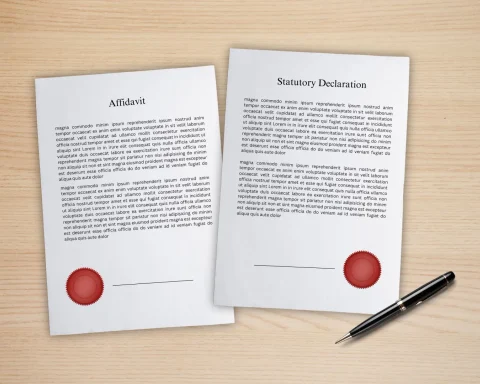
| Commissioning an affidavit | Involves administering an oath or affirmation for a sworn statement | Whether an affidavit is actually required |
| Issuer verification | Checks information against the issuing institution’s records | Whether verification must be sent directly |
| Authentication or legalisation | Provides further official verification for the intended use | The required sequence of authorities |
| Certified translation | Provides a translation meeting the receiving body’s requirements | Accepted translator and certification format |
A commissioned affidavit should not automatically be substituted for a certified copy. Likewise, an ordinary certified photocopy may not satisfy a requirement for issuer verification.
Where to Get Documents Certified in Uganda
The appropriate starting point depends on the document and its intended use.
| Document | Appropriate starting point |
|---|---|
| University certificate or transcript | Issuing university or institution |
| PLE, UCE or UACE results | Uganda National Examinations Board |
| Birth or death register entry | National Identification and Registration Authority |
| Company documents held by URSB | Uganda Registration Services Bureau |
| Court order, judgment or filed court document | Registry of the court holding the record |
| Passport requiring immigration-authority certification | Directorate of Citizenship and Immigration Control |
| Other copies for an application | Certifier expressly accepted by the receiving organisation |
| Documents for use abroad | Issuing authority first, followed by any required authentication |
For a routine application, the receiving organisation may accept a specified legal professional or official. Confirm that requirement before arranging the service.
Step-by-Step Guide to Getting Certified Copies
Step 1: Obtain the Receiving Organisation’s Requirements
Ask the employer, university, bank, embassy or other organisation what it needs.
Useful questions include:
- Must the copy be certified by the issuing institution?
- Is certification by a notary or another specified professional accepted?
- Must every page be certified?
- Are colour copies required?
- Must certification have been completed recently?
- Is a paper copy required, or is an electronic submission accepted?
- Must the issuing authority send the document directly?
- Is further authentication required?
Keep the written instructions and show them to the certifying office where necessary.
Step 2: Identify the Correct Authority
Choose the office or professional appropriate to both the document and the recipient’s instructions.
If a university requires a transcript verified by your former institution, a general photocopy certification may not be enough.
Similarly, if an organisation requests a court-certified order, begin with the relevant court registry.
Step 3: Prepare the Original or Record Details
Where the service involves comparing a copy with an original, take the original document.
For a copy issued from an official register or court file, provide enough information to identify the record. This may include:
- Registration or certificate number.
- Case number and court name.
- Examination year and candidate details.
- Company registration details.
- Names and dates recorded on the document.
Ask beforehand whether a written request, identification or evidence of authority to access the record is required.
Step 4: Make Complete, Legible Copies
Copy all relevant pages and both sides where information appears on the reverse.
Ensure that names, numbers, signatures and seals are visible. Avoid cropped edges, blurred photographs or missing pages.
Do not write over the original or digitally alter its contents.
Step 5: Submit the Request and Pay the Assessed Fee
Follow the office’s application and payment procedure.
Ask whether the fee is charged per page, per copy, per document or per service. Request a receipt and retain the reference until collection is complete.
If a separate search or verification is required, establish whether it carries an additional charge.
Step 6: Check the Certified Copies
Before leaving, inspect the documents.
Check that:
- The correct document has been certified.
- All requested pages are included.
- Text remains readable beneath or beside stamps.
- The endorsement includes the relevant date and certifier’s details.
- Any required signature or seal is present.
Follow the receiving organisation’s prescribed wording or format where applicable.
How to Certify Academic Documents in Uganda
University Certificates and Transcripts
Contact the issuing university or institution, usually through its academic records or registrar’s office.
Explain whether you need certified photocopies, a fresh transcript, direct verification or documents for overseas authentication.
These services may have different application requirements and charges.
Prepare your student number, identification and available academic documents. If someone will submit or collect documents for you, ask about written authorisation.
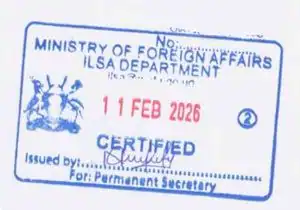
For Ministry of Foreign Affairs processing, its published guidance requires higher-learning documents to be certified by the issuing university or institution.
PLE, UCE and UACE Documents
Start with UNEB when the requirement concerns official verification or certification of national examination results.
UNEB’s electronic services include applications for letters of verification. Its guidance also explains that it does not currently issue duplicate certificates; a verification letter is used for the relevant loss, damage or verification requests.
This distinction matters if the original certificate is missing. A photocopy cannot simply be treated as a replacement original because it carries a stamp.
Ask the receiving organisation whether it requires the verification letter to be delivered directly by UNEB.
School Report Cards
For school report cards undergoing Ministry of Foreign Affairs verification, the Ministry identifies KCCA or the relevant District Education Officer as the certification route.
Confirm the procedure with the school and responsible education office before submitting the document for further processing.
How to Get Certified Copies of Birth and Death Records
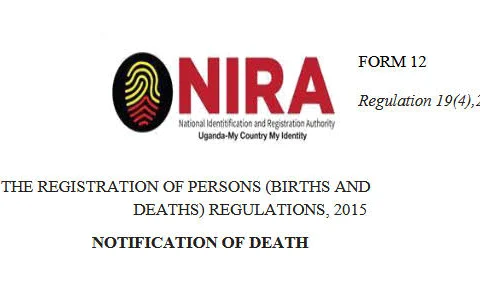
For an official certified copy of an entry in the birth or death register, contact NIRA.
NIRA publishes a specific application form for certified copies of register entries. This is a registry service and should be distinguished from having an existing photocopy compared with an original certificate.
Provide the registration details requested and confirm the applicable form, supporting documents and fee.
If the event was never registered, certification is not a substitute for completing registration. Ask NIRA which process applies.
Where your document contains an error, enquire about correction rather than requesting more copies carrying the same mistake.
How to Get Certified Company Documents
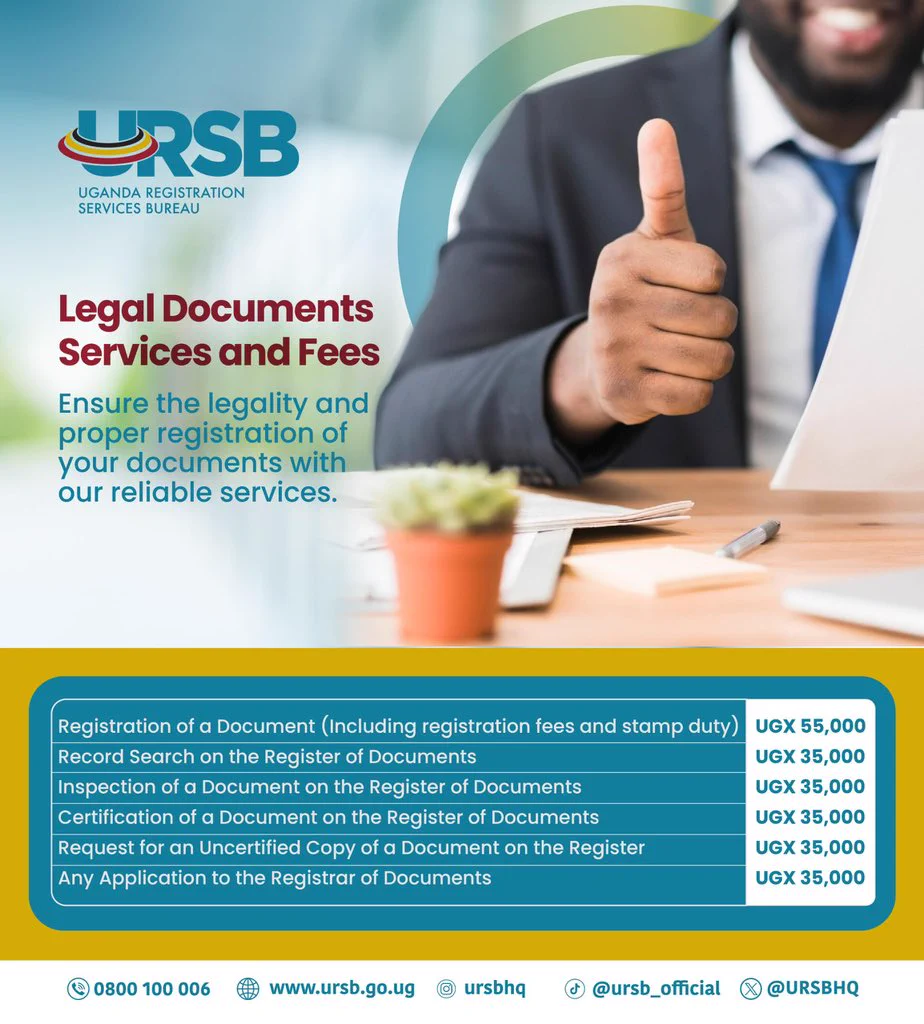
URSB provides certification services for relevant business records.
Its published procedure involves presenting copies, paying the certification fees and submitting the documents with the payment receipt to the Business Registry.
Identify the precise record required. A request for a certified incorporation document is different from a request for an uncertified registry copy or a company search.
Have the company name, registration number and document description ready. Confirm whether you should use the online registry service or submit through an office.
Use the fee category assessed for that particular request rather than assuming all business documents cost the same.
How to Get Certified Court Documents
Apply to the registry of the court holding the case record.
Provide the case number, parties’ names and a clear description of the document required. Specify whether you need an order, judgment, proceedings or another filed document.
Ask about access requirements and the assessed copying and certification fees.
The Judiciary’s published service standards provide a target of three working days for certification of filed court documents. Confirm the expected completion date with the registry, particularly where retrieval or another preliminary step is needed.
Do not assume that a certified judgment automatically includes the extracted order or complete proceedings.
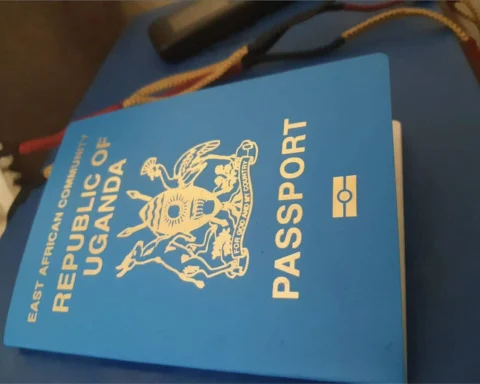
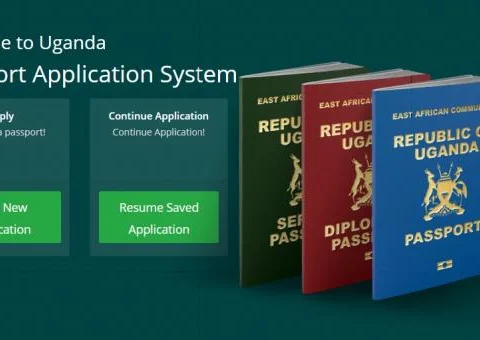
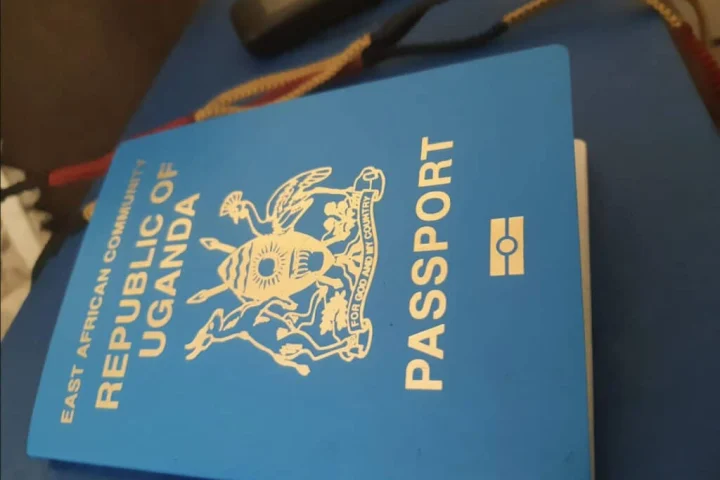
How to Get a Passport Copy Certified
Where immigration-authority certification is required, the Directorate of Citizenship and Immigration Control publishes a specific passport-certification procedure.
Its requirements include:
- The original passport.
- Proof of payment.
- Three colour photocopies of the passport.
The published procedure directs applicants to obtain a payment assessment, then present the copies, payment evidence and original passport at the passport enquiry office.
The stated certification fee is UGX 30,000 per copy. Confirm the current assessment before paying and clarify which pages are required for your purpose.
A recipient that accepts another specified certifier may have a different process. Establish what is needed before choosing the service.
Can a Commissioner for Oaths Certify Documents?
Do not assume that every request for a certified copy can be met by commissioning an affidavit.
Commissioners for oaths perform functions involving oaths and affidavits. Whether a particular copy certification is accepted depends on the document, the certifier’s authority and the receiving organisation’s rules.
If the checklist specifically accepts a commissioner for oaths, show the professional that instruction and ask for the correct service.
If it requires issuer certification, notarisation or a registry-issued copy, arrange that service instead.
Getting Documents Ready for Use Abroad
A certified copy may be only the first stage when submitting documents overseas.
The Ministry of Foreign Affairs publishes document-specific verification requirements. These distinguish between examination results, university documents, identity documents and legal records.
A practical approach is to:
- Obtain the destination organisation’s checklist.
- Arrange the required issuer certification or verification.
- Complete Ministry of Foreign Affairs processing where required.
- Obtain any further diplomatic or destination-country authentication specified.
Do not assume the sequence is identical for every country or document.
Ministry of Foreign Affairs Charges
The Ministry’s published verification schedule lists UGX 20,000 per copy for the document categories shown.
That is a separate service charge. It should not be treated as a universal fee covering initial certification, translations, issuer verification and embassy processing.
Confirm the current payment instructions and complete requirements before submitting.
Documents in Another Language
Ask whether a translation is required and which translator the relevant authority accepts.
The Ministry’s guidance includes specific translation requirements for foreign-origin documents. Obtain those instructions before paying for a translation that may not be accepted.
Certification of a source document and certification of its translation are separate questions.
How Much Does Document Certification Cost in Uganda?
There is no single charge covering every certification route.
| Service | Fee guidance |
|---|---|
| University document certification | Confirm with the issuing institution |
| UNEB verification | Confirm the applicable service assessment |
| NIRA register copy | Confirm the relevant applicant and record category |
| URSB certified business record | Confirm the specific registry fee |
| Court-certified document | Obtain an assessment from the registry |
| DCIC passport certification | Published fee: UGX 30,000 per copy |
| Ministry of Foreign Affairs verification | Published schedule: UGX 20,000 per copy for listed categories |
| Notarial or other professional service | Request the applicable charge before proceeding |
Also budget for copying, transport, courier services and any separate translation or authentication.
What if You Have Lost the Original?
Contact the issuing authority or official record holder.
Depending on the document, you may need a replacement, an official register extract or a verification letter.
A certifier should not be expected to confirm a photocopy against an original that has not been presented. An issuing authority may instead be able to provide a document from its own records.
Explain the loss honestly and ask which evidence is required.
Can You Submit a Scanned Certified Copy?
Ask the receiving organisation.
Some processes accept an uploaded scan of a properly certified paper copy. Others require the physical document or direct delivery by the issuer.
Scanning a document and adding an image of a stamp does not establish valid certification.
If electronic certification is requested, confirm the accepted signature and verification requirements.
Common Reasons Certified Copies Are Rejected
Wrong Certifying Authority
The recipient may require certification from the issuer rather than a general professional.
Incomplete Documents
A missing reverse side, attachment or transcript page can make the submission incomplete.
Unreadable Copies
Blurred details and stamps covering essential information may require new copies.
Name Differences
Certification does not explain why names differ across documents. Ask which supporting evidence or correction procedure is required.
Missing Further Authentication
For overseas use, an ordinary certified copy may not satisfy the complete checklist.
Incorrect Certification Format
Some recipients specify wording, dates, professional details or page-by-page certification. Follow those instructions precisely.
Frequently Asked Questions
Where Can I Get Documents Certified in Uganda?
Start with the issuing institution or official record holder. Depending on the requirement, this may be a university, UNEB, NIRA, URSB, a court registry or immigration authority. Use another certifier only where appropriate and accepted.
Do I Need to Take the Original?
For comparison-based certification, normally take the original. For registry-issued copies, ask what record details and identification are required.
Can One Stamp Cover Several Documents?
Do not assume so. Ask whether each page or document must be endorsed separately.
Do Certified Copies Expire?
There is no single answer for every document and recipient. Some organisations require recently certified copies or recently issued records. Check their instructions.
Does Certification Correct an Error?
No. Contact the issuer about correcting the underlying document.
Can Someone Apply on My Behalf?
Ask the responsible office whether representation is allowed and what authorisation is needed. Requirements vary by service.
Is Ministry Authentication Always Required?
No. It depends on the document and intended use. Follow the receiving organisation’s checklist.
Get the Required Certification Before Submitting
Begin with the recipient’s instructions, identify the correct authority and prepare complete copies or accurate record details.
Confirm the charges, inspect the finished documents and allow time for any additional verification. Choosing the correct process at the start helps avoid rejected applications and repeat payments.
read Also;How to Start a Forex Trading Account in Uganda
Read Also: How to Start a Money Lending Business in Uganda
Read Also: How to Apply For a Change in Particulars of Directors of Licensed Money Lending Procedure in Uganda