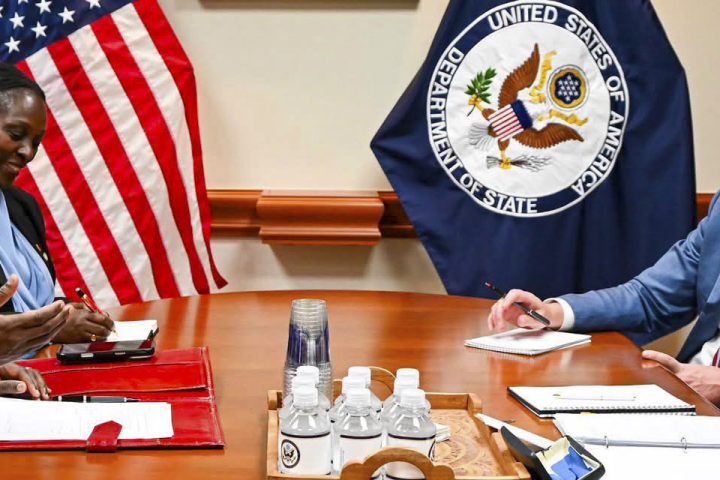
Uganda and the United States recently signed a significant five-year health cooperation agreement. This landmark Uganda US Health Deal carries a total value of $2.3 billion. Specifically, the agreement outlines up to $1.7 billion in US funding for Uganda’s health sector. The two nations announced the bilateral deal on Wednesday. This framework helps Uganda develop a resilient health system. In fact, it prevents the global spread of emerging and existing infectious diseases.
A Pivotal Shift in the Uganda US Health Deal
This agreement forms part of the Trump administration’s “America First Global Health Strategy.” This strategy calls for poorer nations to transition from aid dependency to self-reliance. Consequently, the new model replaces traditional aid assistance. It shifts focus away from non-governmental organizations (NGOs). Instead, the funds go directly to the Government of Uganda (GoU).
The transition follows the administration’s overhaul of foreign aid. It also occurred after the effective closure of USAID operations. Kenya and Rwanda have already signed similar bilateral pacts. This Uganda US Health Deal marks the latest effort to implement the new model across Africa. This approach fundamentally changes the donor-recipient dynamic. It positions the GoU as the primary owner and financier of its health destiny.
Key Programs and Investment Focus
The US funds will target Uganda’s priority health programs. These programs include battling HIV and AIDS, tuberculosis (TB), and malaria. Furthermore, the investment focuses on maternal and child health, as well as polio eradication.
However, the deal goes beyond disease-specific outcomes. It also invests heavily in strengthening national systems. Specifically, the US will finance improvements in human resources and disease surveillance. Over the next five years, the US government plans significant investment in data and disease surveillance systems. Consequently, these investments will advance the GoU’s digitization agenda. They will also improve data capture and the use of electronic medical records (EMRs). They also integrate systems and enhance interoperability. Additionally, the framework supports frontline health workers. It also helps faith-based health providers through various mechanisms.
Driving Self-Reliance: The Core of the Uganda US Health Deal
The new Memorandum of Understanding (MOU) places a heavy emphasis on co-investment. It demands greater financial responsibility from the Government of Uganda. This is crucial for long-term sustainability.
According to the joint statement, the GoU commits to increase its domestic health expenditure. Specifically, the government will spend more than $500 million over the same five-year period. Finance Minister Matia Kasaija committed to this phased increase. He stated that the collaboration “will yield not only disease-specific outcomes but also significant improvements in national systems, institutions, and workforce capacity.” This co-investment model aims to sustain health gains made over decades. Therefore, it aligns with Uganda’s long-term planning, such as [Uganda’s Vision 2040](internal link to national vision).
Uganda’s Co-Investment: The Future of the Uganda US Health Deal
The commitment from Uganda represents a critical step. It ensures the government allocates the necessary resources. This allows the country to sustain progress in its health systems. It also moves the nation toward true self-reliance. This move is necessary as US budget support gradually decreases.
The agreement details a phased transition plan for key areas. For instance, the GoU will gradually assume responsibility for the procurement of commodities. This strengthens Uganda’s supply chain systems. Likewise, the framework maps frontline health workers, previously US-funded, to GoU payroll cadres. This ensures the continuity of essential community health service delivery and disease surveillance. Ultimately, the success of the Uganda US Health Deal relies on both nations fulfilling their financial and operational pledges. This bilateral partnership promises long-term health benefits for both American and Ugandan citizens by securing global health stability.
For more details on the policy shift, you can refer to the official U.S. Embassy Factsheet. You can also read more analysis of the agreement through [suspicious link removed] reporting.
The context for this major foreign aid overhaul is further explored in a video discussing the Trump Administration’s decision to close USAID. Trump Administration Shuts USAID: A Blow to Global Development provides background on the policy shift that led to the bilateral deal model.
Trump Administration Shuts USAID: A Blow to Global Development – YouTube