School Road Safety concerns are growing in Uganda after the Intelligent Transport Monitoring System (ITMS) released a new report warning about increasing road crash deaths involving school-going children ahead of the reopening of second term on May 25, 2026.
The “Safe Kids, Safe Future” report was unveiled during the closure of Phase One of the campaign at Hotel Africana in Kampala. The findings exposed major gaps in road safety awareness, infrastructure, and enforcement around schools across the country.
According to the 2025 Annual Traffic and Road Safety Report, at least two school-going children die every day in road crashes in Uganda. Traffic Police also reported that Uganda loses an average of 15 people daily in road accidents.
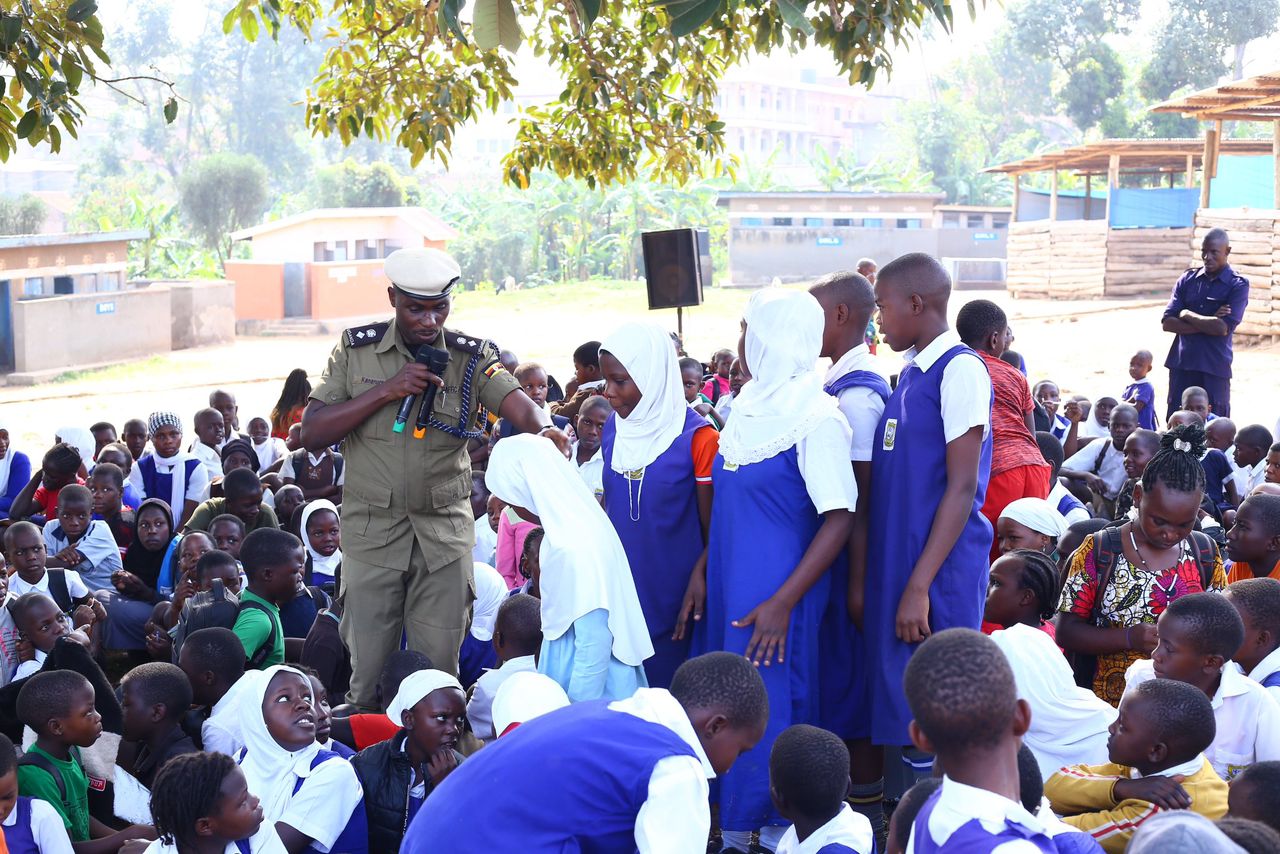
The campaign ran between November 2025 and April 2026 through a partnership involving ITMS, Kampala Capital City Authority, and the Ministry of Works and Transport. It reached around 9,700 pupils in 12 primary schools located in Kampala, Mbale, Fort Portal, and Mbarara.
Officials said the initiative focused on equipping children with practical road safety skills while promoting responsible road use among motorists, parents, and communities.
School Road Safety Campaign Reaches Thousands
Presenting the findings, ITMS Stakeholder Engagement Officer Owen Muhumuza said the campaign aimed to improve awareness among children who remain among the most vulnerable road users in Uganda.
Muhumuza explained that more than 4,000 road safety materials were distributed during the exercise. These included helmets, reflector jackets, and educational materials targeting pupils in selected schools.
The campaign also conducted practical road-crossing demonstrations at schools including Buganda Road Primary School and Kibuye Primary School. Trainers guided pupils on how to interpret traffic signs, identify dangerous crossings, and safely navigate busy roads.
According to Muhumuza, the sensitization campaign produced positive behavioural changes among learners. Several schools also established road safety clubs to help sustain awareness programs.
“Intensified sensitization improved pupils’ understanding of traffic signs, led to positive behavioural change, and resulted in the formation of road safety clubs in schools,” Muhumuza said.
Despite the progress, the report identified several ongoing challenges that continue to expose children to danger on Uganda’s roads.
Infrastructure Gaps Raise Safety Concerns
The report highlighted inadequate pedestrian infrastructure near schools as one of the biggest risks facing pupils. Many schools still lack safe crossings, pedestrian walkways, speed calming measures, and warning signage.
Officials also pointed to severe traffic congestion around school gates during opening and closing hours. In several inspected areas, pupils crossed roads between moving vehicles without guidance from adults or traffic wardens.
The findings further revealed poor road conditions surrounding schools, especially in urban areas experiencing rapid growth. Some roads lacked visible lane markings, while others had damaged surfaces that complicated pedestrian movement.
Limited parental involvement also emerged as a concern during inspections carried out under the campaign. Organisers said many parents fail to reinforce road safety messages outside school environments.
Traffic Police spokesperson Michael Kananura warned that reckless driving and disregard for traffic regulations continue to threaten children across Uganda.
“Children are among the most vulnerable road users,” Kananura said.
He added that human behaviour remains responsible for most road crashes recorded nationwide.
“95 percent of crashes are caused by human behaviour and can be prevented if road users respect traffic laws,” he said.
Government Moves to Strengthen Enforcement
The Ministry of Works and Transport said government is now finalising new regulations targeting school zones to improve child safety.
Road Safety Officer Michael Kamoga said the proposed measures will strengthen enforcement around learning institutions, especially during peak traffic hours when pupils arrive at or leave school compounds.
Kamoga explained that authorities plan to introduce stricter controls against reckless motorists operating near schools. The regulations are also expected to improve coordination between schools, local authorities, and traffic enforcement agencies.
School administrators attending the event pledged to increase investments in child safety measures. Some schools committed to hiring traffic wardens to assist pupils crossing roads during busy periods.
Others promised to allocate part of school budgets toward road safety awareness activities and infrastructure improvements.
Read Also
Uganda Displays Military Might at Museveni Swearing-In
Museveni Sworn In for Seventh Presidential Term
Death Penalty in Law but Not in Practice
Calls Grow to Expand School Road Safety Efforts
Stakeholders at the event urged government and development partners to expand the Safe Kids, Safe Future campaign to more schools nationwide.
Road safety advocates argued that long-term education programs remain critical if Uganda is to reduce preventable child deaths linked to road crashes.
Experts also stressed the need for sustained public awareness campaigns targeting drivers, motorcycle riders, parents, and school communities.
The report’s release comes as schools prepare to reopen for second term amid growing pressure on authorities to strengthen road safety enforcement across urban centres.
With thousands of pupils expected to return to classrooms this week, officials say urgent action is needed to prevent more deaths and injuries involving children on Uganda’s roads.