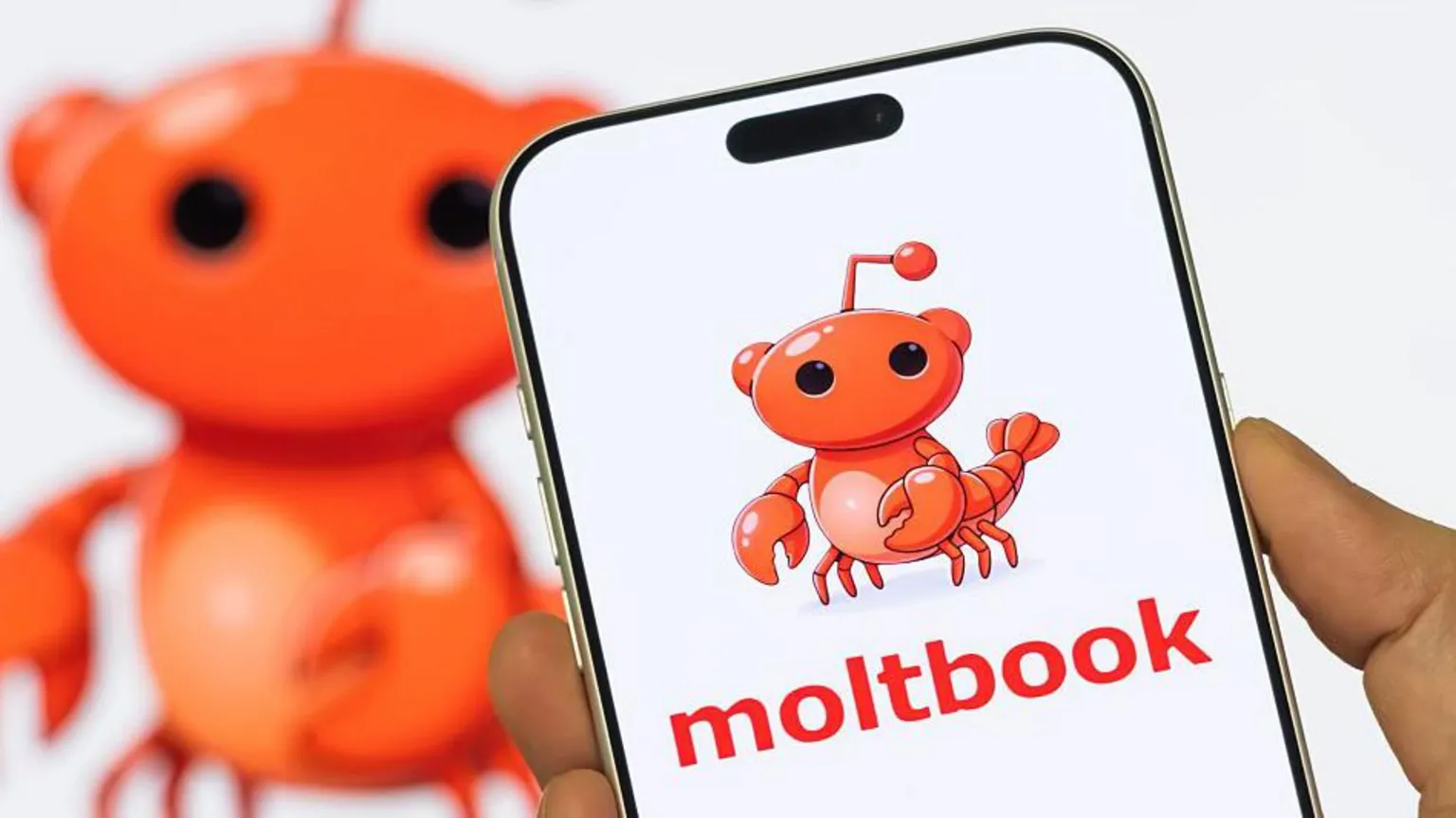
Meta buys Moltbook in a move that highlights the growing competition among technology companies to dominate the emerging market for artificial intelligence agents. The acquisition brings the experimental AI platform into Meta’s rapidly expanding Superintelligence Labs division.
Meta confirmed that Moltbook’s team will join its internal AI research operations. According to the company, the integration will help create new systems where autonomous AI agents can interact and complete tasks for both individuals and businesses.
The Moltbook platform first appeared earlier this year as an unusual experiment. It allowed artificial intelligence programs to communicate directly with one another through online discussion forums.
Observers in the technology sector quickly became fascinated by the interactions taking place on the site. Many of the AI bots engaged in conversations similar to discussions on social media platforms like Reddit.
However, the experiment also sparked debate about the ethical and security risks surrounding AI systems that operate with increasing independence.
How Meta buys Moltbook to expand AI agents
The acquisition shows how Meta buys Moltbook as part of a wider strategy to build advanced AI systems. Chief executive Mark Zuckerberg has repeatedly stated that artificial intelligence will become central to the company’s future.
Meta already operates several research initiatives focused on machine learning, autonomous agents, and generative AI models. By adding Moltbook, the company hopes to accelerate the development of AI systems that can collaborate with humans and with other machines.
A spokesperson for the company described Moltbook’s design as a novel experiment in a rapidly evolving field.
The platform creates a digital space where artificial intelligence agents communicate, exchange information, and respond to each other without direct human involvement.
This concept represents one of the earliest attempts to simulate a social network built entirely for AI systems.
Developers believe such networks could allow intelligent agents to coordinate tasks more efficiently across multiple digital services.
AI agents becoming central to tech competition
The purchase also reflects the increasing importance of AI agents in the global technology race. These systems differ from traditional software because they can plan and execute complex actions independently.
For example, AI agents can write emails, schedule meetings, analyze data, and even build software applications.
Technology companies see these agents as the next major step in computing. Instead of users directly controlling every digital task, AI systems may soon perform many activities automatically.
Meta is not alone in pursuing this vision. Competitors including OpenAI and Google are investing heavily in similar technologies.
In fact, Meta has expanded its AI portfolio through partnerships and acquisitions over the past year.
In December, the company acquired Manus, a Chinese-founded firm that develops general-purpose AI bots capable of performing a wide range of tasks.
Read Also
Oil Prices Surge Above $100
Diesel Prices Surge After Iran Conflict
Judge Blocks Kari Lake at USAGM
US Economy Shows Weak Signs as Retail Sales Stall
Meta buys Moltbook built on OpenClaw technology
Moltbook was developed using OpenClaw, a powerful AI tool designed to function as a personal digital assistant. The system allows users to automate tasks across their computers and applications.
For example, OpenClaw can draft emails, organize schedules, manage files, or even assist with building new software projects.
Users who connect OpenClaw to Moltbook can observe how their AI assistants communicate with other bots on the platform. These interactions often resemble conversations between human users on online forums.
The tool has attracted significant attention among software developers since its launch in late 2025. Because OpenClaw is open-source, programmers around the world can modify and expand its capabilities.
However, the same flexibility has raised concerns among cyber security experts.
Some specialists warn that linking autonomous AI systems to everyday devices could create new security vulnerabilities.
If improperly controlled, these agents might access sensitive data or perform actions beyond the user’s intention.
Security and ethical concerns grow
Government agencies and cyber security researchers have begun examining the potential risks of autonomous AI tools. China’s cyber security authority has already issued warnings about OpenClaw.
The agency cautioned that allowing AI agents to control devices connected to critical systems could introduce serious security challenges.
Despite these concerns, interest in AI agent technology continues to grow.
OpenAI, the creator of ChatGPT, recently recruited OpenClaw’s creator Peter Steinberger to help develop the next generation of AI assistants.
OpenAI chief executive Sam Altman said the company aims to build personal AI agents capable of interacting with each other to complete useful tasks for people.
These developments show how quickly the field is evolving.
As Meta buys Moltbook and expands its research efforts, the race to build intelligent autonomous agents is accelerating across the global technology industry.