Supermarket chains in Uganda are reshaping the retail sector. Moreover, they are actively adapting to evolving consumer habits and economic pressures. Although many households face tighter budgets, demand for organized retail remains strong—especially during festive seasons.
According to Knight Frank Uganda’s Kampala Property Market Performance Review H1 2025, mall occupancy rose by about two percentage points in early 2025. Additionally, shopper footfall grew by 13%, and grocery turnover increased by nearly 8%. Consequently, these figures reveal a resilient market despite income constraints.
Over the past decade, major supermarket chains have entered and exited the Ugandan market. Initially, early entrants attracted customers with clean stores, wide product ranges, and stable pricing. However, some brands later withdrew. Specifically, Shoprite and Tuskys exited due to high operational costs, supply chain issues, mounting debt, and rigid business models that failed to align with local realities.
As a result, their departures disrupted the organized retail segment. Subsequently, many consumers shifted back to neighborhood shops and open-air markets. Therefore, affordability, proximity, and flexibility became more important than brand size. In other words, real-world value now outweighs corporate presence.
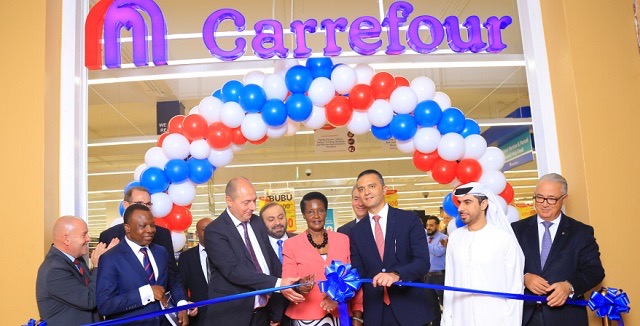
Carrefour, by contrast, has pursued steady expansion. Today, it operates seven stores across Kampala. Thus, it holds one of the largest footprints among supermarket chains in Uganda. Furthermore, this scale enables it to serve a broad urban customer base—particularly during high-demand periods like Christmas.
Shoppers consistently choose Carrefour for convenience and reliability. For instance, Esther Nalukwago, a mother of three from Bugoloobi, says one-stop shopping saves both time and money. Similarly, Joseph Mukasa, an architect in Kira, appreciates not having to visit multiple stores. Likewise, Rehema Kyomuhendo, a teacher in Ntinda, values consistent product quality and transparent pricing.
Beyond physical growth, leading supermarket chains in Uganda are increasingly supporting local producers. In fact, Carrefour’s “Kwata BUBU” campaign actively promotes Ugandan-made goods. It does so through dedicated in-store displays and price incentives. As a result, local businesses gain visibility, and shoppers access affordable, homegrown options. Moreover, this strategy reduces import dependence—a smart move during inflationary periods.
Pricing remains a critical factor in retail decisions. Accordingly, supermarkets run frequent promotions throughout the year. During the festive season, discounts on food, drinks, décor, and household essentials become even more aggressive. Hence, families can celebrate without straining their budgets.
Yet, low prices alone no longer guarantee success. Indeed, the overall shopping experience now carries equal weight. Friendly staff, clear signage, efficient checkouts, and reliable stock all build trust. Meanwhile, not all new malls thrive equally. Footfall remains uneven across locations. Therefore, retailers must offer more than just a convenient address—they must deliver consistent value.
As Uganda’s retail sector matures, the most successful supermarket chains in Uganda will balance scale with agility. They must offer fair pricing without sacrificing quality. At the same time, they should expand thoughtfully while deepening ties with local suppliers. Above all, they must remain responsive to real consumer needs.
This Christmas, brand loyalty is fading. Instead, shoppers prioritize efficiency, trust, and tangible value. Clearly, the retail landscape is still adjusting after years of disruption. For developers, suppliers, and retailers alike, the path forward lies in empathy, flexibility, and service.
In this dynamic environment, supermarket chains in Uganda are no longer just stores. Rather, they are evolving platforms that reflect how communities live, shop, and celebrate together.
READ: MTN MoMo Drives Fintech Resilience Through Awareness and Training Week