Nakivubo Channel Redevelopment is reshaping a drainage corridor that once symbolized Kampala’s flooding challenges. The channel lies in the commercial heart of the city where markets and transport corridors converge. For decades, it cut visibly through the busiest trading zones. The original channel measured six meters wide and carried stormwater and wastewater toward wetlands near Lake Victoria. During heavy rains, water often spilled into nearby streets and markets. In dry seasons, silt and debris collected inside the trench. Solid waste entering the drainage system worsened the problem. By the early twenty-first century, the channel operated close to its design limits.
Today, the corridor no longer measures six meters. It measures twelve. Engineers expanded the drainage structure into two six-meter lanes that run parallel beneath the city. This dual-lane system allows water to move faster through the corridor during heavy rainfall. The reinforced structure also provides greater redundancy if one lane slows due to debris or sediment. Covered sections now conceal the drainage system from street level. Inside the channel, lighting systems illuminate the corridor and support inspection work by engineers. The interior surfaces are painted and reinforced, creating an environment that resembles a controlled underground passage rather than a traditional drainage ditch.
The Nakivubo Channel Redevelopment emerged through cooperation between private developers and public authorities. Ugandan businessman Dr. Hamis Kiggundu led the redevelopment in coordination with the Kampala Capital City Authority and other government agencies. Together they implemented one of the most ambitious structural interventions along the Nakivubo corridor in recent decades. The project focused on improving drainage performance while transforming the surrounding urban space.
However, the transformation is not purely technical. It also reflects spatial and economic changes within Kampala’s central business district. Many rapidly expanding African cities now reconsider how aging infrastructure interacts with urban development. Planners increasingly redesign drainage corridors to support both flood control and commercial activity. The Nakivubo project demonstrates how cities can rehabilitate infrastructure while optimizing valuable urban land.
The central engineering change remains the expansion from six meters to twelve meters. Engineers replaced the single drainage trench with two reinforced channels that carry water simultaneously. This configuration increases hydraulic capacity and stabilizes water flow during peak rainfall events. The system includes catchment sections and silt traps that collect debris before it obstructs the channel. Reinforced structural walls strengthen the corridor and support the structures above it.
Lighting installed within the drainage corridor allows engineers to inspect the system more efficiently. Officials describe the illumination as similar to daylight conditions. Engineers can therefore enter the corridor without the sense of descending into a dark underground drain. Access points along the channel allow technical teams to monitor water flow directly. Maintenance teams can now inspect the corridor regularly instead of waiting for blockages or flooding incidents.
The Nakivubo Channel Redevelopment therefore shifts drainage management from reactive intervention to active monitoring. The interior environment is organized and visibly maintained. Engineers can identify potential problems earlier and respond before water flow slows.
Heavy rainfall during construction provided early tests for the project. Kampala often experiences intense seasonal downpours that strain the city’s drainage grid. During the redevelopment phase, some localized flooding occurred during exceptional rainfall events. These events highlighted the stress placed on urban drainage systems during peak storms.
More recent rains offer encouraging signals. Heavy rainfall recorded in December and the continuing rains during January, February, and early March did not produce flooding along the redeveloped corridor. Water moved through the widened channel without breaching the surface. The expanded dual-lane capacity appears to absorb flows that once spilled into surrounding commercial streets.
Urban hydrologists earlier warned that the system required real-world testing during sustained rainy seasons. The recent sequence of downpours therefore served as an early evaluation of the new drainage capacity. While engineers will assess long-term performance over several rainfall cycles, initial observations suggest that the Nakivubo Channel Redevelopment has significantly improved stormwater movement through Kampala’s central commercial district.
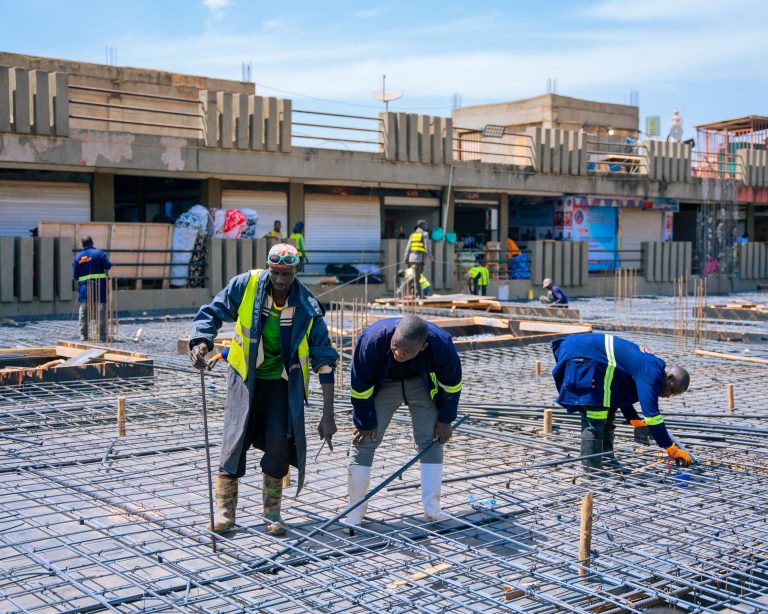
The transformation does not end beneath the ground. Above the covered corridor, approximately 1.5 kilometers of commercial structures now stand along the central business district. These buildings form organized commercial blocks that typically rise three levels above street level. The ground floor contains dense clusters of retail units. Upper levels expand commercial activity vertically and increase the number of available trading spaces. Rooftop areas provide parking for tenants and visitors.
Where an open drainage trench once limited movement, continuous shopfronts now line the corridor. Traders operate inside structured retail spaces that replace informal trading zones. Construction continues along several sections of the redevelopment area, yet the first phase already reshapes the visual landscape of the CBD corridor.
The Nakivubo drainage system extends far beyond this redeveloped stretch. The channel runs from the Makerere area toward Luzira before reaching the wetlands near Lake Victoria. Current works focus primarily on the central business district section, which planners describe as Phase One of the project. Future phases may apply the same widened dual-lane design along other sections of the corridor.
The Nakivubo Channel Redevelopment also produces economic effects beyond engineering improvements. Each operational shop within the new commercial corridor requires licensing through the city authority. As the number of shops increases, licensing revenue for municipal administration rises as well. This formalization strengthens the regulatory environment within the city center.
Retail activity also generates national revenue. Many traders import goods from international markets for sale within Kampala. These imports generate customs duties and taxes collected through Uganda’s revenue system. As inventory volumes increase, the government receives higher tax contributions from cross-border trade.
Employment opportunities expand alongside the commercial corridor. Shop owners, sales staff, cleaners, and security personnel now work within the redevelopment complex. Logistics handlers support the flow of goods through the trading spaces. Transport operators and food vendors cluster around the commercial activity created by the redevelopment.
Economists often describe infrastructure-linked commercial corridors as economic multipliers. Construction generates temporary jobs during the building phase. Retail operations create longer-term employment once businesses open. Trade activity expands tax bases and increases formal economic participation.
Nakivubo’s history reflects the broader challenges of rapid urban growth. When the drainage corridor was first constructed, Kampala was far smaller than it is today. Over time, population growth, informal settlement expansion, and inadequate waste management increased pressure on the drainage system.
The Nakivubo Channel Redevelopment reframes the corridor as both infrastructure and economic asset. By covering and reinforcing the drainage channel, planners integrate water management with urban land optimization. This approach allows essential infrastructure to coexist with organized commercial development.
However, several questions remain for planners and engineers. Cities that combine drainage infrastructure with commercial construction must maintain strong oversight systems. Maintenance regimes must remain consistent even as commercial activity intensifies above the corridor. Engineers must also monitor hydrological performance as rainfall patterns evolve due to climate variability.
Kampala’s flooding challenges extend beyond Nakivubo alone. Wetland encroachment, upstream development, and changing rainfall patterns all affect drainage conditions across the city. Doubling the channel width from six meters to twelve meters therefore acts as a protective measure against peak rainfall events.
Yet engineers acknowledge that one corridor cannot solve the city’s entire flood risk. Broader watershed management and environmental protection will remain necessary to protect Kampala from flooding.
The Nakivubo system extends far beyond the central business district. If future phases replicate the widened dual-lane design along additional segments, the cumulative hydrological benefits could be substantial. Infrastructure projects often begin with demonstration phases before expanding across larger networks.
Standing at street level today, the channel remains hidden beneath organized commercial structures. The open trench that once divided Kampala’s trading district has disappeared. Yet beneath the surface lies a new engineered geometry.
Two wide reinforced lanes carry stormwater through the city within a structured environment. Lighting illuminates the interior corridor. Engineers monitor water flow through inspection points built along the channel.
The transformation from six meters to twelve meters captures the essence of the project. A single drainage passage expanded into a dual-lane system. Informal margins shifted toward licensed commerce. Infrastructure once associated with flooding now supports organized economic activity.
The Nakivubo Channel Redevelopment ultimately represents Kampala’s attempt to modernize both infrastructure and urban space. The durability of the drainage system will determine its long-term success. Consistent maintenance, effective monitoring, and sustained commercial activity will shape its legacy.
Urban infrastructure rarely attracts attention unless it fails. Nakivubo’s redesign invites a different story. It shows how a city can expand the physical geometry of its drainage network while opening new corridors for economic growth.
READ: 2025 Education Crisis: PLE Scores Drop and Teacher Strikes Paralyze Schools