
Finding the right government office in Uganda starts with identifying the service or decision you need. A National ID enquiry, passport application, tax question and local trading-licence issue may involve different institutions, even when they concern the same person or business.
Before travelling, establish which institution handles the service, whether a regional or local office can assist and what documents you should bring.
You do not always need to visit a ministry headquarters in Kampala. The appropriate starting point may be an agency’s online help desk, a district department, a municipal office or the office already processing your application.
This guide explains how to identify the responsible office, verify its contacts and follow up when your enquiry is referred elsewhere.
Start by Defining What You Need
Describe your issue in one clear sentence.
For example:
- “I need to correct a spelling error on my National ID.”
- “I want to check whether my passport is ready.”
- “I need a certified company document.”
- “I want to ask about a trading licence for my shop.”
- “I need to report an unexplained delay in my application.”
A specific description helps officials identify the correct department.
Also decide whether you are seeking information, submitting an application, checking progress, making a complaint or challenging a decision. These may use different channels within the same institution.
Common Enquiries and Where to Start
The table below identifies useful starting points. Confirm the exact service and office before submitting documents or making payments.
| Your enquiry | Where to start | What to clarify |
|---|---|---|
| National ID registration, replacement or correction | NIRA | Application category, documents and relevant service point |
| Birth or death registration and certificates | NIRA | Whether the event is registered and which application is needed |
| Civil-marriage registration or marriage records | NIRA’s marriage services | The particular marriage service and responsible office |
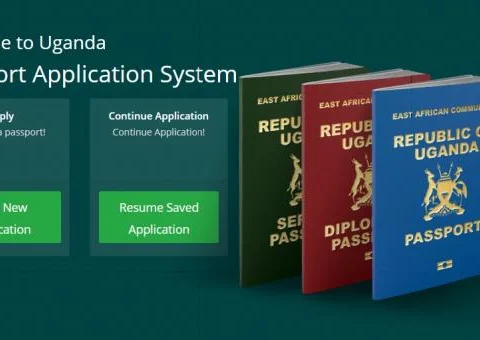
| Passport applications or passport status | Government immigration and passport services | Application reference, processing stage and collection office |
| Visas, residence permits or work permits | Immigration services | Correct permit or visa category |
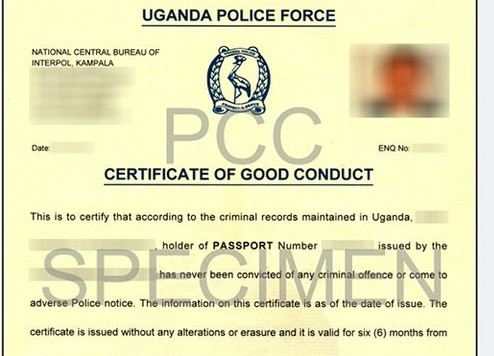
| Certificate of Good Conduct | Uganda Police’s INTERPOL and International Relations service | Application, payment and fingerprint appointment |
| Company or business-name registration | URSB | Registration category and application procedure |
| Certified business records or legal-document registration | URSB | Exact record or document service |
| Tax registration, returns, assessments or customs | URA | Relevant tax or customs department |
| Driving-licence applications, renewals or replacements | Uganda Driver Licensing System | Service category, application channel and branch |
| Local trading licences or municipal services | Relevant city, municipal, town-council or district administration | Territorial responsibility and department |
| District education or health administration | Relevant district or city technical department | Whether the matter belongs to the facility, district or national level |
| Child welfare or community-development concerns | Relevant probation, social welfare or community-development office | Appropriate local service and referral |
| Corruption or maladministration in public administration | Inspectorate of Government | Appropriate complaint procedure and supporting information |
One issue can involve several institutions. Ask each office which part it handles.
Understand the Difference Between a Ministry and an Agency
A ministry may oversee policy while an agency or directorate processes the service you need.
For example, knowing that an issue falls under internal affairs does not mean every enquiry should go directly to the ministry’s senior administration. A passport application is more likely to require the passport service handling that application.
Similarly, a business may deal with several separate bodies:
- URSB for business registration.
- URA for tax matters.
- The relevant local authority for a trading licence.
- A sector regulator for an activity-specific approval.
A company-registration certificate should not be assumed to complete every licensing or tax requirement.
Ask: “Which institution processes this particular service?”
Use Official Government Directories
Official directories can help you identify an institution’s mandate and contact channels.
The Uganda Media Centre publishes a searchable ministries-and-agencies directory. Individual government institutions also publish service pages, contact information and client guidance.
Use a directory to identify the likely institution, then check that institution’s own service information.
Search by the Service
Searching for “passport application status” or “birth certificate correction” is usually more productive than searching for “government help Uganda.”
Useful search terms combine:
- The service.
- The problem or action.
- Uganda.
- Your district or city, where relevant.
For example, “business-name certified copy Uganda” is more specific than “business documents.”
Check That the Information Is Current
Look for recent notices and compare the guidance with the institution’s current service page.
An old application form may contain a former office address or superseded payment instructions. A recent website update can also coexist with older guidance elsewhere on the same site.
Where information conflicts, ask the institution to confirm the current procedure before acting.
Ask the Government Citizen Interaction Centre for Direction
The Government Citizen Interaction Centre provides a channel for citizen questions, feedback and suggestions concerning government services.
Its published channels include the 900 toll-free line.
If you cannot identify the responsible institution, explain:
- The service you need.
- Your location.
- Whether you already have an application.
- The offices you have contacted.
- The specific guidance you still need.
Ask for the responsible institution and department.
A referral channel can help you find the right office, but it should not be treated as replacing the application or decision-making process of the responsible authority.
read Also; List of Irrigation Companies in Uganda: 10 Providers
When to Start With Local Government
Local enquiries may be handled more effectively through the relevant local administration.
Depending on the matter, this could involve:
- A sub-county office.
- A town council.
- A municipal or city department.
- A district technical department.
- A Chief Administrative Officer’s administration.
- A town clerk’s administration.
District services include technical areas such as education, health, community development, labour and social welfare.
Ask for the Responsible Department
Instead of asking generally for “the district office,” identify the subject.
For example:
“Which department handles an enquiry about this public health facility?”
Or:
“Which office assesses trading-licence applications for this location?”
Confirm that the office covers the actual location concerned. Nearby offices may serve different administrative areas.
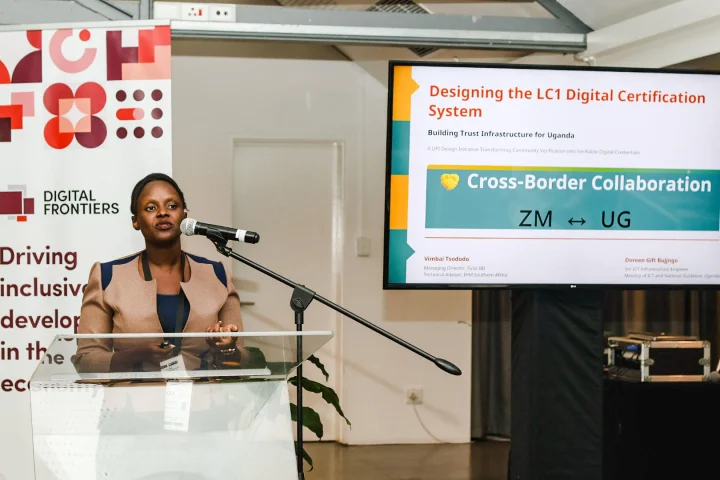
Understand the LC1’s Role
Local leadership can provide introductions and help identify administrative contacts.
However, an LC1 office does not issue every government document or replace the technical department responsible for a service.
Use local guidance to reach the appropriate institution, then follow that institution’s requirements.
Verify Contact Details Before Sharing Documents
An official-looking logo or social-media profile is not enough to establish that a contact is genuine.
Before sending identity records or paying:
- Find the contact through the institution’s official website or verified service channel.
- Confirm the department and service.
- Check that the payment instructions relate to your application.
- Ask for an official reference or acknowledgement.
- Keep copies of correspondence and receipts.
Many government websites use government domains, but some authorised service providers use other domains. Verify the connection through official guidance rather than relying on the address ending alone.
Do not send passwords, mobile-money PINs or one-time security codes to someone offering assistance.
read Also; Susan Kushaba Denied Bail by Buganda Road Court Over Reoffending Risk
Contact the Office Before Travelling
A short call or enquiry can prevent an unnecessary journey.
Ask:
- Does this office handle my exact service?
- Can the enquiry be resolved online or by phone?
- Is an appointment required?
- Which original documents and copies should I bring?
- What are the current service hours?
- Is there an official payment assessment?
- Can a regional office assist?
- What should I do if I have already applied?
Confirm the service hours rather than assuming every counter operates throughout general office hours.
Prepare a Clear Government Enquiry
An effective enquiry explains what happened and what response you need.
Include:
- Your name and contact information.
- The relevant service.
- Application or case reference, where applicable.
- Date and place of submission.
- A concise description of the issue.
- Previous action taken.
- The specific information or action requested.
Provide sensitive identifiers only where needed and through an appropriate official channel.
Sample Government Enquiry
Subject: Request for Guidance on [Service] — Reference [Number]
Dear [Department or Officer’s Title],
I am seeking guidance concerning [service or application].
I submitted my application at [office or channel] on [date], under reference [number].
The issue is [brief factual explanation]. I have already [describe relevant follow-up].
Please confirm whether your office handles this matter and advise on the next step. If another department is responsible, kindly provide its name and official contact details.
I can provide the relevant supporting documents through the appropriate channel if required.
Yours faithfully,
[Name]
[Contact information]
For a first-time information request, remove the application details and state the service you wish to access.
What to Bring to an Office Visit
Prepare a small folder containing the documents relevant to your enquiry.
Useful items may include:
- Identification.
- Application acknowledgement.
- Payment receipt.
- Appointment confirmation.
- Relevant letters or notices.
- Copies of documents concerning the problem.
- A short written summary.
- Previous correspondence.
These are preparation suggestions, not a universal checklist.
Show originals where requested. Before leaving an original document, ask why it is needed, how it will be recorded and when it will be returned.
What to Do if You Are Referred Elsewhere
Ask for a specific referral.
“Try another office” is less useful than:
- The institution’s full name.
- Department or section.
- Service point.
- Official contact channel.
- Reason for the referral.
- Any documents you should present.
Keep a brief record of the referral and date.
At the next office, explain the previous referral without assuming that the first office has transferred your application or documents.
read Also; Hamz Cup 2026 Final: UGX 150M, Five Cows, and Uganda’s Biggest Stars Await on Saturday
How to Follow Up on a Delayed Response
Check the Published Service Guidance
Look for a client charter, processing standard or application-status service.
Do not count from the wrong starting point. Some service periods begin after payment, enrolment or receipt of complete documentation.
Use the Existing Reference
Follow up using the same application or complaint reference.
Describe what has changed since the previous enquiry. Avoid submitting duplicate applications unless the institution advises it.
Request a Written Next Step
Ask:
“Is any information outstanding, and what should I do next?”
Where possible, request an acknowledgement or updated reference.
Escalate Within the Institution
If the normal help desk cannot resolve the matter, ask for the supervisor, complaints unit or escalation process.
Keep the communication factual and state the outcome you seek.
Enquiries, Complaints and Appeals Are Different
A general enquiry asks for information.
A complaint raises a service problem or alleged misconduct.
An appeal or review challenges a decision through a particular procedure.
If you receive a refusal or assessment you disagree with, ask for:
- The decision and reasons.
- The applicable review or appeal route.
- The responsible body.
- Any deadline.
- Required forms and supporting evidence.
A customer-service complaint should not be assumed to extend an appeal deadline.
Reporting Corruption or Maladministration
The Inspectorate of Government receives reports concerning corruption and maladministration within its mandate.
Prepare a factual account identifying:
- The institution involved.
- What happened.
- When and where it occurred.
- Relevant officials or positions, if known.
- Supporting records.
- Previous action taken.
Use its published reporting channels.
A routine processing delay should first be investigated through the responsible service. Where there is suspected corruption, abuse of authority or other misconduct, use the appropriate reporting route rather than making unsupported public accusations.
For immediate danger or an urgent criminal incident, seek police assistance rather than waiting for an administrative enquiry to be answered.
If You Are Outside Uganda
For consular matters, begin with the Ugandan embassy or high commission responsible for your location.
Ask which services it handles directly and which require action by an institution in Uganda.
For records held by a university, registry or other authority, contact that record holder as well. An embassy may provide guidance without having authority to amend the underlying record.
Before arranging a representative, confirm whether representation is permitted and what authorisation is required.
Frequently Asked Questions
How Do I Know Which Ministry Handles My Problem?
Identify the service first, then check the official directory and institution’s mandate. The actual application may be handled by an agency or directorate rather than the ministry’s general office.
Must I Travel to Kampala?
Not always. Ask whether an online service, regional office or local department can handle the matter.
Can the GCIC Help Me Find an Office?
It provides a citizen-interaction and information channel. Explain the service and location and request a specific referral.
Does Paying Through URA Mean URA Issues the Document?
No. A payment channel and issuing authority can be different. Contact the institution responsible for the service when asking about processing or collection.
What if Two Offices Give Different Instructions?
Explain the discrepancy and ask the responsible service to confirm its current requirements in writing.
Should I Pay Someone to Find the Right Office?
Start with official directories and help desks. If you appoint a professional representative, establish their role and charges separately from government fees.
Make the Enquiry Specific Before Making the Journey
Identify the service, confirm the responsible institution and contact the relevant department before travelling.
Keep your reference numbers, documents and correspondence organised. When an office cannot assist, request a clear referral so your next enquiry reaches someone able to address it.
Read Also: Trump Govt Calls for Emergency UN Security Council Meeting Over DRC Crisis