To contract and register a civil marriage in Uganda, an eligible couple applies through the government’s marriage-registration system, provides the required documents, completes the notice procedure and appears before an authorised Registrar of Marriages with two adult witnesses.
NIRA now handles the national marriage-registration function previously held by URSB. However, URSB can still be involved in registering supporting legal documents, such as marriage affidavits.
For a straightforward application, plan around the 21-calendar-day statutory notice period and obtain confirmation of your ceremony date before making firm arrangements.
This guide explains the requirements, fees, application stages and important differences between arranging a new civil marriage and registering an existing marriage.
What Is a Civil Marriage?
A civil marriage is a monogamous marriage celebrated before an authorised civil registrar under the Marriage Act.
It is different from simply recording that two people live together or uploading their details to a government portal.
For a new civil marriage, the couple must complete the required preliminary steps and ceremony. An online application alone does not make them married.
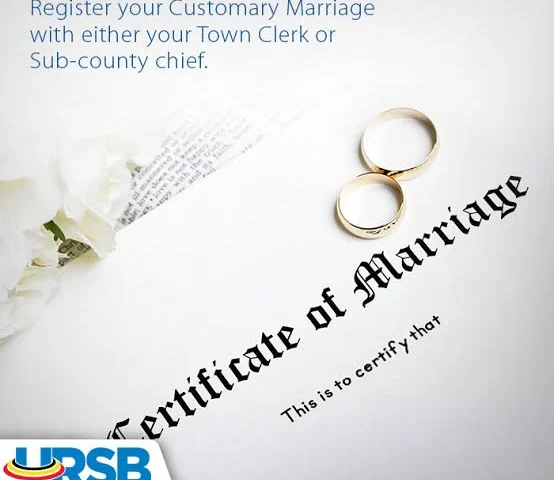
If you already have a customary or religious marriage, ask which registration or conversion procedure applies rather than beginning an unrelated new application.
Who Handles Civil Marriages in Uganda?
NIRA administers marriage-registration services nationally.
URSB officially handed over its marriage-registration function to NIRA in April 2025. Older guides directing all marriage applications to URSB may therefore be outdated.
NIRA’s published guidance identifies:
- The Registrar of Marriages responsible for Kampala.
- District Registrars of Marriages, including Chief Administrative Officers outside Kampala.
Confirm the responsible registrar and current ceremony location for the district where you intend to marry.
Do not assume that every NIRA identification-service office conducts civil ceremonies.
read Also; Uganda Expands Digital Number Plate Rollout
Who Can Contract a Civil Marriage?
NIRA’s guidance identifies eligible applicants as people aged 18 or above who are single, widowed or divorced and legally free to marry.
Both parties must consent freely. Any previous marriage or other possible legal impediment must be disclosed.
If either person has an existing customary marriage, obtain guidance on whether a conversion procedure applies. Do not describe yourself as single simply because the earlier marriage was not a civil ceremony.
Applicants Aged 18 to 20
Being an adult does not mean every additional documentary requirement can be ignored.
The Marriage Act contains consent provisions relevant to certain parties under 21, and NIRA’s published filing checklist includes consent documentation for that age group.
Applicants aged 18 to 20 should ask the registrar what consent or other lawful authorisation is required in their circumstances before submitting.
Documents Required for a Civil Marriage
Prepare the documents applicable to both parties and the witnesses.
| Document | Who needs it or why it is required |
|---|---|
| Valid National ID, passport or refugee identification | Identification appropriate to each applicant’s status |
| Identification copies for two adult witnesses | Witness verification |
| LC1 residence letter | Confirms residence and the relevant period |
| Passport-sized photographs | NIRA’s guidance lists one for each party |
| Registered marriage affidavits | Required statements concerning eligibility to marry |
| Certified decree absolute | Where a previous marriage ended in divorce |
| Relevant death certificate | Where a previous spouse died |
| Foreign single-status evidence | Where required for a foreign applicant |
| Immigration-status documents | Where applicable to foreign applicants |
| English translations | For documents issued in another language |
| OPM marital-status letter | Identified in the guidance for refugee applicants |
| Payment evidence | Confirms the assessed charges have been paid |
The registrar may request clarification or additional evidence where circumstances require it.
Residence Requirement
The published procedure requires evidence that at least one party has resided in the marriage district for the relevant minimum period of 15 days.
NIRA requests an LC1 letter stating residence and duration of stay.
Ask whether separate letters are needed for your application. The letter should accurately reflect the facts the local leadership can verify.
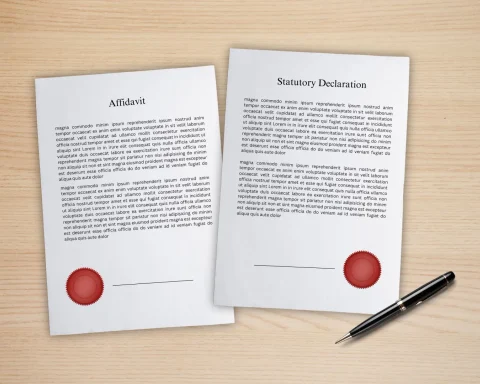
Marriage Affidavits
Have the required affidavits prepared for the marriage application and properly executed before an authorised person.
Confirm the content and registration requirements with the registrar. A generic declaration copied from another application may not address the Marriage Act requirements.
Disclose previous marriages truthfully and provide the supporting documents requested.
How to Apply for a Civil Marriage in Uganda
Step 1: Choose the Appropriate Registrar
Identify the district in which you intend the marriage to take place and confirm which registrar handles it.
Ask about:
- Residence requirements.
- Available ceremony dates.
- Submission arrangements.
- Original-document checks.
- Witness requirements.
- Current fees.
This is particularly important if one party lives abroad or has limited time in Uganda.
Step 2: Prepare the Supporting Documents
Gather identification, residence evidence, photographs, affidavits and any documents concerning previous marriages.
Check names and dates across the records.
If they differ, seek guidance before submission. Do not alter a scanned document to make it match another record.
Step 3: Begin the Online Application
Access the marriage-registration service through NIRA’s official website and select the civil-marriage application.
Complete the fields and upload the requested documents.
Keep control of the email address, telephone number and account used for the application. Review all information even if someone assists with data entry.
Step 4: Follow the Payment Instructions
Obtain the official assessment and pay through the approved channel.
Retain the payment reference and confirmation. Check whether supporting-document registration or a special licence requires a separate payment.
Do not assume that one payment covers every stage.
Step 5: Complete Document Examination and Notice Arrangements
Follow the registrar’s instructions concerning original documents and any necessary attendance.
Ask when the marriage notice will be displayed and which date starts the notice period.
The date you create an account or upload a document should not automatically be treated as the beginning of the statutory notice.
Step 6: Allow the 21-Day Notice Period
The notice is displayed on the relevant registrar’s notice board for 21 calendar days.
If an objection is raised, the registrar will follow the applicable legal procedure. A reserved date does not override an unresolved impediment.
The Marriage Act also contains a three-month limit connected with the notice. Confirm your latest permissible ceremony date with the registrar rather than waiting indefinitely after the notice expires.
Step 7: Confirm the Ceremony Date
After the necessary requirements have been satisfied, obtain confirmation of the appointment, location and attendance instructions.
Ask what both parties and witnesses must bring.
Confirm arrangements before committing to travel, catering or other wedding expenses.
Step 8: Attend With Two Adult Witnesses
Both parties appear before the registrar with the two adult witnesses.
Follow the registrar’s directions for the ceremony and signing. Check that the witnesses’ details match their identification.
If someone cannot attend, contact the registrar beforehand rather than substituting another person without updating the records.
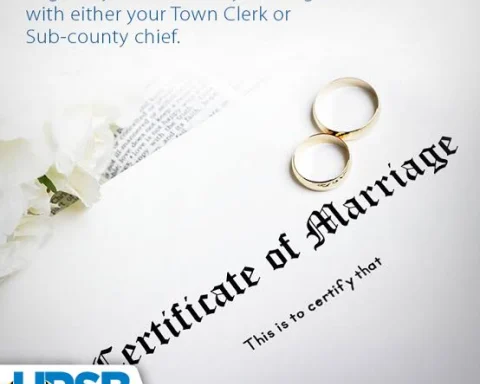
Step 9: Check the Marriage Certificate
NIRA’s guidance states that a marriage certificate is issued following solemnisation.
Review:
- Both parties’ names.
- Marriage date and place.
- Witness details.
- Other recorded particulars.
- Required signatures and official endorsements.
Raise errors promptly and keep the original certificate secure.
How Much Does a Civil Marriage Cost?
NIRA’s published civil-marriage guidance lists UGX 260,000 where at least one party is Ugandan or a refugee.
Its website contains differing figures for cases involving non-Ugandan parties. Obtain the current assessment for your circumstances instead of relying on one foreign-couple figure.
| Expense | What to confirm |
|---|---|
| Civil-marriage service | Registrar’s current assessment |
| Affidavit preparation and registration | Separate professional and registration charges |
| Special licence, if requested | Applicable fee and approval process |
| Translation and certification | Charges appropriate to foreign or supporting documents |
| Extra copies or later authentication | Separate requirements and fees |
Ask for an itemised explanation and retain receipts.
Can You Marry Before the 21 Days Have Passed?
A special-licence procedure exists for requesting a waiver of the statutory notice.
NIRA’s guidance requires an application addressed to the Minister of Justice and Constitutional Affairs through the Registrar General of Marriages, supported by the relevant registered affidavit and documents.
Approval is discretionary. Paying an application fee or explaining that flights have been booked does not guarantee a waiver.
A request to use a special venue is also a separate issue. Do not assume that notice-waiver approval automatically authorises any ceremony location.
Civil Marriage Requirements for Foreigners
Foreign applicants should contact the registrar early.
NIRA’s published checklist identifies evidence of single status from the applicant’s home-country civil-registration or vital-statistics authority, alongside identification and relevant immigration documents.
If your country issues a differently named document, ask whether it is acceptable.
Also confirm:
- Translation requirements.
- Whether certification or authentication is needed.
- How residence requirements apply.
- What immigration evidence must be presented.
- Whether the available travel schedule allows enough time.
A foreign passport alone does not establish freedom to marry.
Requirements for Refugee Applicants
NIRA’s guidance identifies refugee identification and an Office of the Prime Minister letter concerning marital status.
Ask how to obtain the necessary documentation and whether additional verification is needed.
Do not submit inaccurate marital-status statements because records are difficult to obtain. Explain the situation and request guidance.
What if You Already Have a Customary Marriage?
NIRA’s system provides a conversion of customary marriage to civil marriage route.
Confirm whether that service applies and what evidence of the existing marriage is required.
Registering a customary marriage, converting it and contracting a new civil marriage are different processes. Select the route that reflects your circumstances.
Read Also: Obote’s 1969 Expulsion of Kenyans From Uganda
Registering an Existing District Marriage
Where a district registrar has already conducted the ceremony, filing the marriage return is an administrative responsibility distinct from beginning a new civil-marriage application.
Ask the officiating office to confirm submission of the return and how to obtain evidence of the record.
Keep the certificate and application references. If the record cannot be found, request assistance using those details rather than applying to marry again.
Common Mistakes to Avoid
Following Outdated URSB Marriage Instructions
Begin with NIRA’s current marriage service. Use URSB where supporting legal-document registration is required.
Confusing Application With Marriage
Submitting forms and paying fees do not replace the ceremony.
Counting Notice From the Wrong Date
Confirm the actual publication date with the registrar.
Concealing a Previous Marriage
Disclose your circumstances and provide the necessary evidence.
Booking a Special Venue Without Approval
Confirm whether the proposed location requires a separate licence or gazetting process.
Assuming Marriage Changes Your Name Automatically
Updating a National ID, passport or bank record requires the relevant institution’s procedure.
Frequently Asked Questions
Can We Complete Everything Online?
The application uses an online system, but the parties must attend the civil ceremony and comply with any required document checks.
Do We Need Two Witnesses?
Yes. NIRA’s published procedure requires two adult witnesses.
Is a Church Ceremony Required Afterwards?
A properly contracted civil marriage does not depend on a later church ceremony.
Is the Notice Period 21 Working Days?
The published guidance specifies 21 calendar days.
Can We Marry Immediately After Paying?
Payment does not waive the notice or other legal requirements.
Can a Divorced Person Apply?
Yes, if legally free to marry. Provide the required certified decree absolute and other applicable documents.
Can We Choose Any Outdoor Venue?
Ask about the special-venue approval procedure before making arrangements.
Prepare the Documents Before Choosing the Final Date
Confirm eligibility, the responsible registrar and the correct checklist first. Complete the application, payment and notice requirements, then obtain a confirmed ceremony appointment.
After the marriage, check the certificate and ensure the record is properly filed. Keeping those documents organised will make later searches, certified-copy requests and other official applications easier.
Read Also; James Isabirye Mugoya: The Ugandan Tycoon Behind Times Tower and Mugoya Estate